Press "Enter" to skip to content

Category: making things

Low-Cost Fat Bike Stand


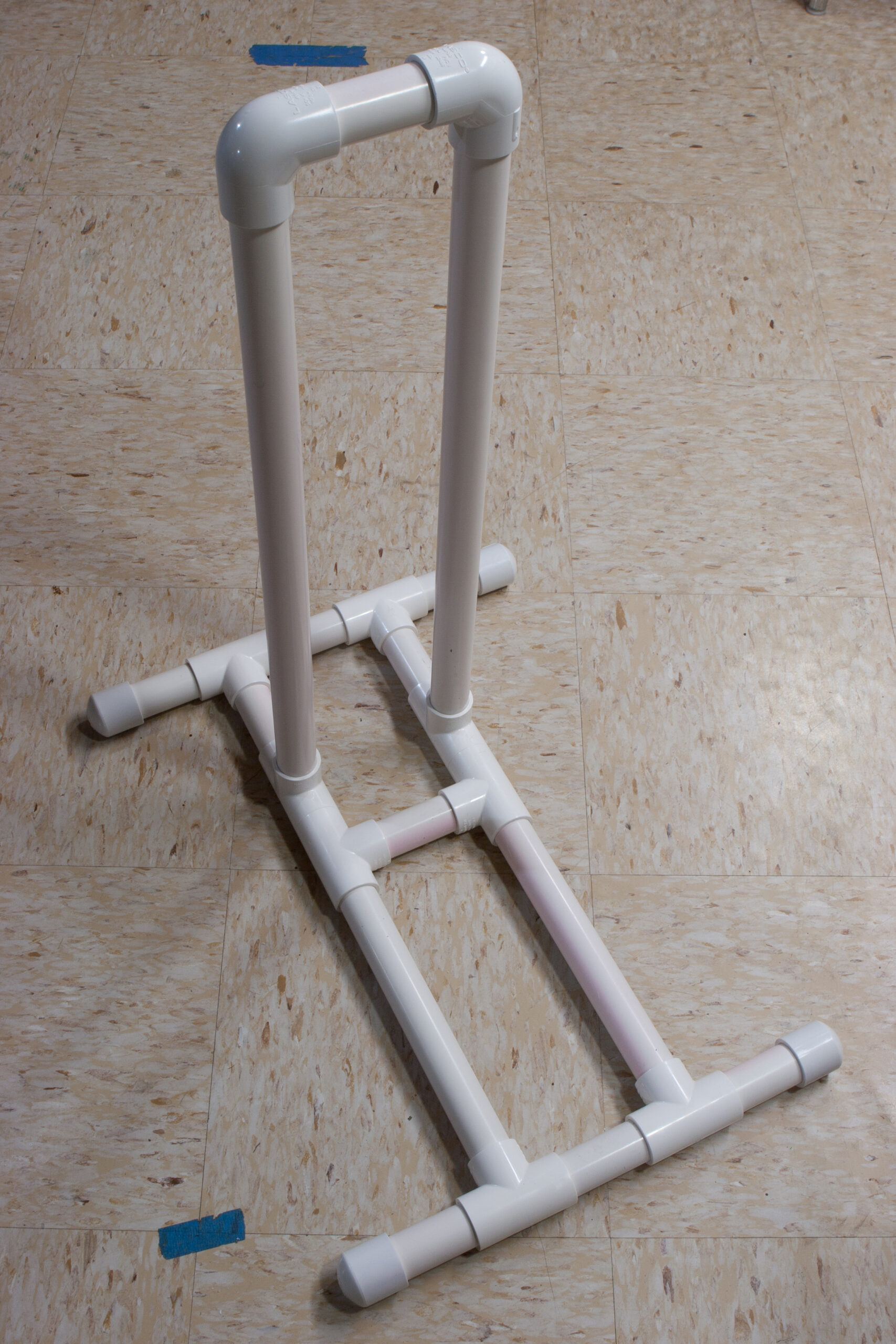
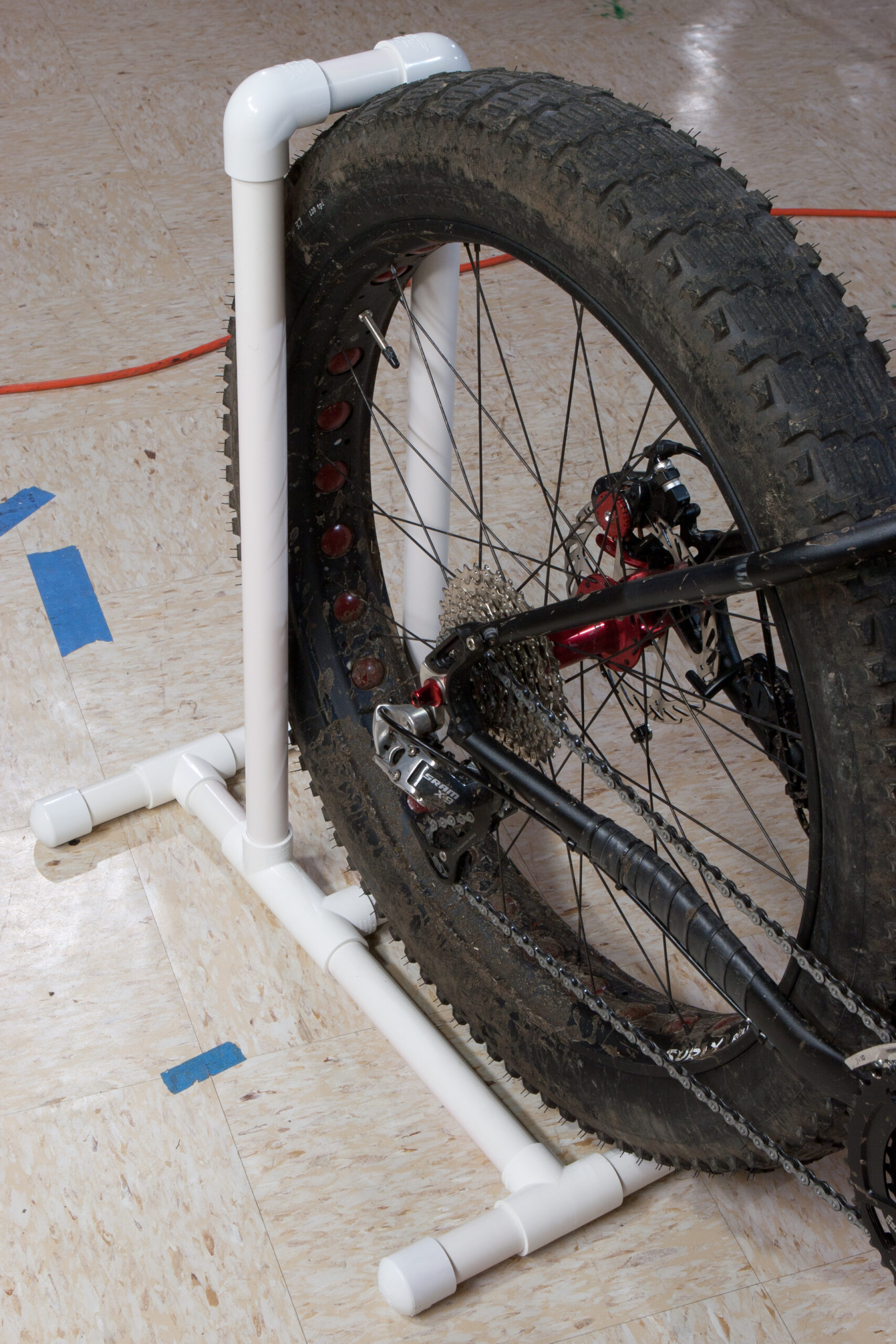
With the acquisition of a fat bike I needed a way to store it standing up in the garage but my favorite rack, Feedback Sports’ RAKK, won’t work with a tire this wide. So, I set out to build my own. The result is what’s seen above, a collapsable stand which holds the rear tire at the bottom in a channel and at the top/sides to keep it from tipping over.

There are some other PVC rack designs floating around online, most similar to this one from Bogley Outdoor Community, but they all seem to have derailleur or brake rotor interference issues to one degree or another; see this photo for one example. By building an L-shaped stand I was able to completely avoid this.

The rack also has a lip extending off the back of it which serves two purposes. First it keeps the rack from tipping backward when pushing the bike into it, and second, by jutting out just a bit further than the rear tire, it keeps the stand just far enough from the wall that the rear tire doesn’t touch. Thus the bike can be inserted into the rack by pushing the whole assembly against the wall (without holding it), and it keeps the rack from inadvertently being unusably close to a wall. This latter point is a problem with the Feedback Sports RAKK, as if it’s sitting too close to the wall the bike cannot push the spring loaded arm backward and the rack must be slid away from the wall before a bike can be inserted; a bit of a hassle when the rack is set close to others in a small garage.


Total parts cost for this project was US$13.08 (after 6% Michigan sales tax), purchased at Lowes, not including incidental supplies or tools:

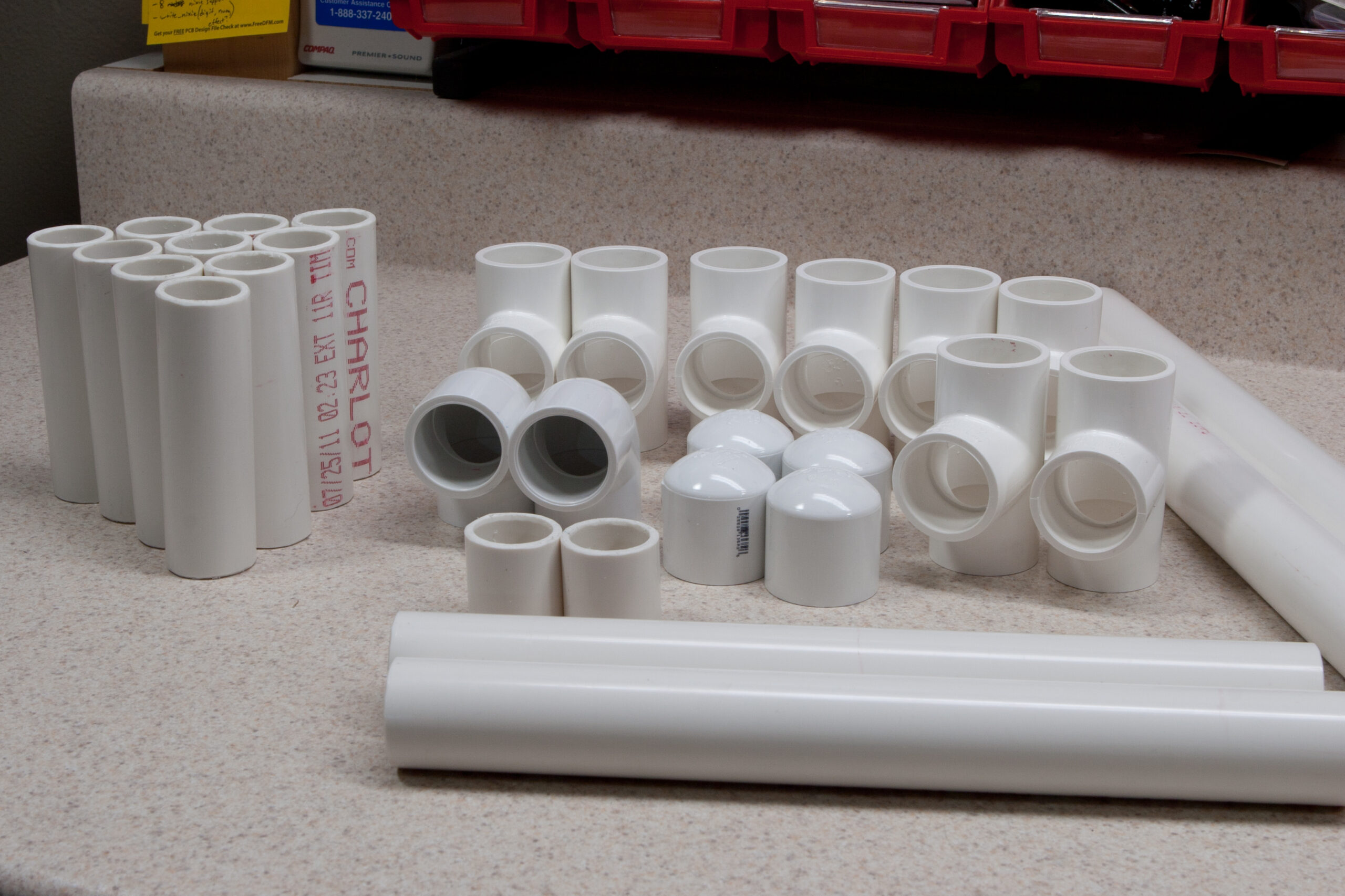
1″ Schedule 40 PVC Pipe:
· 1x 10′ Pipe
· 4x End Caps
· 2x 90° Elbows
· 8x Tee

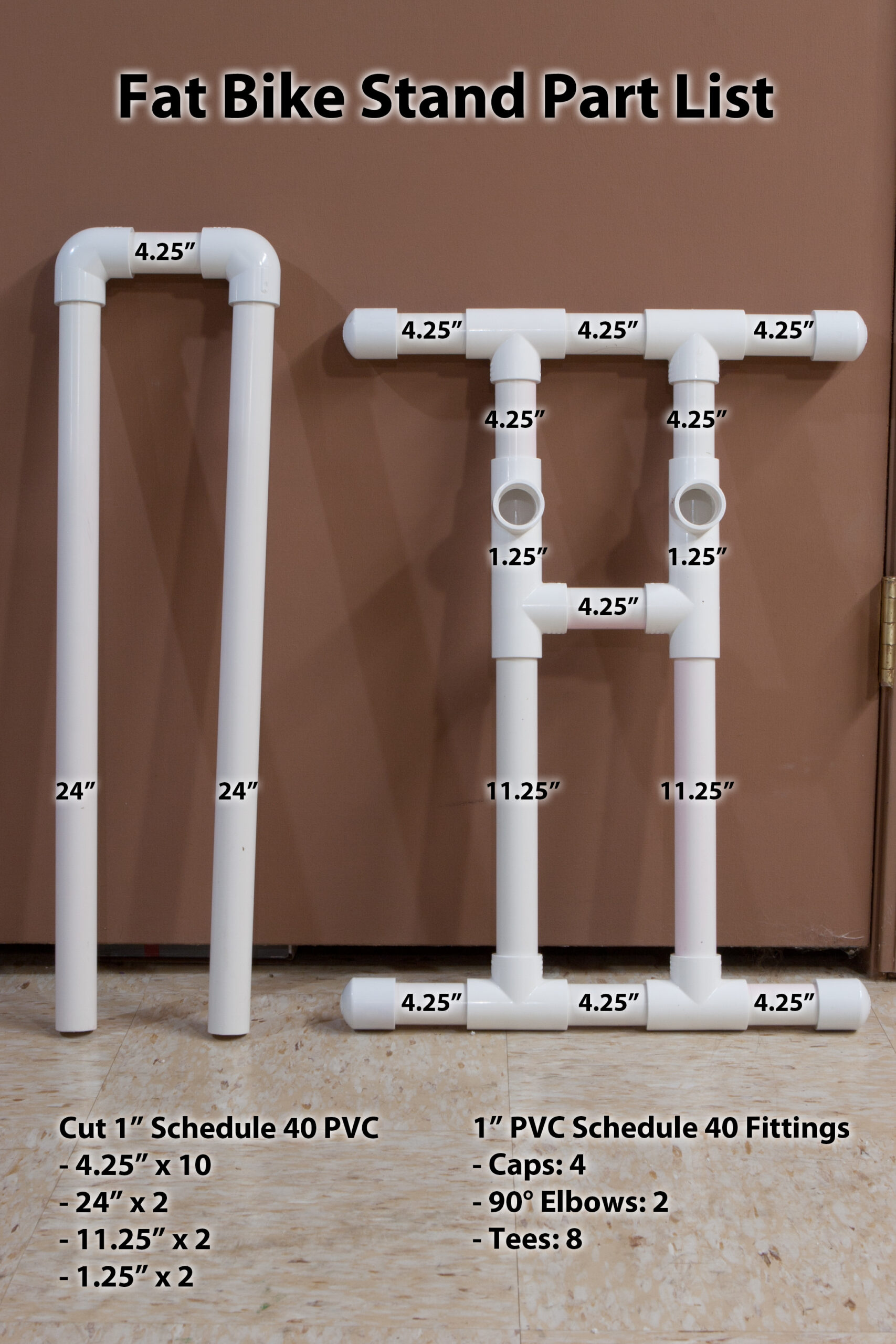
Presuming a 7/8″ inset in each fitting the 10′ piece of pipe is then cut into the following size segments:

· 10x 4.25″
· 2x 24″
· 2x 11.25″
· 2x 1.25″

If your pipe fittings have something other than a 7/8″ inset or if your tire size is a fair bit different from mine you’ll want to adjust these lengths as necessary to ensure that you’ve got the appropriate distances between support pieces. The spacing that I found to work for my Salsa Mukluk 2 with a Surly Rolling Darryl rim and either an Endomorph or Larry tire has a base rectangle with inside dimensions of 4.25″ x 11.25″ and an upright with a 4.25″ x 24″ opening. Bikes with narrower (or wider) rims or tires may require this opening to be adjusted.


I did all of my cutting with a hacksaw or bandsaw, depending on which was more convenient. Once all pieces are cut the ends need to be deburred and slightly beveled with a file or razor blade. Before assembly I also scrubbed the colored labeling off with some acetone and paper towel, but this isn’t a necessary step. If doing so caution must be taken as the acetone dissolves / etches the PVC, so one should be careful not to damage the surface or let it pool. It is also extremely volatile and flammable and thus any cleaning of this sort should be performed outdoors.

Assembly proceeds as pictured here, with all items cemented in place except for the where the upright meets the base. Parts were liberally coated with PVC cement (no primer, as this doesn’t need to hold water), and before this could set the parts were tapped into place with a dead blow hammer, measured with a ruler to ensure appropriate gaps, and aligned by pressing the parts against a flat surface. I found it was easiest to assemble the short cross pieces first, then fit the longer pieces, then the legs, and finally the end caps.


The resulting stand works out very nicely, solidly holding the bike by either the front or rear wheel. This integrates well with the row of RAKK-supported bikes in the garage, and now I don’t have to lean by bike against a hose holder, garbage can, or wall. I’m quite happy with how it came out.
28 Comments

AMB χ1: Complete

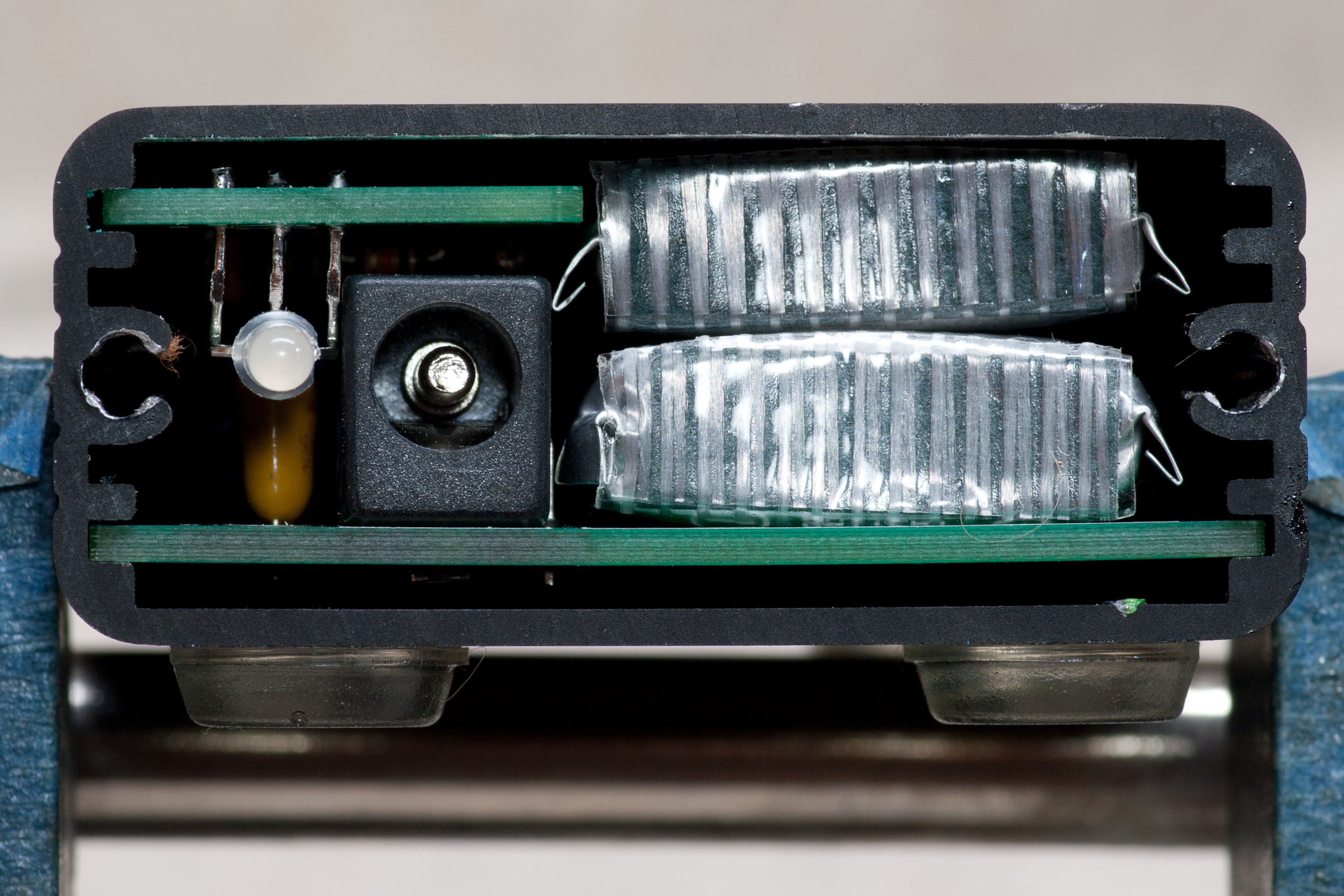
Yesterday evening I finished up retrofitting my AMB Mini³ headphone amplifier with the AMB χ1. This is a battery management board which replaces the original charging circuitry and 9VDC NiMH battery resulting in a considerably faster charge and longer runtime. By using a Lithium-ion polymer (LiPo) battery the runtime has been extended to ~25 hours (for my high performance version) while the charging time has been reduced to ~1.5 hours. (AMB.org claims that this is a 10x improvement in charge time and a 3x improvement in run time.)

The photo above shows the rear end of the Mini³ without the end panel, showing the two LiPo packs (the silver / strapping tape pieces) the edge of the χ1 PCB (top), and the bi-color charge/fault indicator LED. Assembling this involved removing a small handful of diodes, regulators, and resistors from the Mini³’s PCB, adding a header in place of the LM7812 voltage regulator, and plugging the χ1 into that. As documented on AMB’s site building the χ1 was pretty straightforward and involved only a handful of medium-size (and easy to solder) surface mount parts. I almost wish the design was all surface mount so I wouldn’t have to deal with as much through hole, but I understand his desire to not go all-SMT in order to keep things easy to assemble.

I use this headphone almost every day at work while listening to music from my iPod, and thus far it’s sounded great. However, due to my weird patterns of not being in the office I haven’t been leaving it plugged in for long enough lately, so whenever I’ve been wanting to use it I must plug it in to use it. Hopefully this new version with a shorter charge time and longer run time will sort out that problem.

Now I want to build something else, but I’m not really sure what. I’m somewhat considering a beefy Class A amp and new monitor speakers for my desk at home, all nicely integrated with a USB DAC and tucked under my desk. I could even build the monitors themselves, but this would end up being a pretty big project and I’m not sure it’d get me enough benefit…

Leave a Comment

Park Tool BBT-19 vs. Truvativ Howitzer Team BB

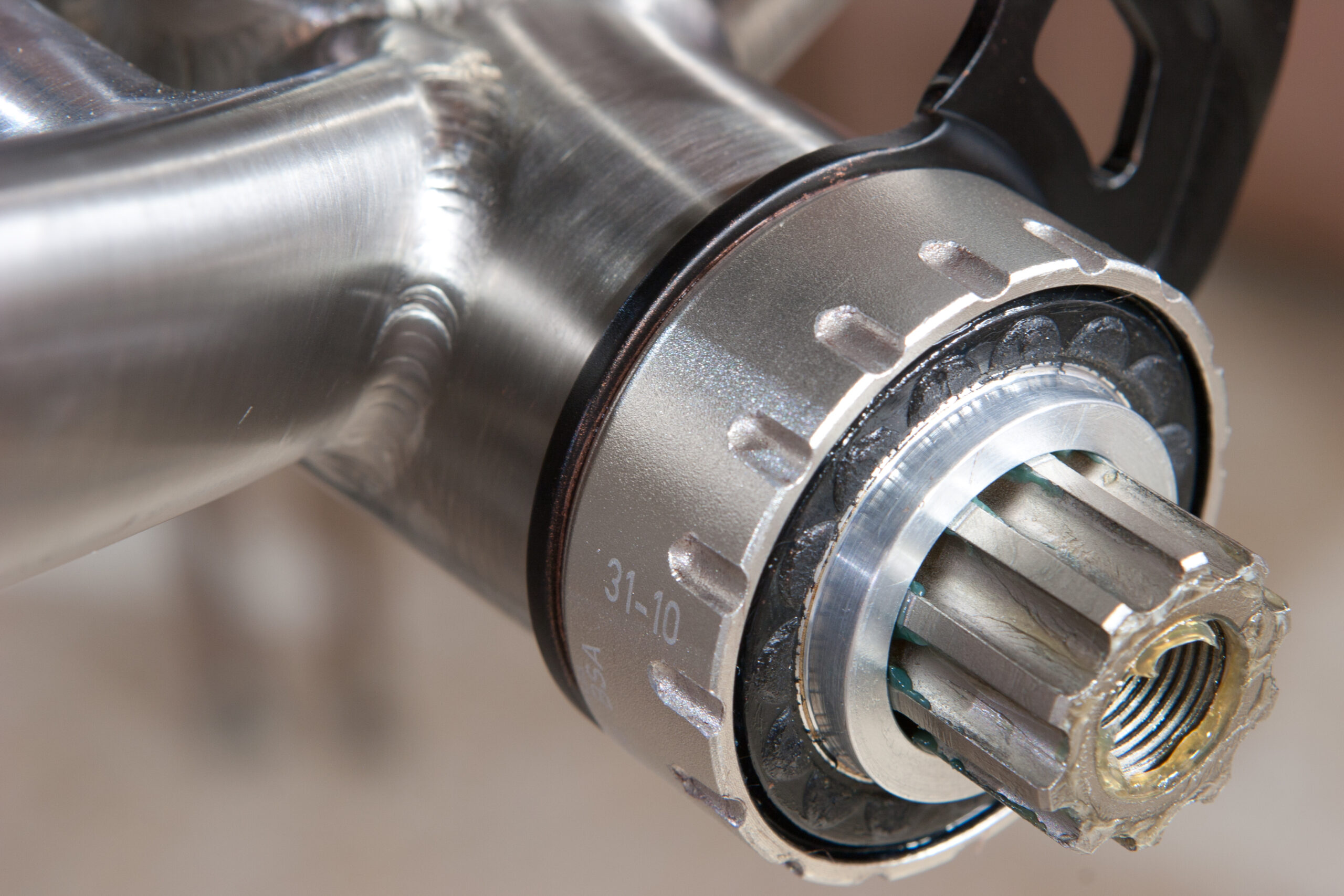
This evening when beginning assembly of a friend’s new snow bike I ran into a bit of frustration while fitting the bottom bracket. Due to the design of the Truvativ Howitzer Team BB that he chose it’s not possible to use a Park Tool BBT-19 bottom bracket tool to torque it to spec. Because the spindle has to be inserted before both cups are fitted and the tool itself isn’t very deep, the spindle keeps the tool from fitting on the cups for final torqueing. To finish the job I instead had to use a standard box-type wrench for external BBs. This did the job, but it would be nice to know that I got the torque spot on.

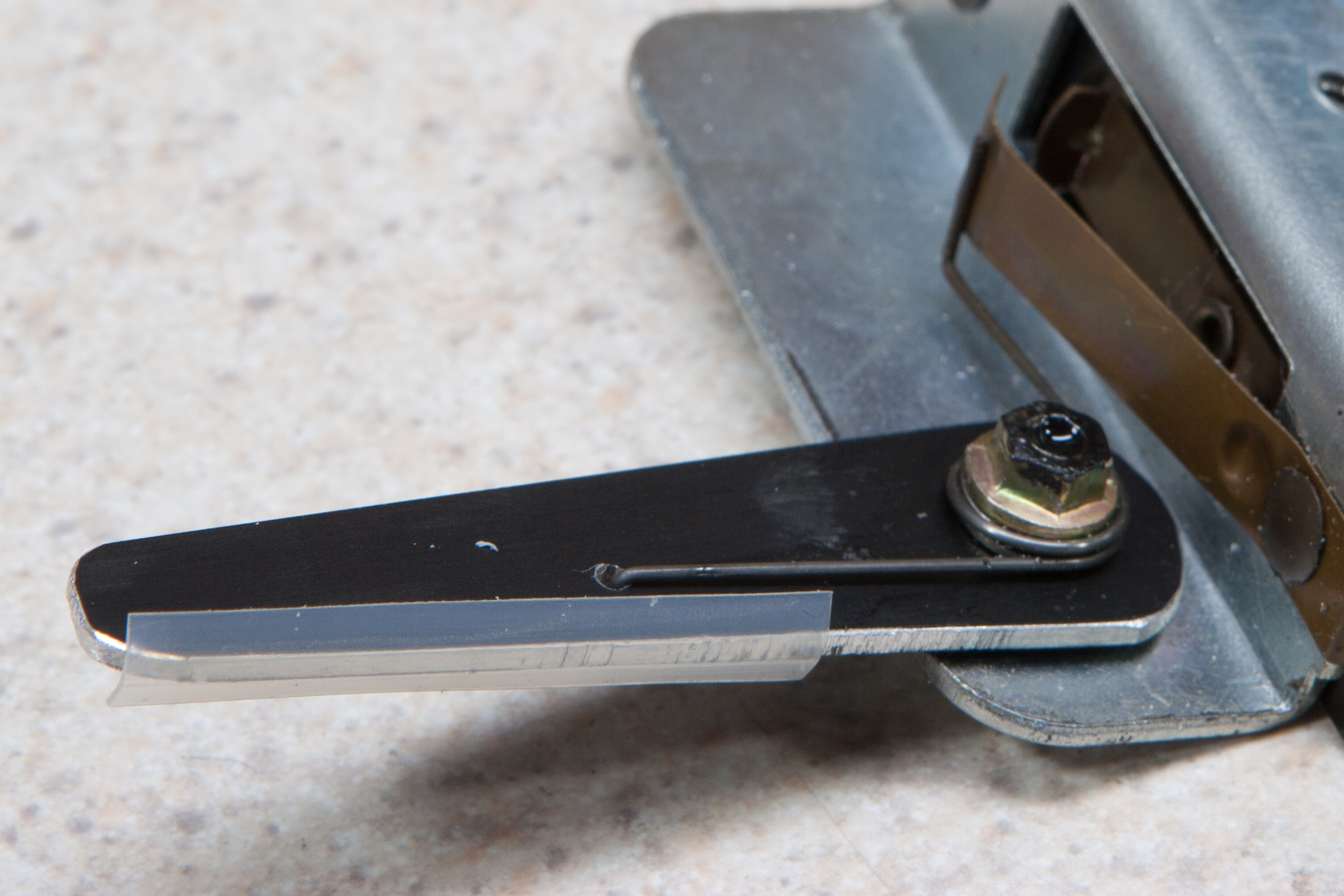
The stuff shown above is the initial assembly of Bob Costello’s new Carver titanium snow bike, and includes an E-Type front derailleur. This is the first time I’ve fitted one of these derailleurs, and it was a pretty easy task. However, as I was warned, the Finish Line Anti-Sieze (Ti-Prep) compound which needs to be applied to all metal fastener surface is quite a pain. It seems to be a fine metallic powder suspended in a grease, and the resulting compound is sticky, staining, and it ends up just about everywhere. Unlike grease it’s not easy to wipe off of anything but metal and solid plastic surfaces; it soaks quickly into skin and is even difficult to remove from nitrile gloves. Thankfully ProGold Lubricants’ Shop Towels do an amazing job of cleaning it up from both frames and hands.

Unfortunately, we ran into a little quirk with the acquired parts which put the build on hold for a bit, but I imagine that’ll be remedied soon.

Leave a Comment

Salsa Mukluk 2

This past week I received a new Salsa Mukluk 2, and yesterday I finally finished assembly and got it out for a ride. In short: I really like this bike. Being a fat bike it’s got tremendously large tires which were originally designed for riding in snow, sand, and on other soft surfaces. This makes for a very interesting but really fun ride. I’m really looking forward to trying it in snow. As I already do a fair amount of winter riding (up until the snow is too deep to ride) this should extend the riding season for me even further. I am also really hoping to take it up north to the area around Sleeper State Park and Danielle’s aunt and uncle’s cabin so I can explore riding it on beaches and on sandy roads.

This bike was purchased via our team shop, Trail’s Edge Cyclery, and this allowed me to receive it unassembled and have fun building it up myself. Over three evenings I slowly (and enjoyably) put it together. This involved putting all the major pieces together, cutting the steerer tube while fitting the fork, cabling the whole bike, and setting up the drivetrain. Putting it together myself gave me a chance to set up the bike fit things (seatpost height, saddle fore/aft adjustment) from the get-go, and careful measuring of my other bikes resulted in the Mukluk being wonderfully comfortable for the first ride.

I also made a few slight modifications during assembly, including switching all cage mounts to stainless steel fasteners, filling empty (potential water ingress) holes with screws, converting a downtube bottle cage mount into additional cable retention points, wrapping the chainstay with an old tube, soaking the rust-resistant zinc-coated chain in ProLink Voyager, and fitting Ergon GP1 grips. This was a really enjoyable process and I’m very happy with the results. Due to the larger wheels I also had to fit a spacer kit to my bike rack so the wheels to fit, but this generally went well and works as advertised.

Yesterday I took the bike out for a first ride at River Bends, and it went rather well. I’ve got a small tick that seems seatpost/saddle related that I need to look into, but other than that I had no issues with it. The twist shifters seem nice but will take some getting used to; having no particular indexing for the front derailleur is quite a change, but being able to trim the front derailleur on the fly is nice.

In the photo album Salsa Mukluk 2 you can see a number of photos that I took during the unboxing, build, and first ride. Click here if you’d like to see them.

(Incidentally, this just happens to be post #1000 since March 31, 2008 when I moved to using WordPress for blog posting.)

Leave a Comment

Salsa Mukluk 2 is Here!

Yesterday a friend played delivery driver and picked up my new (but unassembled) Salsa Mukluk 2 from our team bike shop, Trail’s Edge. Last night I mostly unpacked it and took pictures and hopefully I’ll get it assembled by the end of the weekend. There’s a lot to do and I’m intending to be particularly picky during assembly, but I’m also really looking forward to riding it.

The photo above is of my workbench with some of the parts laid out on it and the front wheel aired up to 30psi in order to stretch the tire to shape and get the bead seated properly. These wheels are massive.

1 Comment

Wheel Building Time!

After picking up some parts from the shop tonight I’m now ready to build up a new wheelset. Velocity Blunt SL rims (32 hole, black), SRAM X9 hubs, DT Swiss Competition spokes, and black brass nipples will hopefully make for a nice new wheelset for the Titus. Everything about this build is value-priced, but if things go as planned they should be fairly light and functional. This will be the second full set of wheels that I’ll have built and the first with all-new parts. Hopefully I do a good job.

Leave a Comment

New Single Track at River Bends

I’ve been on vacation for the last week or so (since the 3rd), and much of this time has been spent working on a new 1.3 mile segment of single track trail at River Bends. As of this afternoon it is now signed and open and can be considered complete. All work on this segment from here on out will be tweaking or maintenance; initial building is done.

The image above shows the entrance to this new segment. This spot had previously been a wall of brush, best illustrated here at the end of a trail ride video from River Bends where the rider turns left after exiting the single track. Now riders can continue straight and ride another long segment of twisty single track. This takes the place of riding some relatively flat two track which had a couple unpleasantly blind corners. An updated copy of the River Bends Trail Map (PDF) shows this new segment of trail, the eastern yellow line which flows north between the asphalt and two track.

While I did a fair bit of work on this trail segment laying it out and doing a bunch of the rough cutting and such, it would not have been possible to build this without loads of help from other volunteers. Some folks (in particular Jeremy Verbeke and Paul McAllister) were able to help out in the middle of the week, while others donated their time and effort during a scheduled trail day on October 9th where our numbers (21 people!) allowed us to finish most of the work resulting in something recognizable as a trail.

Thank you to everyone who was involved with this; we’ve got more trail!

Leave a Comment

Rejuvenating Desiccant

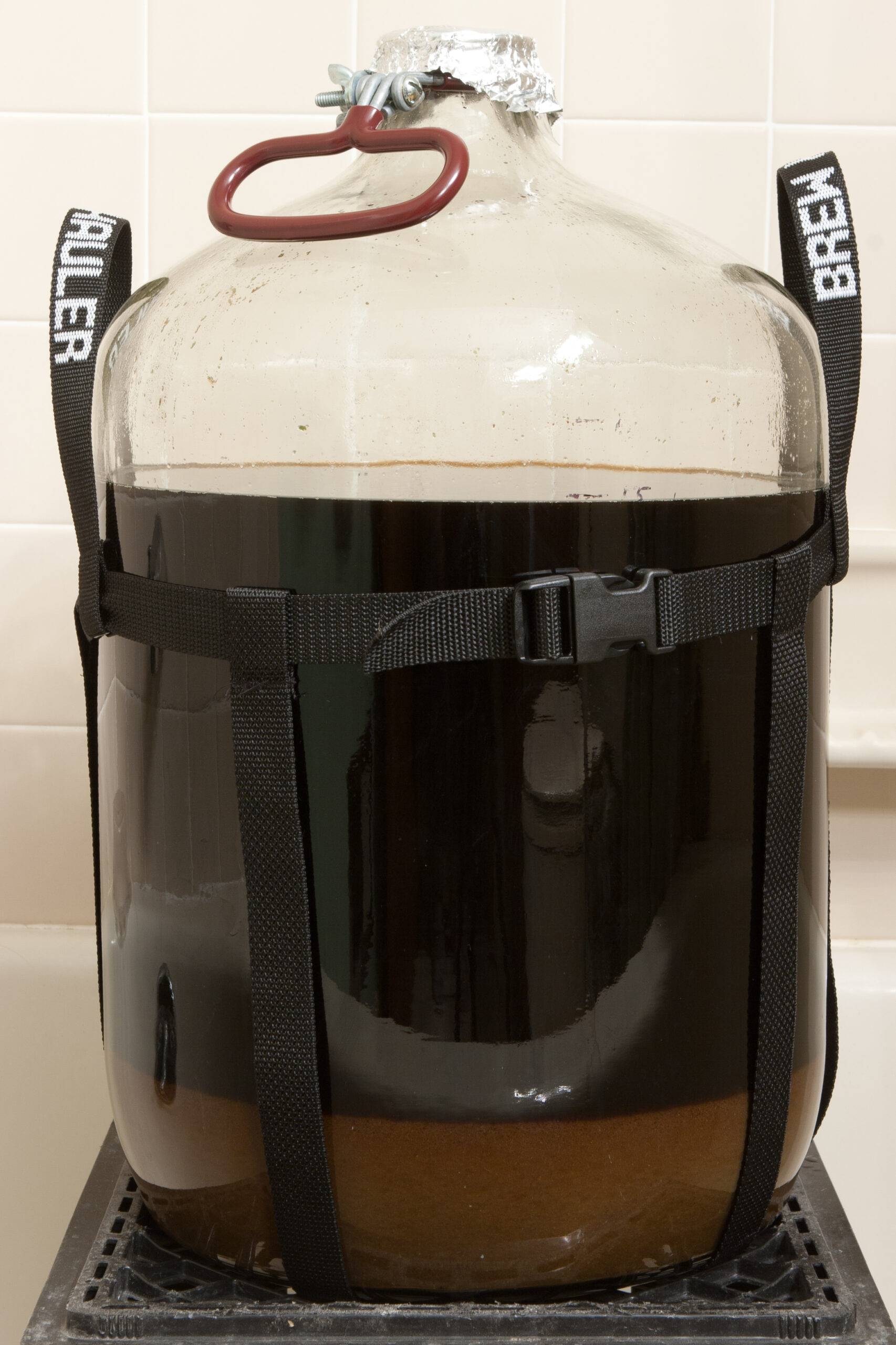
In preparation for kegging a Final Absolution clone for Danielle’s birthday I am rejuvenating the desiccant used in the Kegged Beer Cooler by placing it in a 245°F for the proscribed 16 hours. I also put a smaller bag and the indicator card in there as well hoping that they too would change back to their original spec. This seems to be doing the trick as the indicator card is definitely returning to its original color, but I have slight concerns that the H2O produced by the gas flame in the oven might cause this process to not be as effective as it could be. Still, I’ll leave it overnight and seal up the pouches come morning. After baking all night they’ll definitely be drier than they were earlier today.

Leave a Comment

Logpile!

Here, have a photo of the newest addition to the trails at River Bends: a log pile. This has been in place for a few days, but this afternoon I finished it off by adding another log to the front to make it more approachable. I also added more glue dirt to help keep it all together. Another view of the logpile (from the direction which it is typically ridden) can be seen here. At River Bends when the parks people cut downed trees from the two track, they tend to leave nicely maneuverable ~4′ pieces sitting in the woods along the trail. Finding a few fresh, non-rotted ones of these is trivial and they can easily be used to build solid log piles. For anything else I can find other fallen, dead trees and cut them to length with a handsaw.

This afternoon’s trailwork also included tweaking a corner to increase its radius (photo) and adjusting another to flow more smoothly to cut down on people overshooting the corner and washing out. Damage to both the trail surface and edge made it obvious that this was a common problem on these corners. Here is a helmet cam video of me washing out on the pictured corner and falling. Whoops.

Leave a Comment

River Bends Trailhead Kiosk: Complete

This morning, along with help from Jeremy Verbeke and Scott Retford (and Bob Costello last night in collecting the Lexan) the kiosk at the River Bends Trailhead was completed. This involved hanging the signs, covering it all with Lexan, and fitting some wooden strips that I cut and drilled last night (picture). Here is a photo of Scott and Jeremy standing next to the kiosk right after we completed the sign hanging.

This kiosk (along with much of the trail signage) was donated and build by Spencer Wood and Troop #242 as part of Spencer’s Eagle Scout project. It’s a nice improvement on the standard MMBA Kiosk Construction Plans, is extremely well built, and should last for years. This is one of the best constructed trailhead kiosks that I’ve seen.

The signage includes a trailhead-specific version of the map, a QR code allowing easy download of a PDF of the map to one’s smart phone, and some basic trail rules. The kiosk also features a sign from Aktion Club, a Kiwanis program for people with disabilities who helps with maintenance of the first mile of two track trail.

This completes the current River Bends trail system allowing us to move on to the next phase. I just recently received approval to expand the single track even further, so once the mosquitos start dying off and leaves start falling from trees construction on this next segment can begin.

6 Comments