RoHS, here we come!
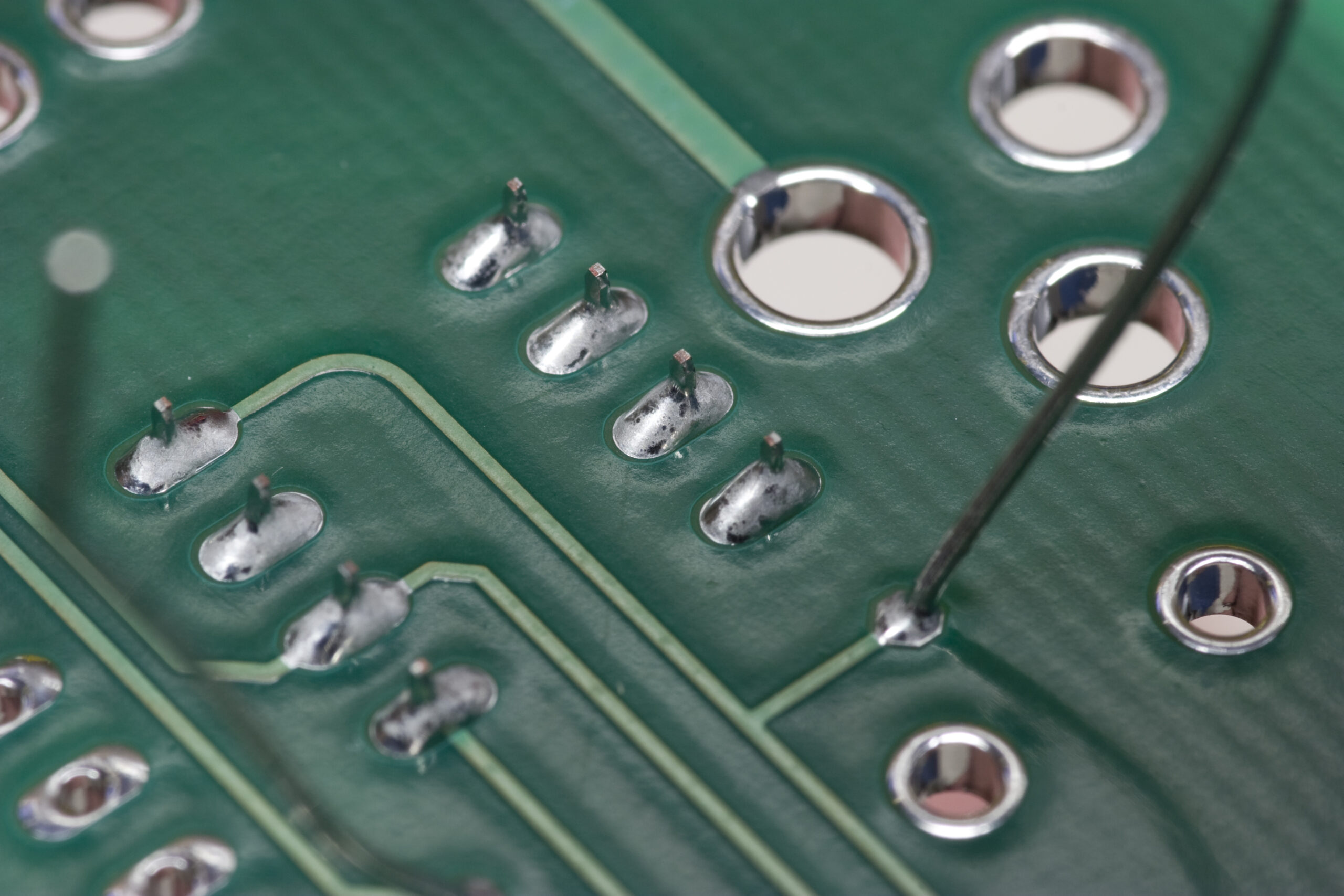 Lead-Free test of 555 Timer and Resistor
(Click for full res…)
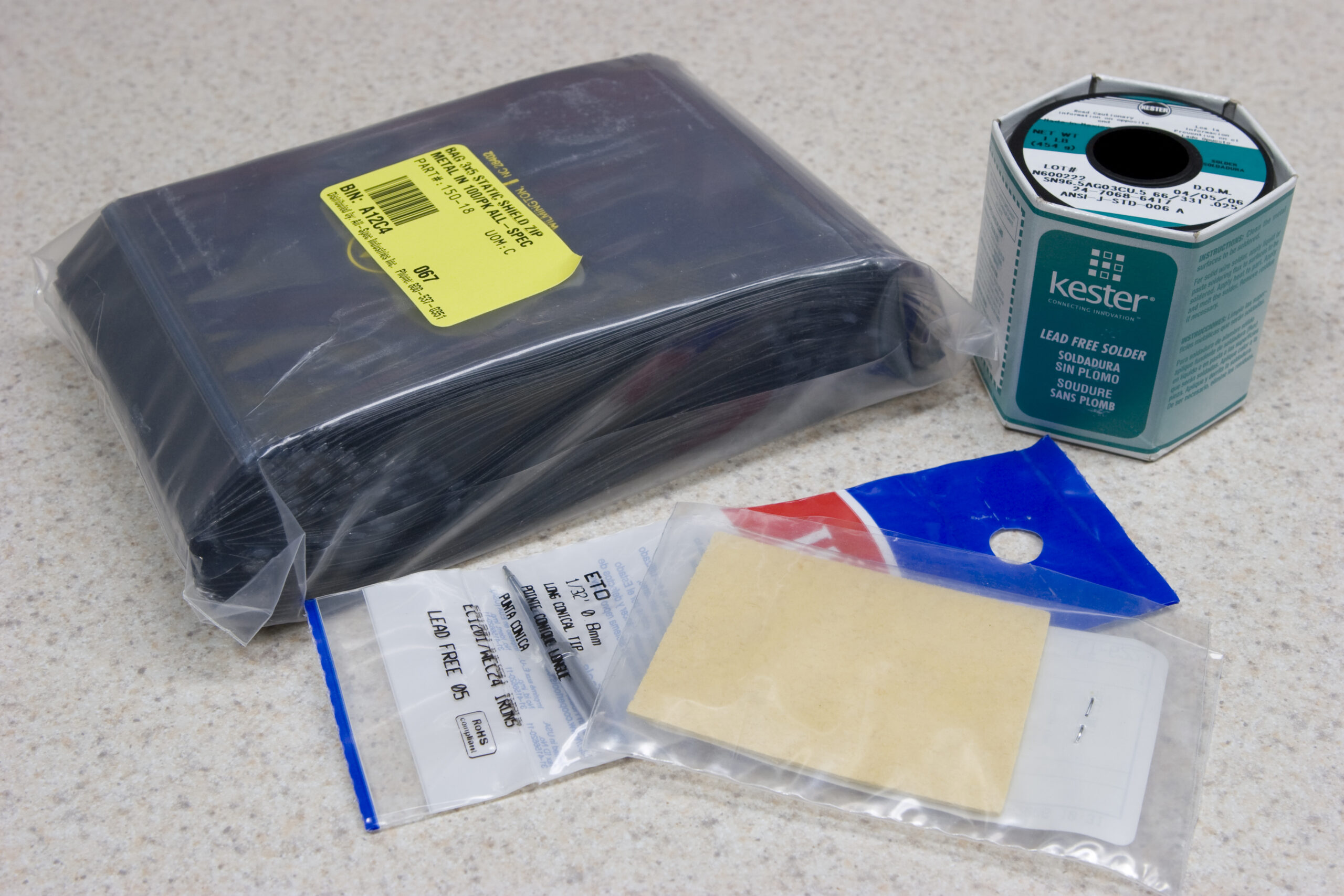
Today my order of lead-free solder and anti-static bags arrived. That meant that was finally able to stick the new ETO tip on my iron, get out the new sponge, and set everything up for trying out lead-free (SAC: 96.5% Tin, 3% Silver, 0.5% Copper) soldering. To get started I acquired a spool of 0.025″ Kester SAC solder with 331 (water soluable) flux.
I must say, this is quite different… First off, I had to turn the temperature up to 750°F. Then, after that, it was rather like soldering with the low-flux no-clean lead solder. The joints don’t wet as much, flux still flows but it doesn’t seem to help as much, and the resulting joints just aren’t shiny. All of this is in line with what I’d read about lead free solder, so that’s at least good.
The flux came off nicely with a toothbrush and hot tap water (my normal process, followed by a rinse in distilled water and drying with an air compressor) so I’m quite happy with that.
After reading this article from Kester (PDF) I may give an 800°F tip a try next time, but for now I’m pretty happy with how things were coming out.
A few more photos of test joints, both before and after flux removal, are available here (photo gallery retired).
and how much did this set you back?
i did a proposal a few years ago about updating the lab equipment for RoHS and estimated it at few to several hundred dollars.
Oh, the spool of solder (1 lb, I think) was around $25, the new tip was about $5, and the sponge was $2 or so.
Doing a whole lab would be a lot I guess, but I figured there is only a need to replace the parts which will be used in production of the actual boards. The PCBs themselves were easy to order RoHS compliant, and all the parts come spec’d as such from Mouser.
So you didn’t have to get a new iron?
Interesting.
Oh, naw. I just replaced the tip… I’ve got a WES51, so I just ordered a new ETO tip. The tips themselves are RoHS compliant, and since none of the other parts on the tool actually are involved in the part, that seems to meet compliance to me.
Also, I guess one doesn’t want to use a tip which has regularly been used with lead solder with no-lead, both because of lead contamination and mixing of alloys which leads to bad joints.
yeah exactly what i was thinking. you just happened to have a good iron.
Are involved in the assembly of the final parts, I mean.