Press "Enter" to skip to content

Category: making things

Home-Made Cheez-Its

Yesterday afternoon I came across this post about making home-made Cheez-It-like crackers on LiveJournal. Since they sounded good and we had all the ingredients around the I went ahead and made some. It took about five minutes to make the dough then 10-15 to cut them out. After this they baked for 18-20 minutes until they were done.

Brief recipe is as follows:

  1. Combine the following ingredients in a food processor and process until crumbly:
    • 8 oz. Shredded Cheddar
    • 1 cup All-Purpose Flour
    • 4 tbsp. room-temp Salted Butter (Use 1/2 tsp. of salt if using unsalted butter.)
    • 1/2 tsp. Smoked Paprika
    • 1/4 tsp. Ground Mustard
  2. After completely integrated, drizzle in 2 tbsp. of tap water and process more so it forms a dough.
  3. Wrap the dough in plastic wrap and put in the fridge for 20 minutes.
  4. Lay the dough between two pieces of plastic wrap and roll thin; perhaps 5mm thick.
  5. Cut the dough into rough squares with a pizza cutter.
  6. Poke small holes in the center of each piece of dough with a round toothpick with the end cut flat.
  7. Transfer to a parchment-lined baking sheet.
  8. Sprinkle with flaked salt. I used a flaked Spanish sea salt.
  9. Bake at ~375°F until golden brown. This took me almost 20 minutes. (If underdone the centers will be soft and they won’t be very good.)
  10. Cool, transfer to an air tight container for storage.

These are very, very good. They are similar to Cheez-Its in that they are snack crackers, but they taste much better and don’t have that odd vomit-like smell familiar to anyone who has opened a new box of the Nabisco product.

UPDATE / Lessons Learned: The second time I made these I did a couple things differently which made it much easier, and they came out quite a bit better (photo of the second batch):

  1. I split the dough into two halves, rolled the halves out separately, and baked each half in a separate pan. This gave me much more room to work and allowed me to roll the dough thinner making them more properly cracker-like.
  2. When rolling out the dough I put some thin bamboo skewers down next to the dough and used this as a spacer for the rolling pin. This allowed for all the crackers to be a consistent thickness.
  3. Dough was cut into 1″ squares for consistency in baking.
  4. After cutting the dough into squares I inverted the cookie sheet over it, then flipped the whole assembly over. Don’t bother separating the dough squares, this can be done later.
  5. Part-way through baking use a spatula to separate the partially-crunchy squares, shake to distribute them throughout the pan, and continue baking. This is much easier than trying to separate the squares when putting them on the pan.
  6. Be sure to bake any mis-shapen trimming pieces from the edges. They are just as good, but know that they’ll cook faster.
  7. Err on the side of over baking. Slightly browned crackers are better than chewy ones.
Leave a Comment

FOX F29 RLC Seal and Oil Replacement

Today I did my first seal and oil replacement on a FOX fork. I’d watched Erik do his before, but it was a few years back so I didn’t remember much about the process. While I took my time this was easier than I’d expected, and almost everything went smoothly.

To do this work I’d purchased a bottle of 10 weight (Green) Suspension Fluid, a SKF low friction seal kit, 5mL packet of Float Fluid, and a seal driver tool to help seat the seals. I’d also picked up some graduated cylinders for measuring the oil, and a friend made me a very nice tool for removing the top caps. These parts all worked out very well, and following FOX’s documentation for seal and oil replacement, oil volumes, and use of the seal driver I had no problems getting everything together.

The greatest difficulty was removing the old seals, but a little persistance on the first one paid off, and then using this as a model I was able to get the second out much more easily. There were a few small things learned that’ll make the work easier next time, including:

· The foam rings take very little time to soak up oil when pre-soaking them.
· Once the damper is in place, there’s not much room below the damper cap for adding oil unless air is let out of the spring side to collapse the fork. After this there’s a plenty large space to pour in the oil.
· Tilting the fork while adding oil to the damper side makes things slightly easier.
· The nuts on the bottom of each fork leg are identical.
· Crush washers stick solidly to the nuts on the fork legs and blend in. The replacement ones, before being crushed, fit much more easily.
· Suspension oil tends to get all over the place. Even with wiping the entire fork down there is still an oily residue which leaves a nice sheen, especially if the fork is a bit weathered and becoming matte.

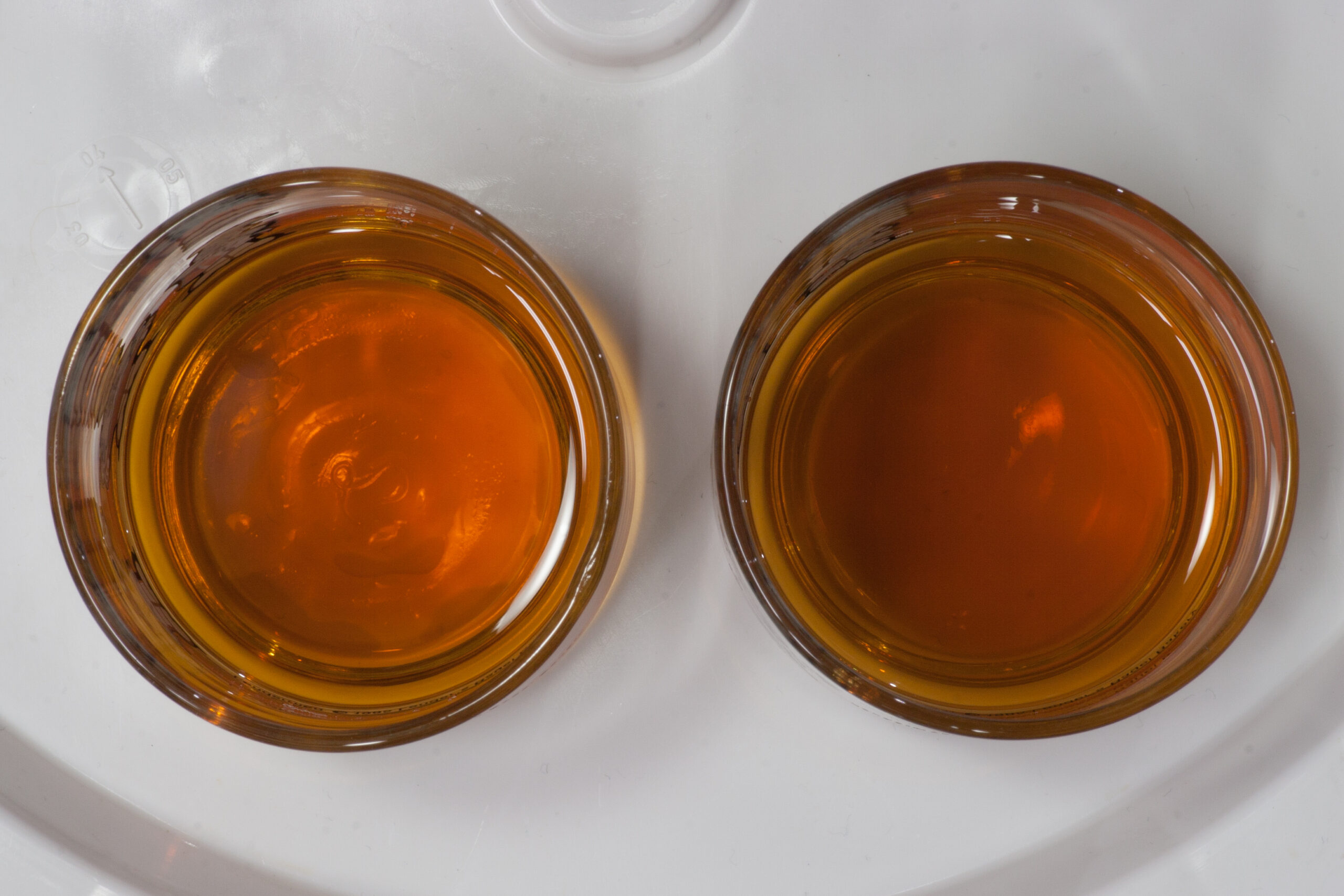
I received this fork when I purchased this bike in December of 2009. Since that time I’d put around 5000 miles on the bike, but never rebuilt the fork nor replaced the oil. While I’d been particular about keeping the stanchions clean I was not shy about riding it in poor conditions. FOX recommends changing the oil every 30 hours on forks. I definitely exceeded this, yet the oil in the fork was still quite clear, the foam rings mostly clean and oil-saturated, the stanchions unmarred, and there was still a fair amount of oil in the various chambers. The only way the stanchions look not-new is some fading on the portion which was exposed to sunlight. Here is a photo of the disassembled uppers and lowers showing nothing more than a slight bit of fading.

Hopefully after the work I’ve done the fork continues to work as reliably as it had for these past years.

Leave a Comment

Series 30 American Lock: Cut Open

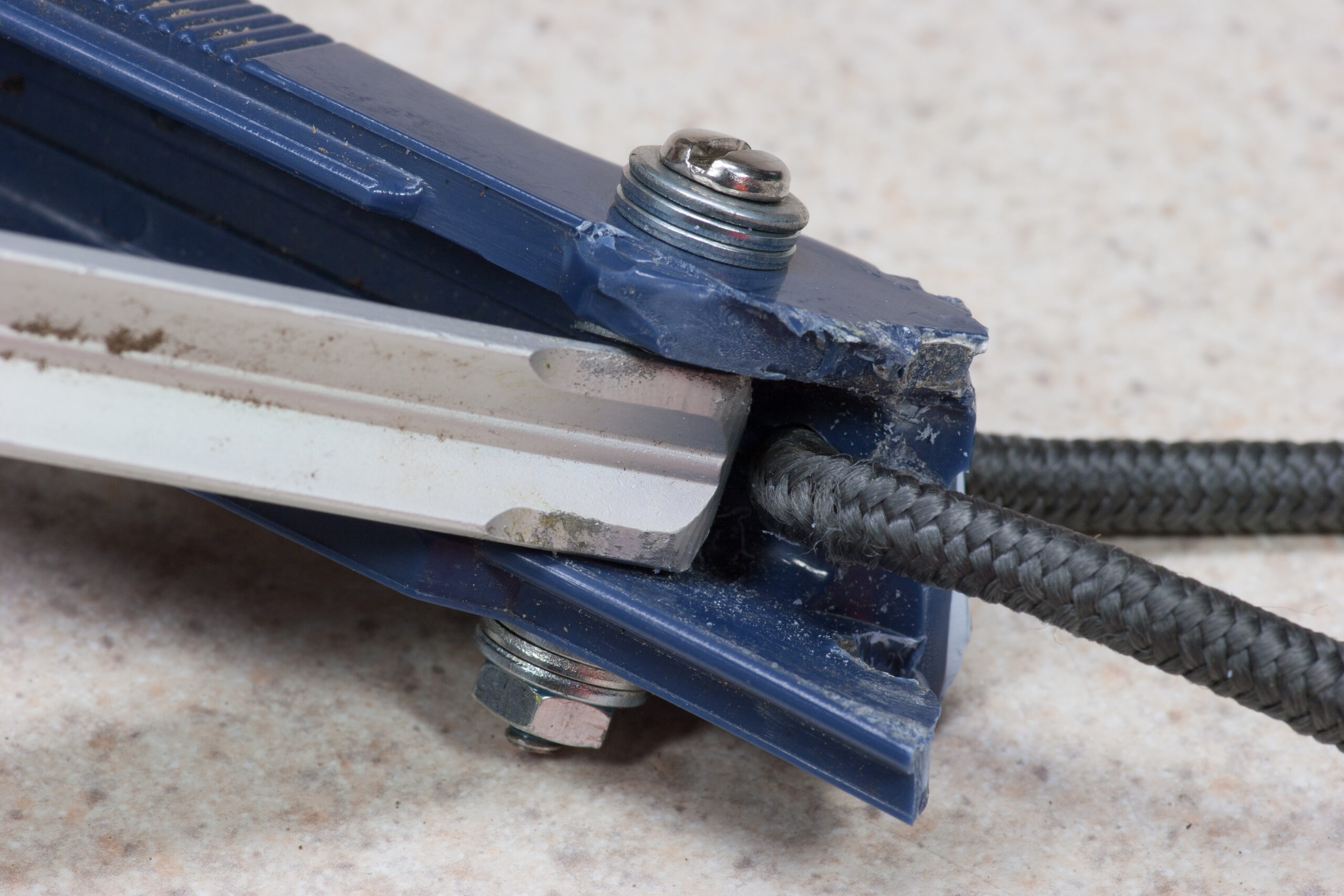
My friend Erik uses a heavy cable and a padlock to keep someone from walking away with the bikes on his car rack. He recently lost the keys to one of the racks but wanted to keep the cable, so he needed to cut the lock. Being an American Lock purchased from a locksmith we figured it’d be quite a task to get it apart, but since it ended up to be a Series A30 aluminum body lock it was much easier than we’d anticipated.

Using a heavy duty Hilti reciprocating saw he first tried to cut the hasp, but the hardened steel was only polished shiny by the saw blade. He then cut into the lock body and ended up severing the pin which holds the lock together. It was then easy to remove the core and use a screwdriver to actuate the lock mechanism, releasing the hasp. With a set of picks I was then able to disassemble the core and remove the pins and springs. A quick tug on a small brass ring with needle nose and the ball locks for the hasp were free and the lock was completely disassembled.

Leave a Comment

Addison Oaks MTB Route in OpenStreetMap

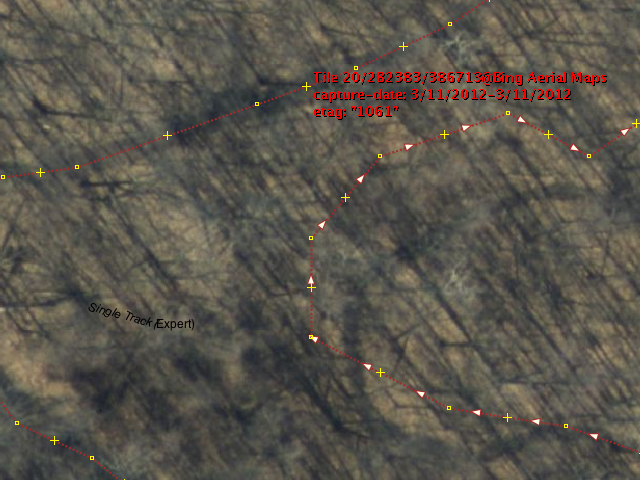
With the upload of OpenStreetMap changeset 12787189 I have finished adding all of the hiking and equestrian trails, intersection markers, and mile markers needed to draw a second generation version of CRAMBA’s Addison Oaks map. This data includes the still-under-construction connector trail which’ll create a new park entrance at Indian Lake and Lake George and provide a safe route to Addison Oaks East and Oakland Township’s Cranberry Lake Park. I also added all of the named routes through the park as found on the official park map, including the specific hiking, biking, and equestrian permissions and restrictions.

If all goes according to plan, the next version of the map will show the actual locations of the C and D trails, shared hike/bike/equestrian (on C only) areas in the west of the park while highlighting the MTB route. The mountain bike route (trail F) frequently crosses these trails and occasionally shares their route, so I want to better illustrate the interplay between them all. This next version will also be based on OpenStreetMap data, which beyond the benefits of being CC BY-SA licensed should make it easier to update and use for future planning.

The only things I have left to add to OpenStreetMap before it’ll be usable for drawing a complete map of the park are a few campground roads and the B loop, a relatively flat and straight hike/bike loop around the campground in the northeast of the park. I’ll probably record that route the next time I’m at the park.

2 Comments

External Intel 320 SSD

A couple weeks back, the Intel 320 SSD in my iMac failed, leaving the machine unbootable and the drive appearing as an 8MB volume. This drive was replaced with a new 256GB Crucial M4 SSD and the Intel drive was returned for warranty replacement.

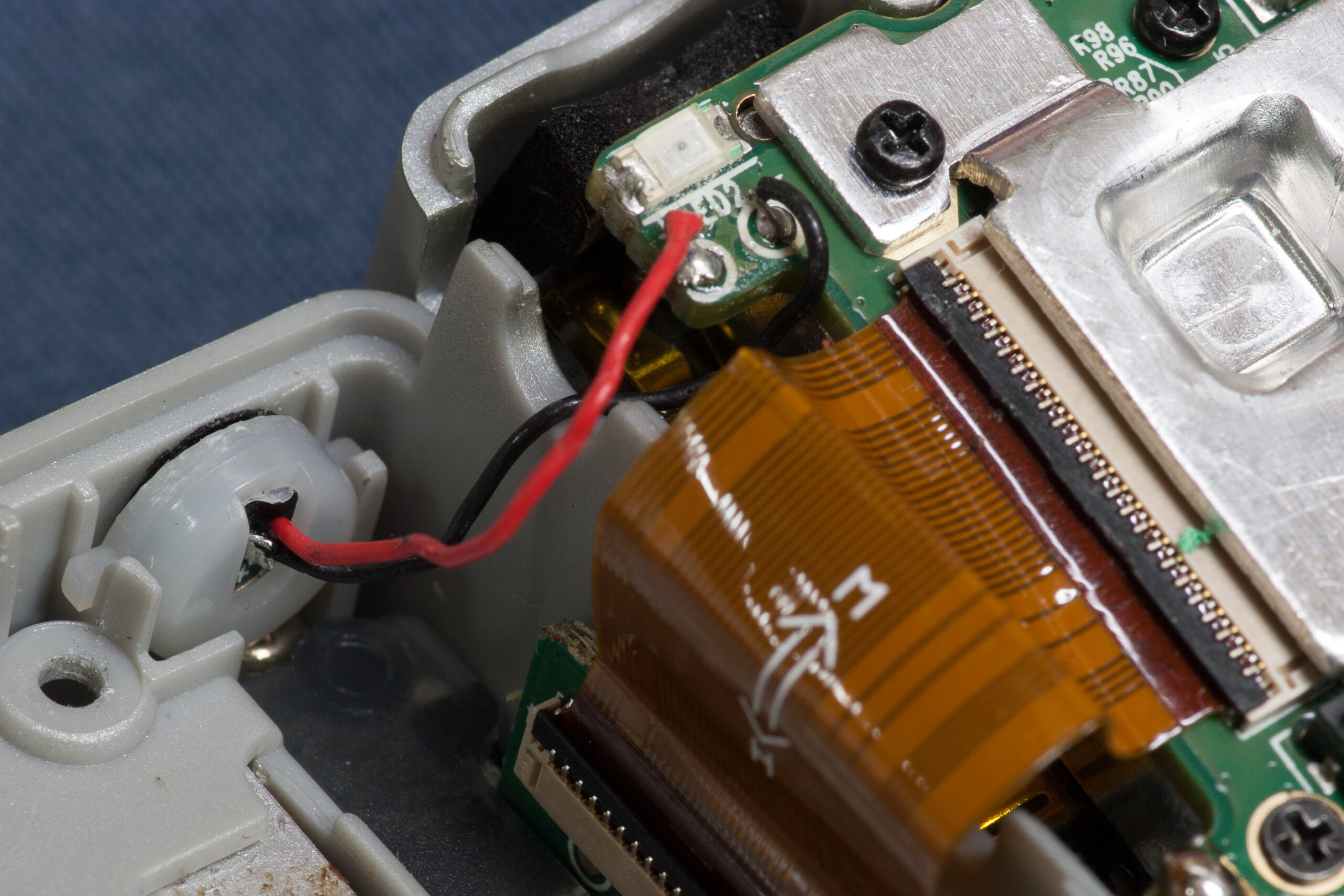
Having no immediate need for another SSD but not wanting to have this one laying around I decided to put it in a Macally PHR-S250UAB external enclosure and use it as another piece of fast storage on my Mac. While the installation went well I’m not quite happy with the performance. Despite being connected via FireWire 800 (IEEE 1394b-2002) couple of benchmark tools report only around 80 MB/sec read and 65 MB/sec write while the spinning piece of rust inside the computer reports something like 105 MB/sec read and 107 MB/sec write. It’ll be much lower latency than a spinning disk, but I’m not sure it’ll provide improvement over the internal disk, especially for things I was hoping to do with it like running VMs.

Maybe I’ll give it a try on my work laptop for VMs there, or maybe I’ll see if it’d work out well in Danielle’s Macbook Pro.

The photo above shows the external enclosure with an Intel-provided case sticker applied to the top in place of Macally’s branding. Except for the residual curved blue logo pieces at the end that didn’t fall outside of the cutoff area, I think this worked pretty well. Here is a photo of it all being assembled.

Leave a Comment

Résumé Updated for 2012

Updating one’s résumé can be quite a pain especially if done under duress, so I like to periodically update it so that a fairly fresh copy is readily available. This afternoon I put the finishing touches on the most updated version, one which takes into account some changes at work, stuff that I’ve done with CRAMBA and the MMBA, and a few other newly-acquired skills.

If you’d like to see a copy of my resume it can be found at nuxx.net/resume.

Leave a Comment

A Place For Stinky Clothes

With a few minutes to spare at lunch today I tackled a problem that has been bothering Danielle (and me, to some degree) for a while: stinky bike clothes. After riding I’ll hang up my sweaty clothes in either the bathroom or basement so that they can dry. This keeps them from becoming too pungent, but even after drying they still have a lingering funk until they are washed.

Since the smell in the bathroom is a bit unpleasant and Danielle has been spending a fair bit of time in the basement on some weekdays (it’s darker and cooler down there), another place to hang the clothes was needed. The solution? Hang them up in the garage.

By purchasing $7 worth of shelving brackets from Home Depot and using some PVC pipe and fasteners that I had sitting around home I had everything needed. Now there is a 58″ long rack in the garage, right above where our bikes are kept, perfect for hanging up clothes. It’s also large enough that I’ll probably be able to use it for drying clothes and blankets after they are washed.

I think I may add a end cap on where the Headsweats cap is hanging and add a pair of hooks for the cap and my hydration pack. This’ll keep these out of the way and give them a place to hang and dry as well.

1 Comment

Clinton River Park Trails MTB Map: Complete

This evening I wrapped up another mapping project; this one for Clinton River Park Trails in Sterling Heights. After getting a nice workflow nailed down this map was pretty easy to make, taking only around 30 hours to get it complete.

I can see a couple small changes coming down the line such as the addition of sponsor logos and a few tweaks as trail development continues, but for now it should be pretty set.

Click here if you’d like to view a copy of this map: CRAMBA_CRPT_MTB_Trail_Map_2012-Jul-10.pdf latest.pdf

Leave a Comment

Excited Hefeweizen

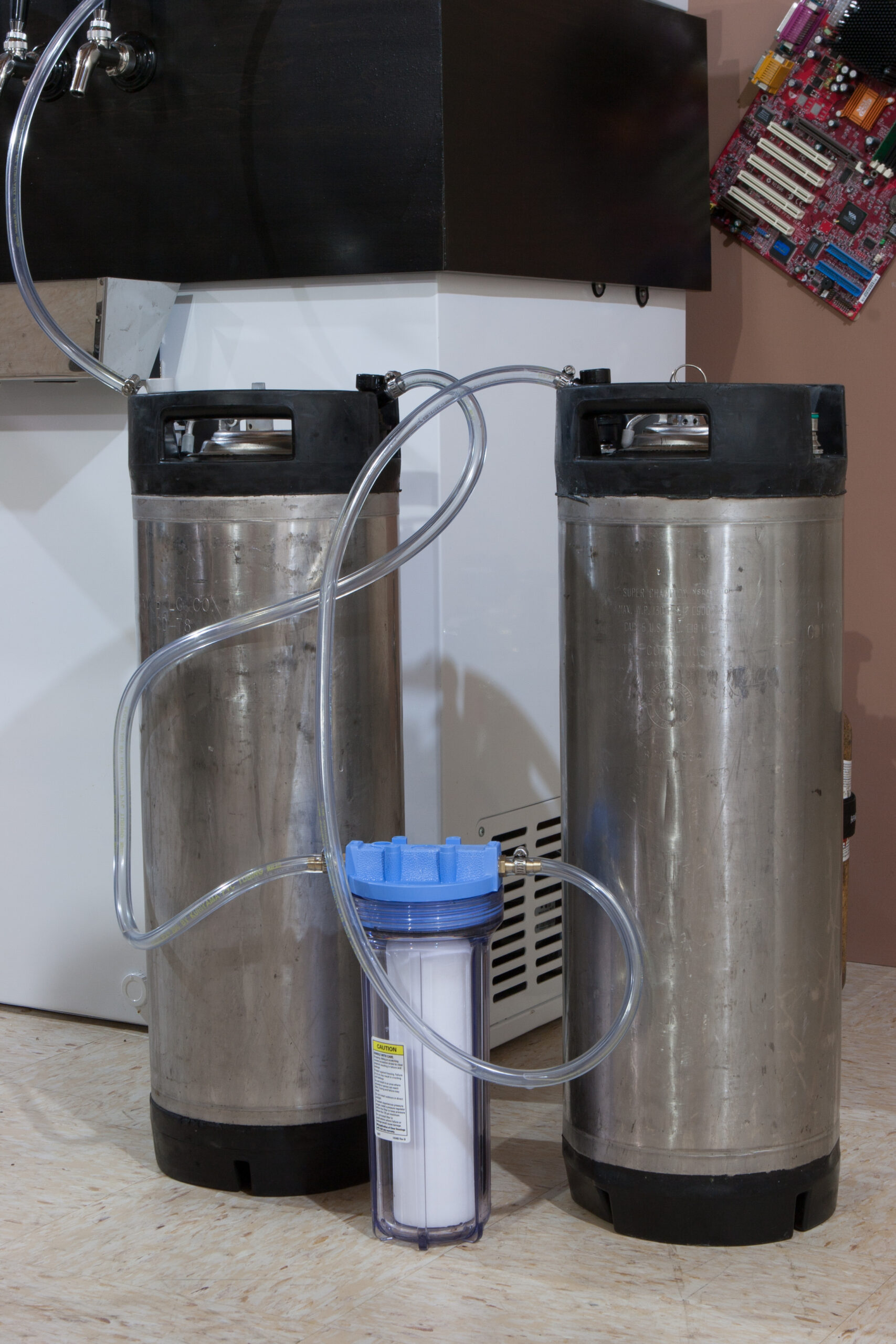
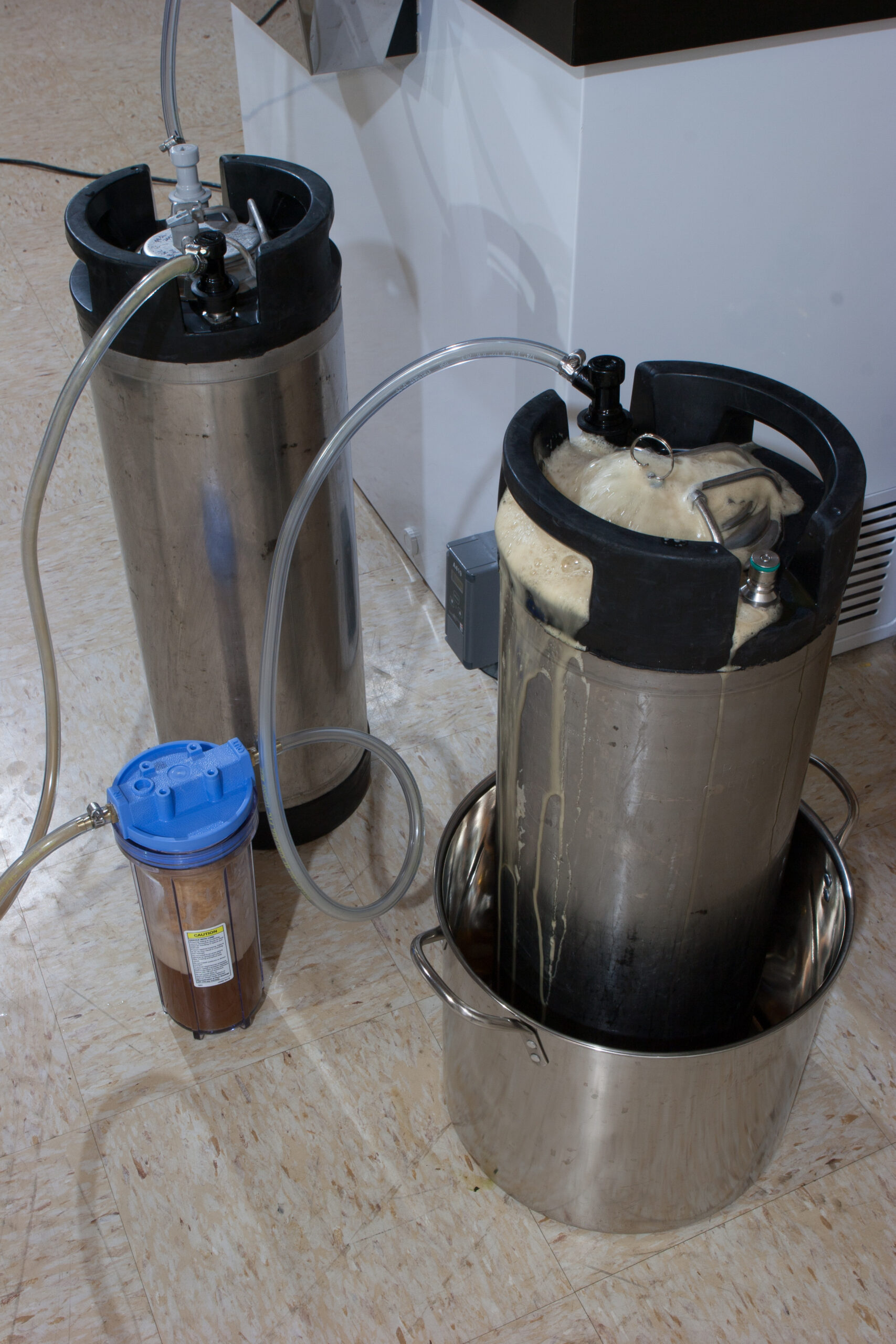
After work yesterday I brewed a very simple hefeweizen and put it to ferment. This morning I found that it had blown out of the airlock, even though it’s not a particularly thick beer. Nor was the yeast pitched at a particularly high temperature (~75°F), so the yeast shouldn’t have gotten too excited.

The Activator pack did inflate quite quickly yesterday so maybe the yeast is particularly strong, but I still wouldn’t have expected this to happen. A blowoff tube has since been fitted so everything should be fine. Now I just need to wait for it to ferment.

The recipe I’m using is as follows, as told to me by Andy, the owner of Cap N Cork Home Brewing Supply:

· Six Pounds of Wheat Dried Malt Extract
· One Ounce of German Hallertau Hop Pellets (@ 60 Minutes)
· Wyeast 3056 Bavarian Wheat Blend Yeast

Ferment for ~11 days in primary (until it’s done, plus a few more days), transfer directly to the keg, carbonate, and drink fresh.

I’ve got pretty high hopes for this beer. Much of what I’ve brewed lately has been reasonably complex (for extract brewing) so I’d like to have some simple, easier recipes like these tested and available.

Leave a Comment

Improvised Lock Picking Tools

Walking out of the house to the Wednesday Night Stony Creek Ride I realized that I didn’t have my keys seconds after pulling the locked door shut behind me. After running through a number of ideas (most of which involved calling for help and missing the group ride) I ended up fashioning a half-diamond pick from a cable tie, then using it along with and using a plastic sword toothpick (as a tension wrench) to pick one of the house locks and get back inside.

I have a set of lock picks and while they were (unfortunately) locked in the house with the keys, experience playing with them in the past let these tools be used successfully. The white nylon pick was quite flexible and too thick to easily use, but I was still able to use it to rake the pins and open the lock in a couple of minutes. I then made it to the group ride on time.

This shows just how easy it is to pick the cheap house locks from Schlage, Kwikset, and the like.

1 Comment