nuxx.net
Making, baking, and (un-)breaking things in Southeast Michigan.

Category making things

Problem-B-Gone!

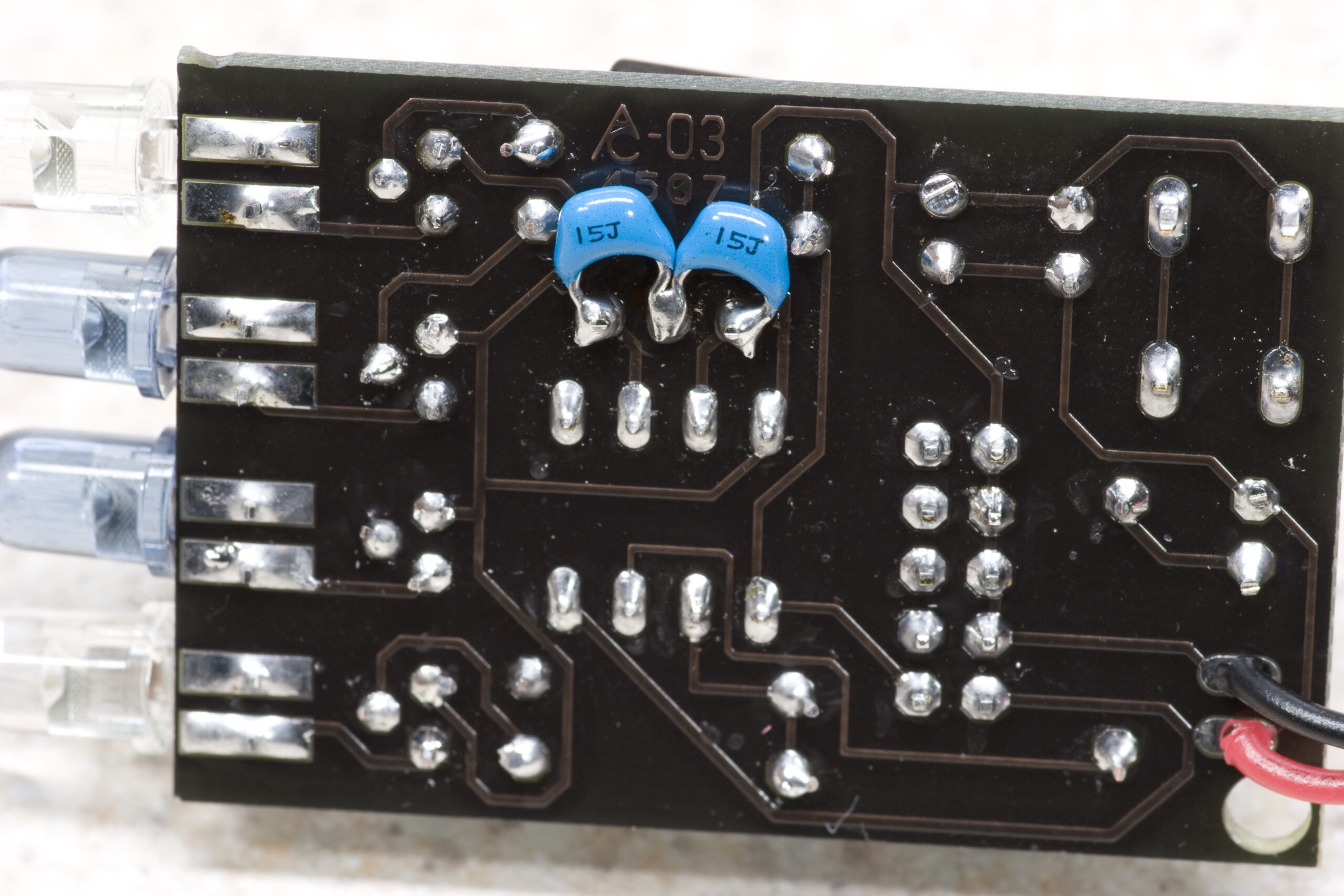
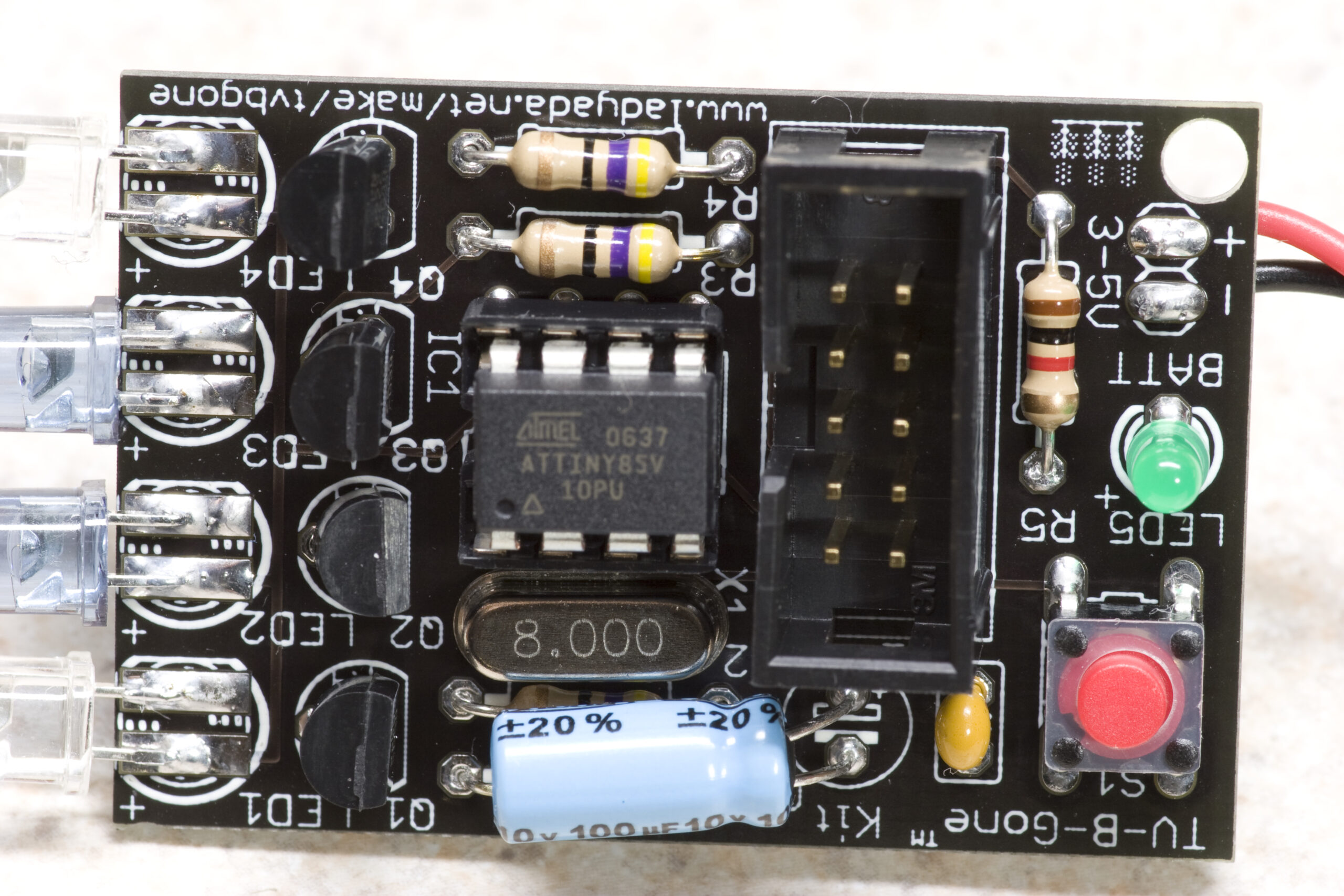
15pF caps cobbled into Ben’s TV-B-Gone
(Click for more photos…)

So, that TV-B-Gone problem from last night is sorted. Just after coming in from shoveling snow I remembered that I had an 8MHz crystal hanging out on the EasyPIC 4 I acquired about a year ago (photo gallery retired). I just dropped the crystal on the board, squeezed in some 15pF caps on the back of the board (not sure if these are the right value, but they should be close enough), and tested it. As expected, it was now working. Also, because we used no-clean flux there wasn’t anything more to clean off. That was quite nice.

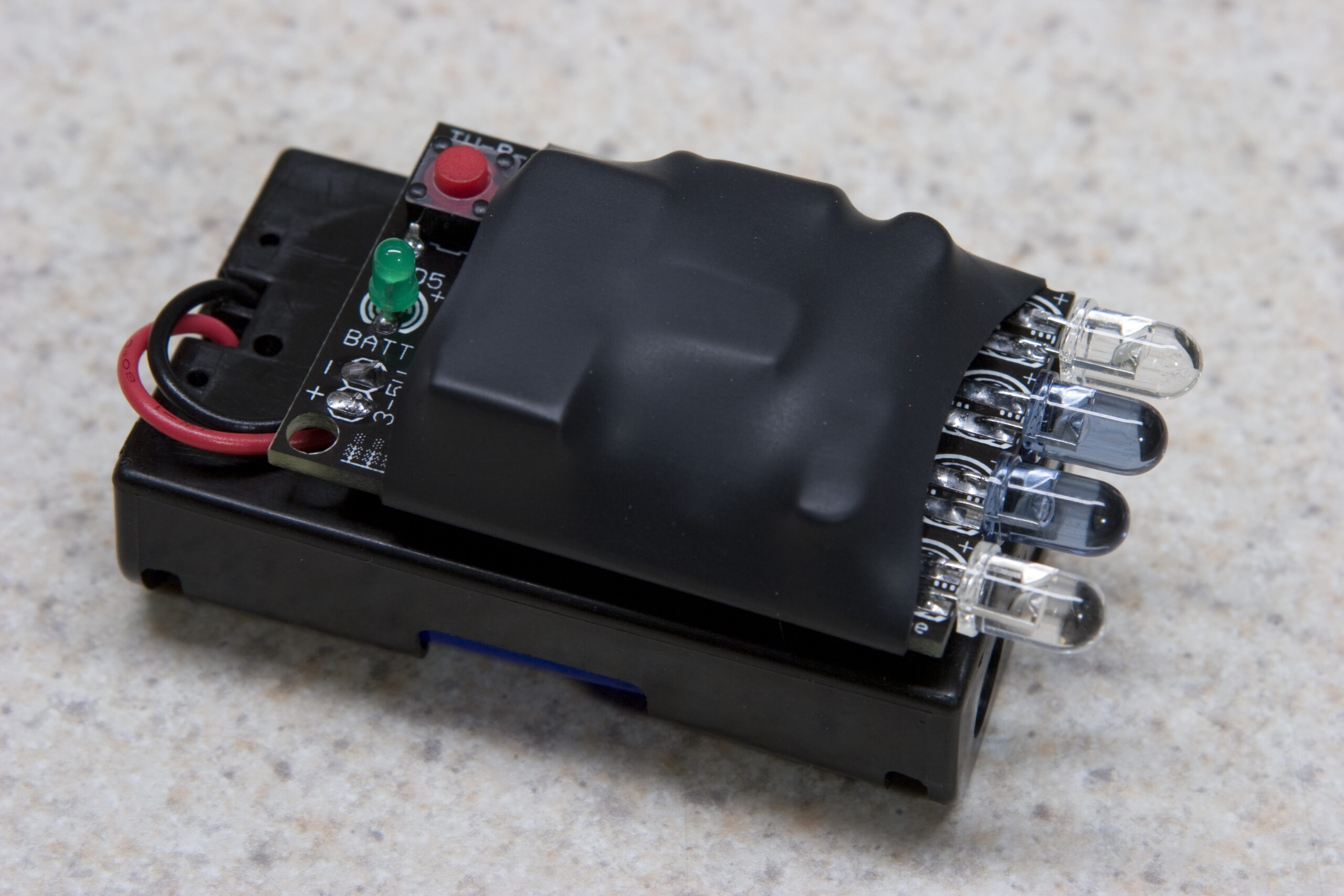
To make it a little more pocket-friendly I put some 1″ Harbor Freight Special heatshrink tubing around the main part of the body. This makes it nice and smooth, and parts are less likely to be accidently torn off. (Danielle accidently knocked one of the transistors off… Oops… This will get replaced next time I order something from Mouser or Digi-Key.)

Anyway, it’s working good now. Now it just has to get back to Lapeer and in ‘s possession so he can use it on Christmas.

This is normally handled by the condo association, but because of the heavy snowfall I decided to do my porch and in front of my garage myself, instead of waiting for the snow clearing company to get to it.

electronicsmaking thingsmoved from livejournal

Rez

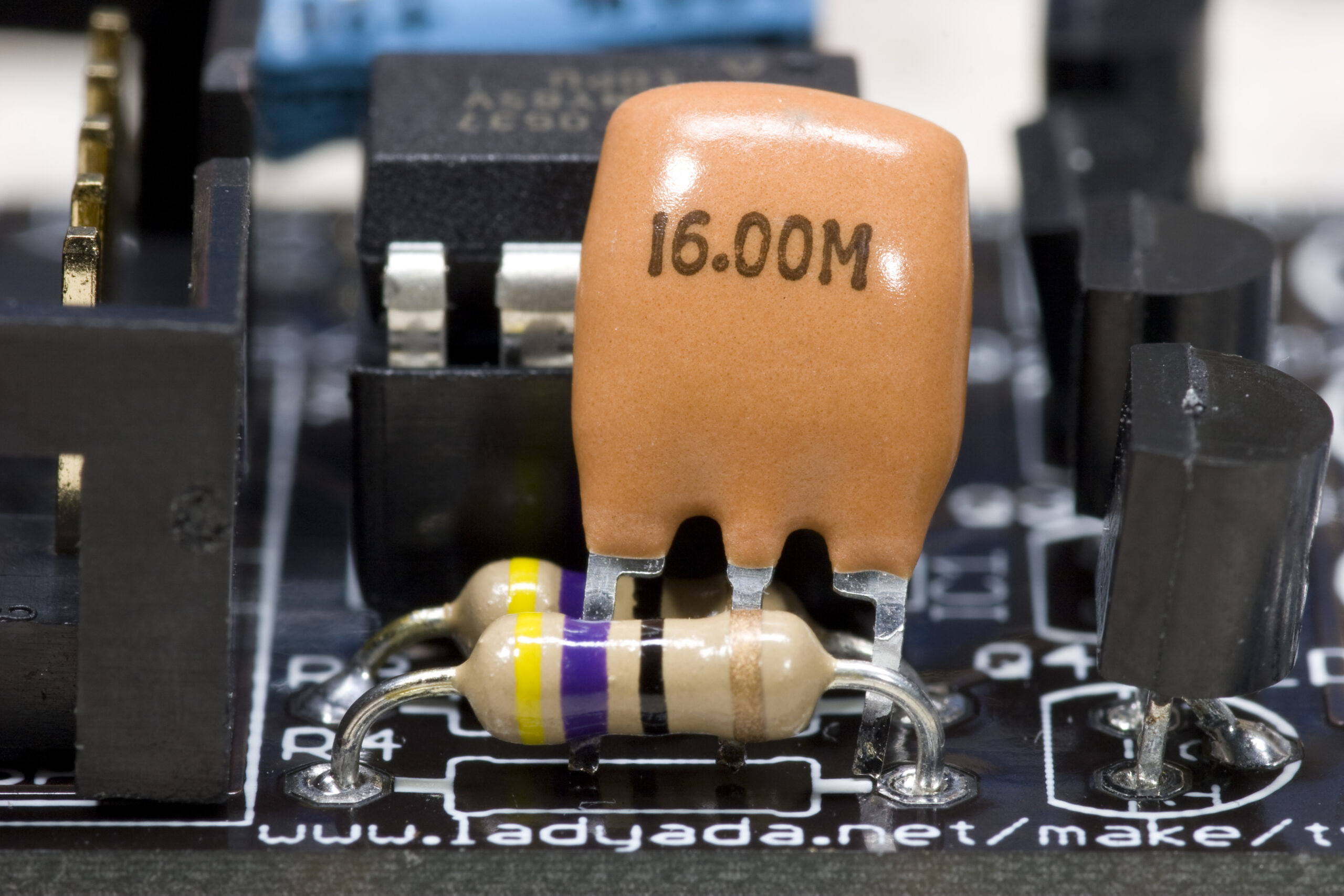
Wrong resonator shipped with TV-B-Gone kit.Wrong Resonator with TV-B-Gone

came over tonight to assemble one of adafruit Industries TV-B-Gone kits, his first electronics kit. While he did a great job soldering things, it doesn’t work. Why? This one shipped with the 16MHz resonator seen above, instead of the spec’d 8MHz.

At first I thought this might be okay, as a new v1.1 of the kit was released, and I figured that maybe the BOM hadn’t been updated. However, after things didn’t work, I did a bit more digging and realized that it’s just the wrong part. The microcontroller won’t even run at that 16MHz speed, the firmware says that 8MHz is required, etc.

That’s now a total of three kits I’ve ordered from there, two of which had missing parts. I hope I’m the only customer with these issues.

electronicsmaking thingsmoved from livejournal

IC Sorting

Sorted ICs
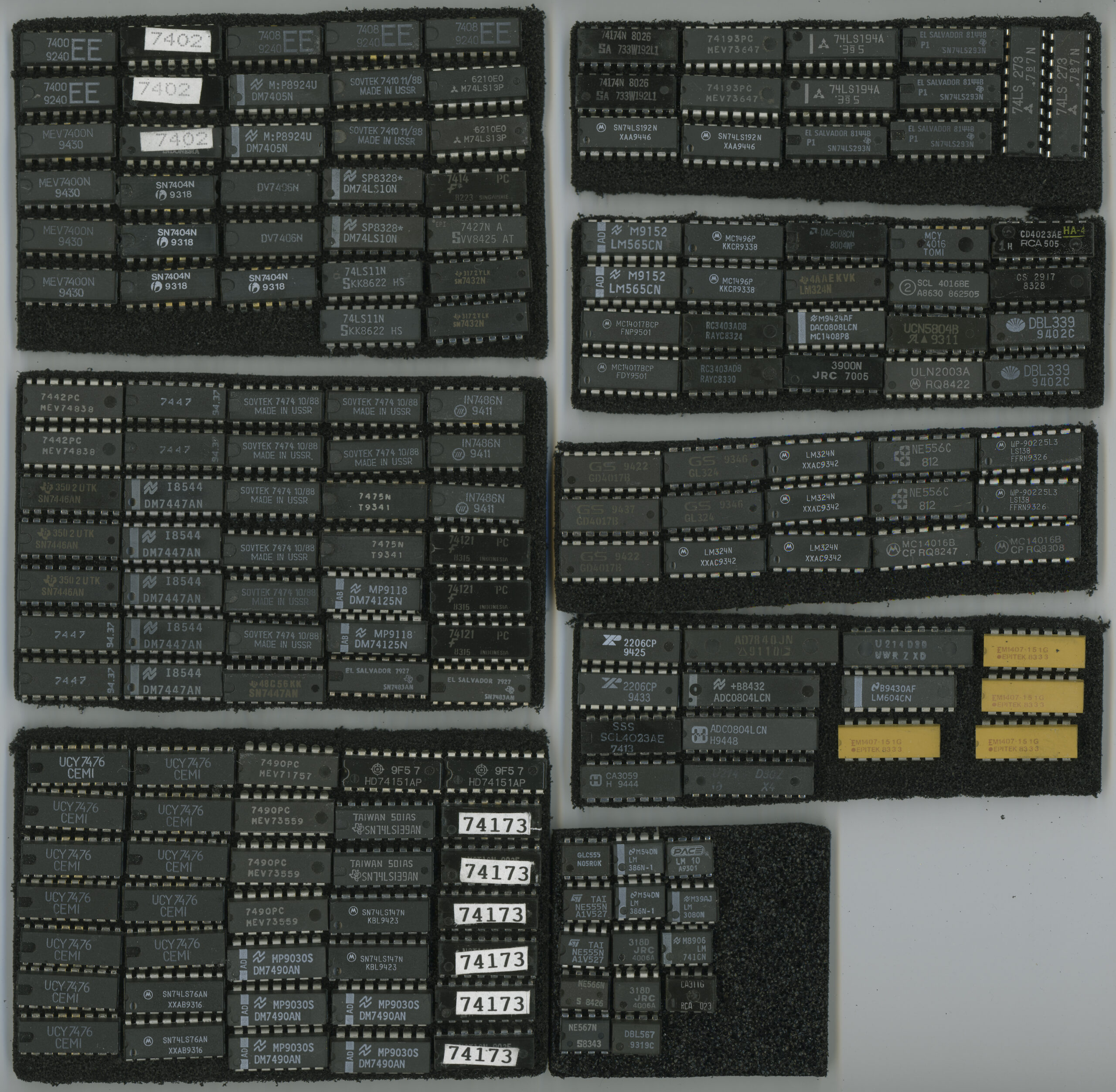
(Click for higher resolution image…)

Remember the SOVTEK ICs and random other electronics I received as part of an ITT toolbox from a coworker?

Well, tonight I decided to go through and sort through the ICs, tossing out the noticeably physically damaged ones, and cataloging the rest. That scan up above shows all of the ICs, about half 74xx series, on foam. If you’d like to see a list of what is there, I put it all in Google Documents and shared it here. (And yes, Google Documents works pretty darn well.)

The yellow things are resistor arrays / networks, and those aren’t in the catalog.

Maybe now I can get to putting together that synth-like thing, or something else nifty. (Perhaps a LED clock or something…)

electronicsmaking thingsmoved from livejournal

Motherboard + RAM

Do any of you happen to have an old motherboard + RAM + CPU which you don’t need any more?

I need something reasonably fast, Intel or AMD, with PCI slots. It is going to go in my MAME Cabinet and hold an AudioPCI running the fabulous DOS driver (thanks, !) and some flavor of MAME.

Really, I’m not too picky as to what it all is, so long as its reasonably quick and free. :D

computersmaking thingsmoved from livejournal

RS232 to Eaton Leonard Interface, 24V Version, First Draft

Remember those RS232 to Eaton Leonard adapters I made a few months back? Well, there’s a need for me to develop a version which can run from 24VDC, so I did. The switching power supply mentioned a few days back is used in this (you can see its footprint there on the left), with the rest being the same as the other board.

I had to remove the reverse voltage protection (it just won’t really work with the high potential input voltage this needs), I’m using a resistor network instead of discreet resistors to make assembly easier, selected different LEDs (ones that use slightly higher current to go with the 120R network), and laid out the whole board again.

That picture up above is missing the documentation and logo layers, just to obfuscate things a bit. I may also tweak a little bit of the design, but I think I’m happy with it. It’s now 3″ x 3″ instead of the original 3″ x 2″, but that extra three square inches is needed for the power supply. Yes, there’s a bit of blank space still, but I don’t think it’s enough to make shrinking the board worthwhile. The cost difference between the previous PCBs and these is pretty much nonexistant, if I’m remembering the quote right.

I think I’m going to keep compacting the board. Hmm…

UPDATE: I just shaved a square inch off the board by bringing the top in 1/4″. LEDs were compacted a bit, logo made smaller, L2 moved, and more.

electronicsmaking thingsmoved from livejournal

Switching Power Supply

Well, the prototype power 5V switching power supply that I cobbled together seems to be working. Up there you can see it powering the first nuxx Audio Input Switch, just to give it some sort of load to work on.

Here is a photo of the bottom of it. It’s clearly hacked together, just sort of built up on the board so I could have solder connections and reasonably short wires. When I tried to breadboard it things didn’t work quite right, which I blame on switching power supplies being touchy about long rows of bare wire.

It’s pretty much a reference implementation (some variances in parts) and it produces what appears to be nice, clean power. I can’t see any noise on my scope. Granted, my scope is pretty crappy, but it does seem to show some noise when it exists. (I can’t afford a new scope yet…)

I’m happy with how it is working thus far. I need to put a bit more load on it, but that’ll be done over one of the next random couple of days. For now I can say that it had no problem giving me an even 5.000 VDC while powering the nAIS above and being fed 6.073 VDC. If I cranked the input up to 35.93 VDC (the highest I can get my benchtop power supply) the power supply was pushing out 5.074 VDC. Pretty good, I think.

electronicsmaking thingsmoved from livejournal

TV-B-Gone

Danielle’s TV-B-Gone
(Click for full res photo…)

Tonight I helped Danielle put together her first electronics kit, one of Limor Fried’s open-source TV-B-Gone kits. She’s soldered a bunch of stuff before from when she briefly went to Kettering, but this is the first functional kit. And, of course, it works!

Well, it at least turns off my TV almost instantly… I imagine that it’ll work pretty well on whatever other ones. At $20 it’s a good, and useful first kit… Imagine actually being able to turn off all those annoying TVs in places like the doctor’s office waiting room, school hallways, and (hopefully) the advertising things on gas pumps.

electronicsmaking thingsmoved from livejournal

Tooth Tunes Musical Toothbrush Dissection

Transducer in the head of a Toothy Tunes Musical Toothbrush
(Click for more photos (photo gallery retired)…)

As mentioned earlier I had hoped to stop on the way home and pick up a Tooth Tunes Musical Toothbrush. Well, I did. For US$8.99 I grabbed a Tooth Tunes which plays Queen’s We Will Rock You. While I can’t stand that song, it was one of the few recognizable songs on the available brushes, with most of the others being tweenpop.

After eating dinner and playing a bit of E4 I decided to dig into the toothbrush. It definitely wasn’t designed to be easily taken apart, with a metal rivet holding the O-ring sealed bottom in place, and the solid plastic pieces ultrasonically welded together. This meant that most of my disassembly was pretty destructive, but I was able to keep all the electronics inside intact and poke around with them a bit.

The only real problem I ran into is that the IC which holds the audio (and can presumably be reprogrammed) is potted, so it’ll be very difficult to get to. The transducer itself is pretty nifty, and pressing it against my teeth or head or the workbench made the audio quite audible. It doesn’t sound too great, but it at least works.

Anyway, if you’d like to see photos which have better descriptions than the little glossed-over stuff above, just take a look here: Tooth Tunes Musical Toothbrush Dissection (photo gallery retired)

electronicsmaking thingsmoved from livejournal

PICkit 2 and ZIF Socket

PICkit 2, ZIF socket from ICD2 clone, and cobbled together cable.

Well, it’s no gang programmer, but with that cable being reasonably solid I should have no problem using that setup there to program all the PICs for the forthcoming nuxx Audio Input Switch group buy. See, I’ll be offering up PCBs and programmed PICs to whoever wants them (and reserves them within a limited window) at cost as a favor to the DIY audio stuffs community and I want programming the PICs to go as easy as possible.

When I got home from work I cobbled together this cable from a spare 1×6 .100″ header, some 2 place Molex KK connectors, and an old piece of CAT5. With the PICkit 2 software now featuring a function to program (and verify) the part when the button on the programmer is pressed, so I should now be able to just drop a chip in, hit the button, wait for the box on the computer to turn green, then do it again. Even doing 100 parts (if that many people are actually interested) shouldn’t take very long at all. Yay!

electronicsmaking thingsmoved from livejournal