Press "Enter" to skip to content

Category: around the house

Kegged Beer Cooler Ingress Fittings

Meijer is great for when it’s 10pm and the next step of your project requires Great Stuff spray foam insulation.

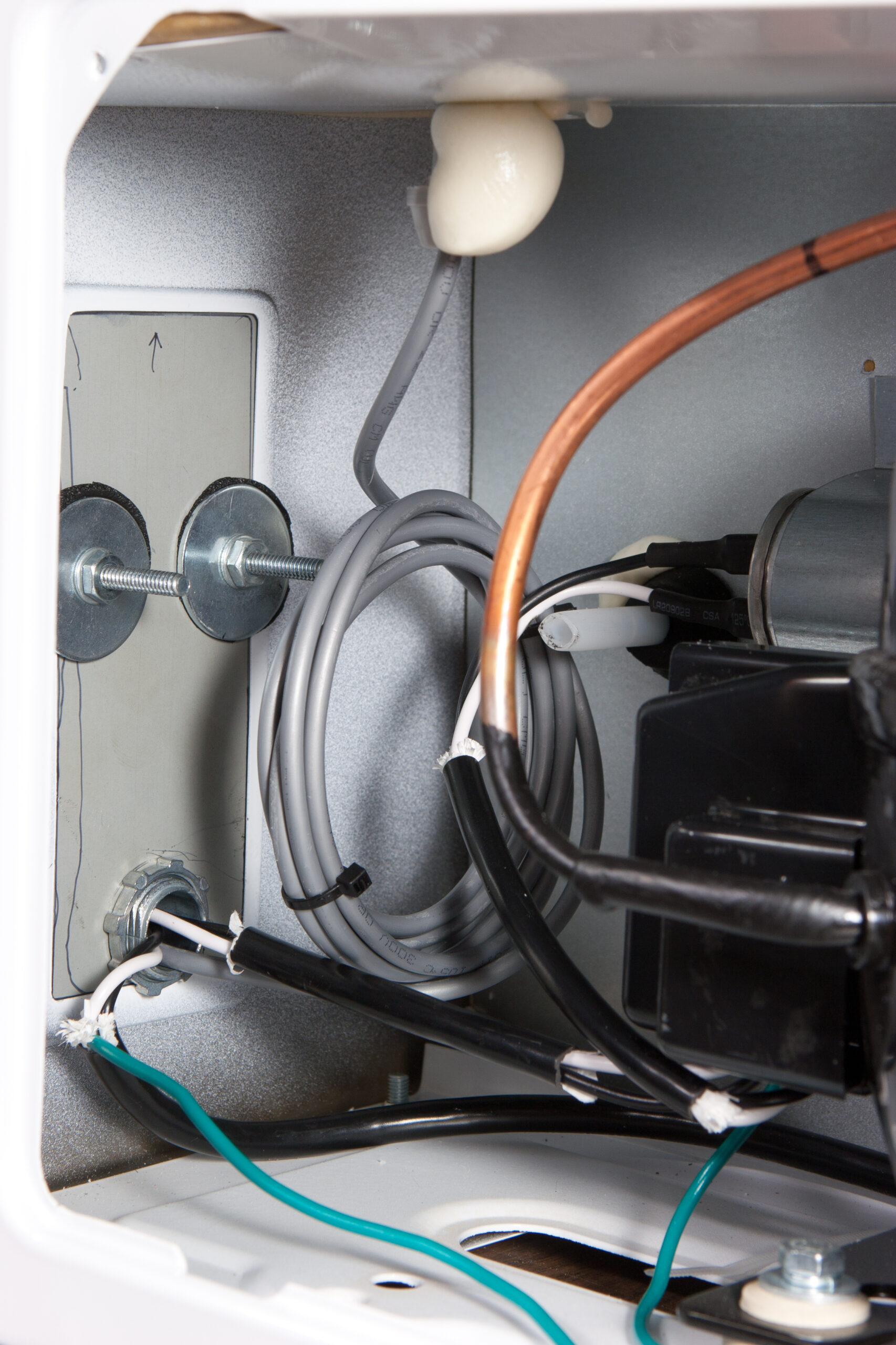
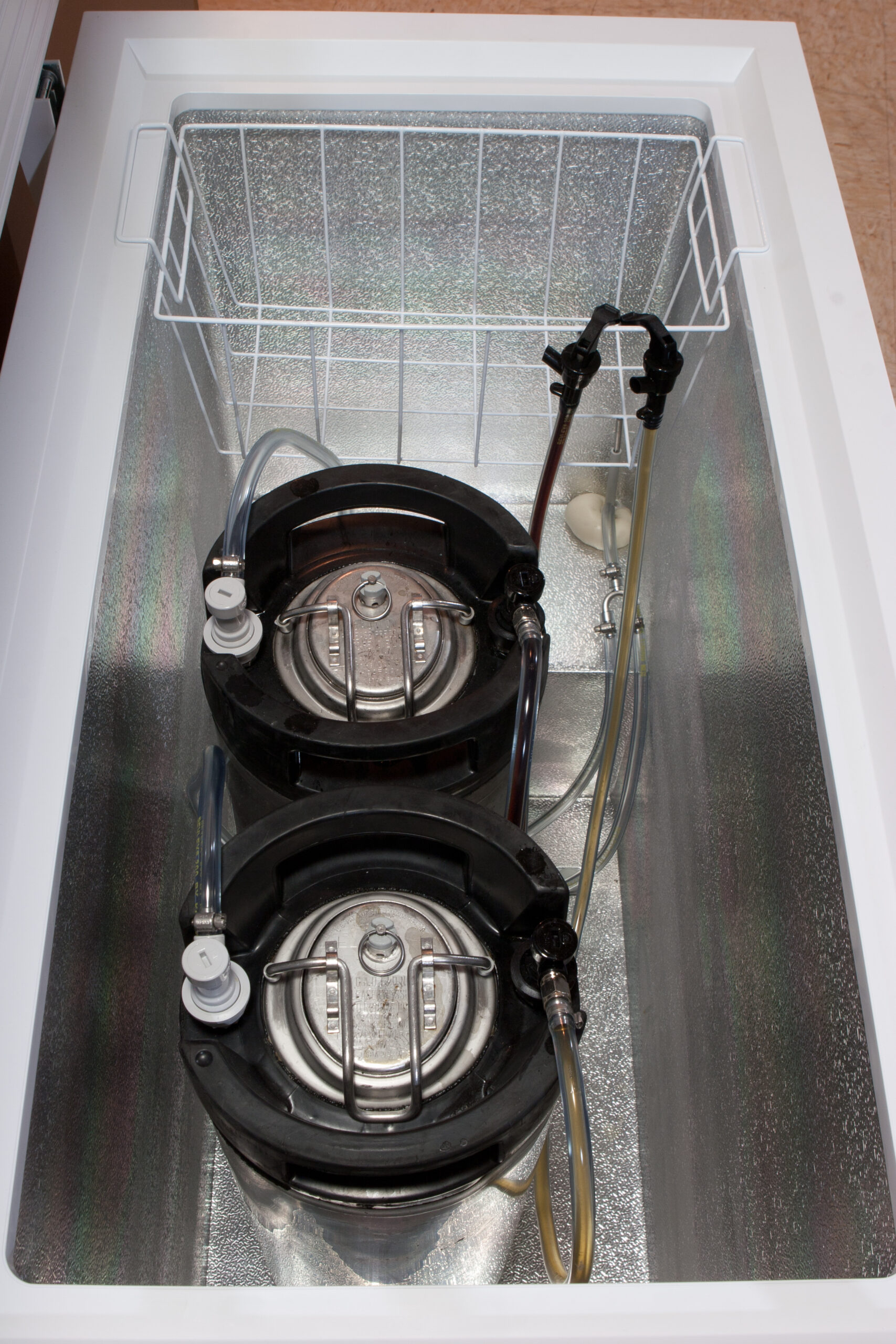
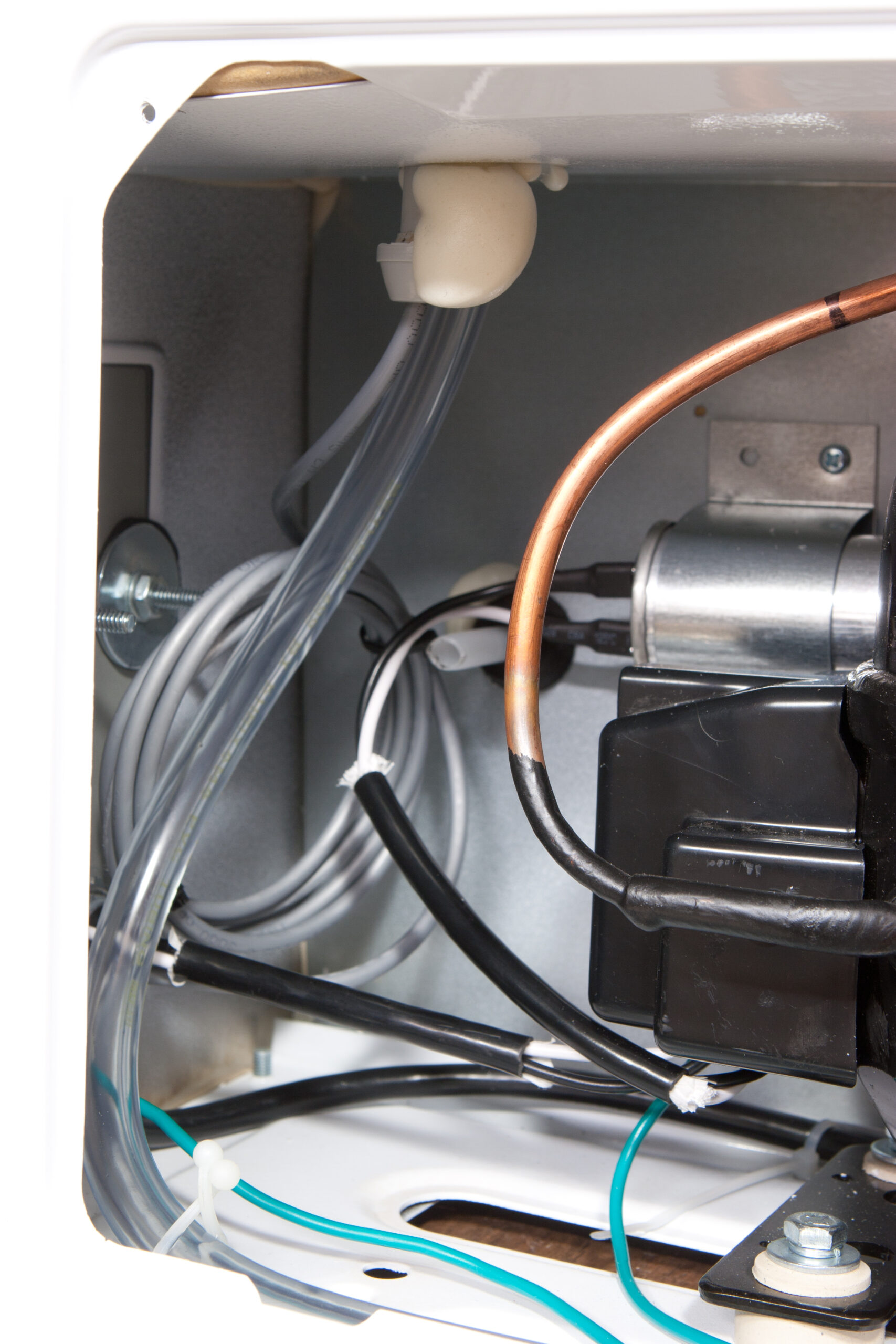
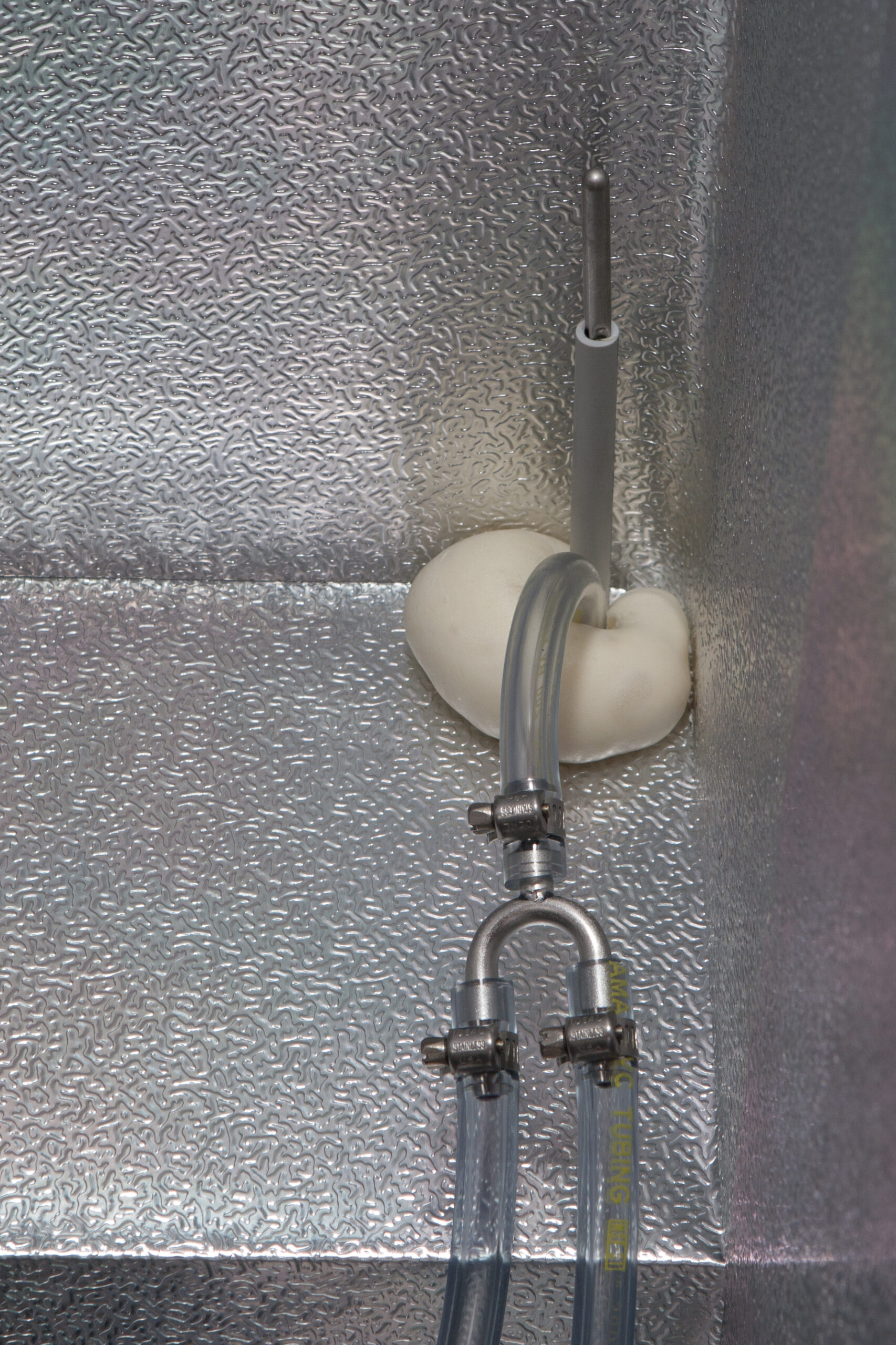
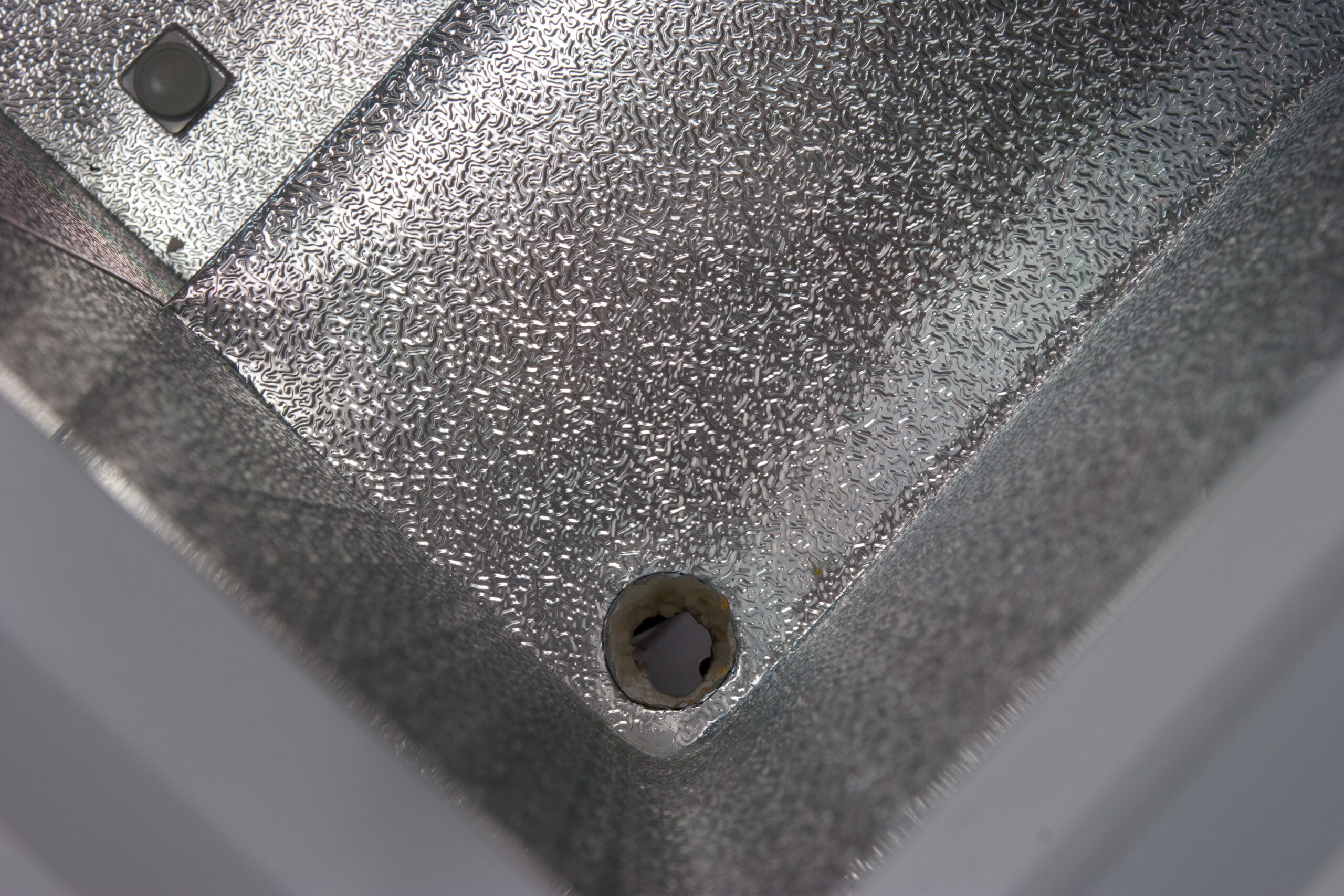
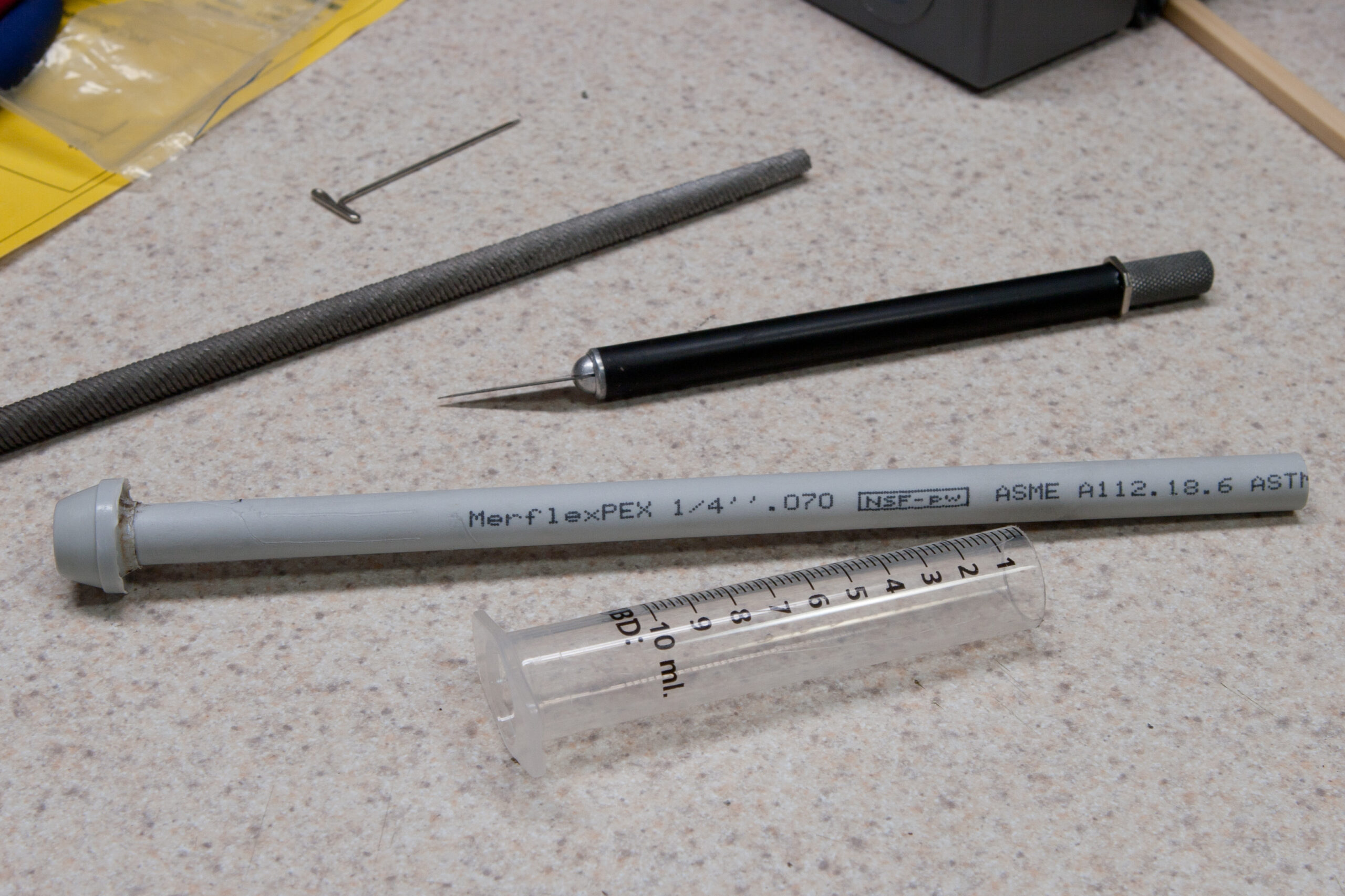
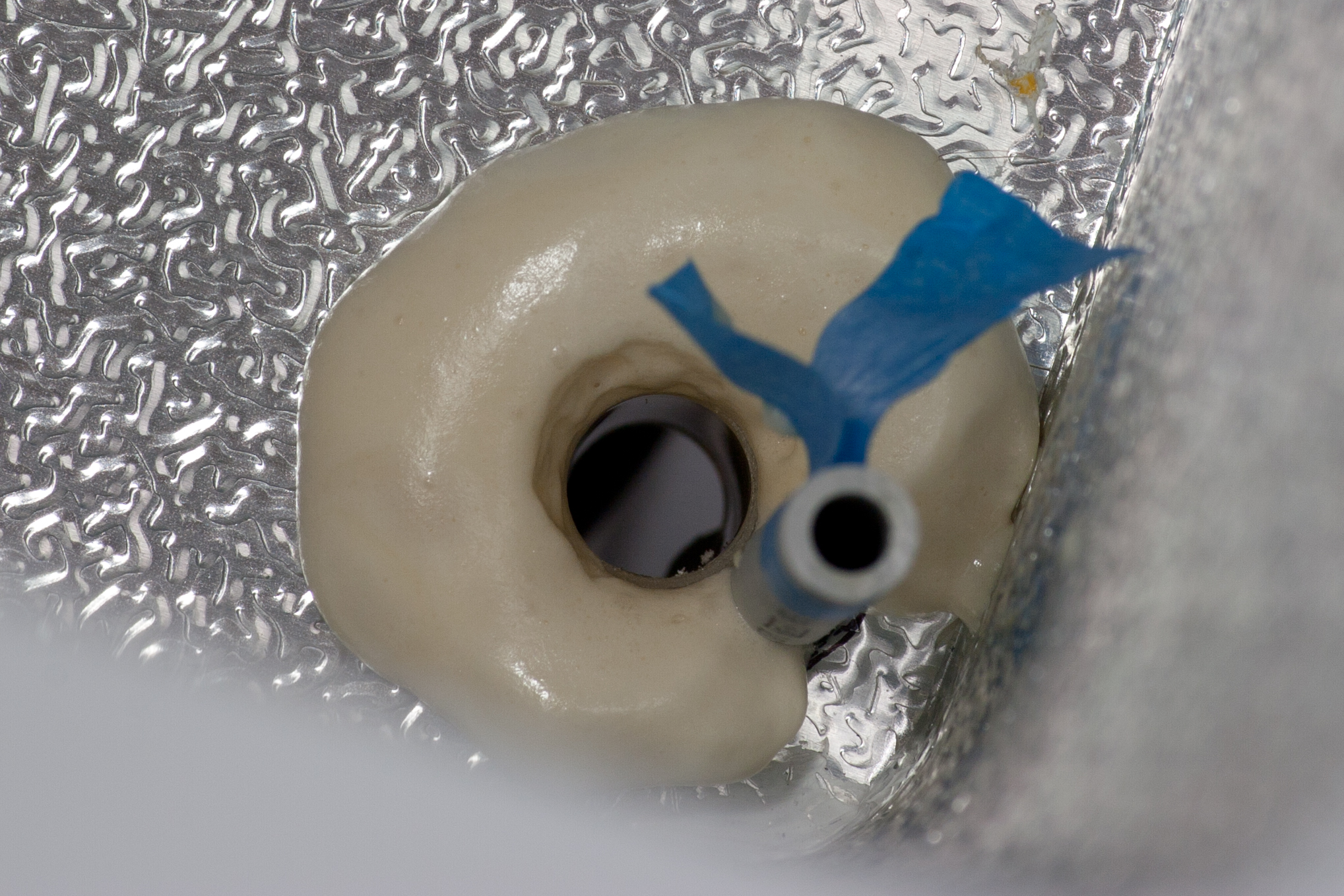
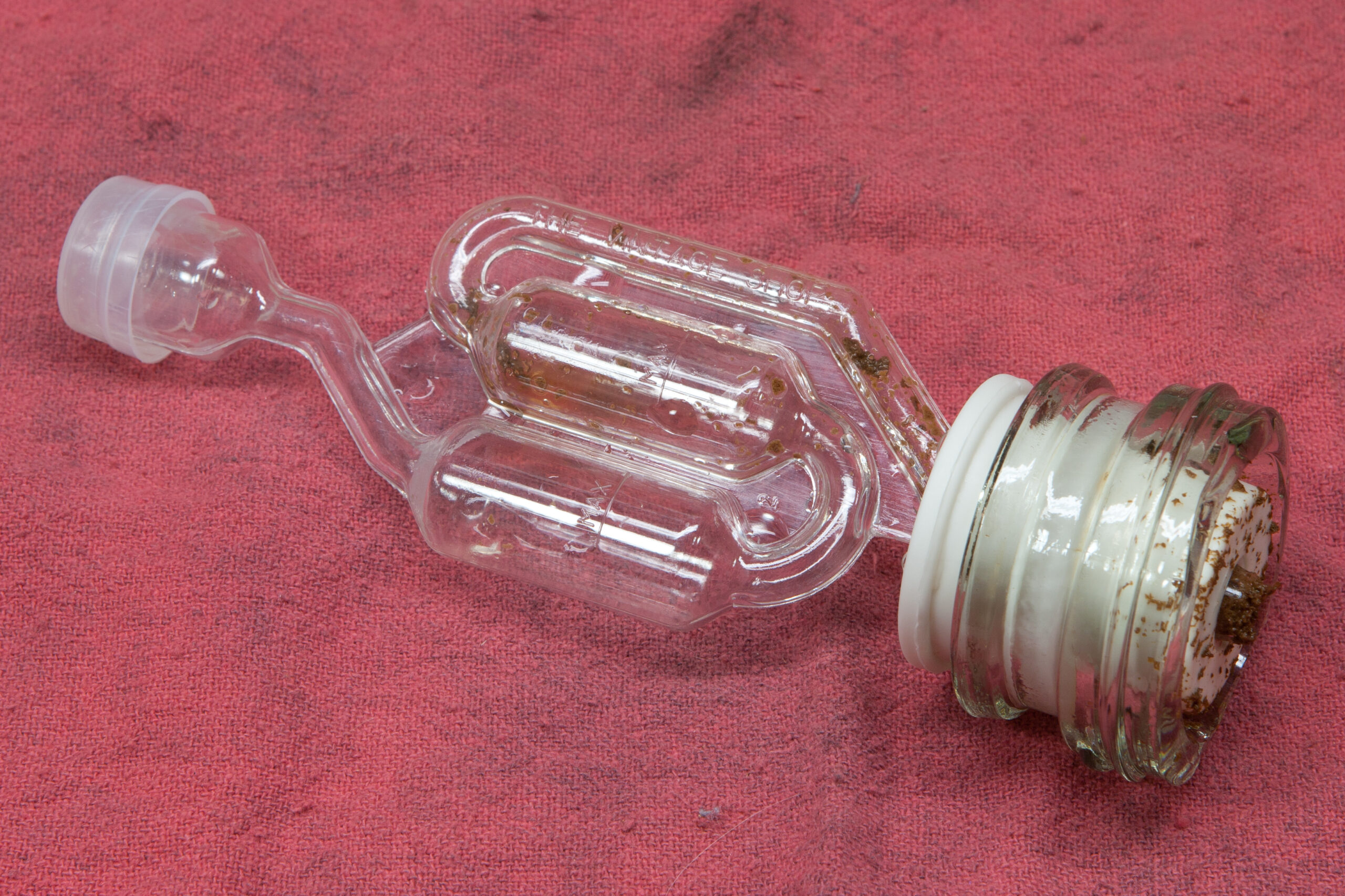
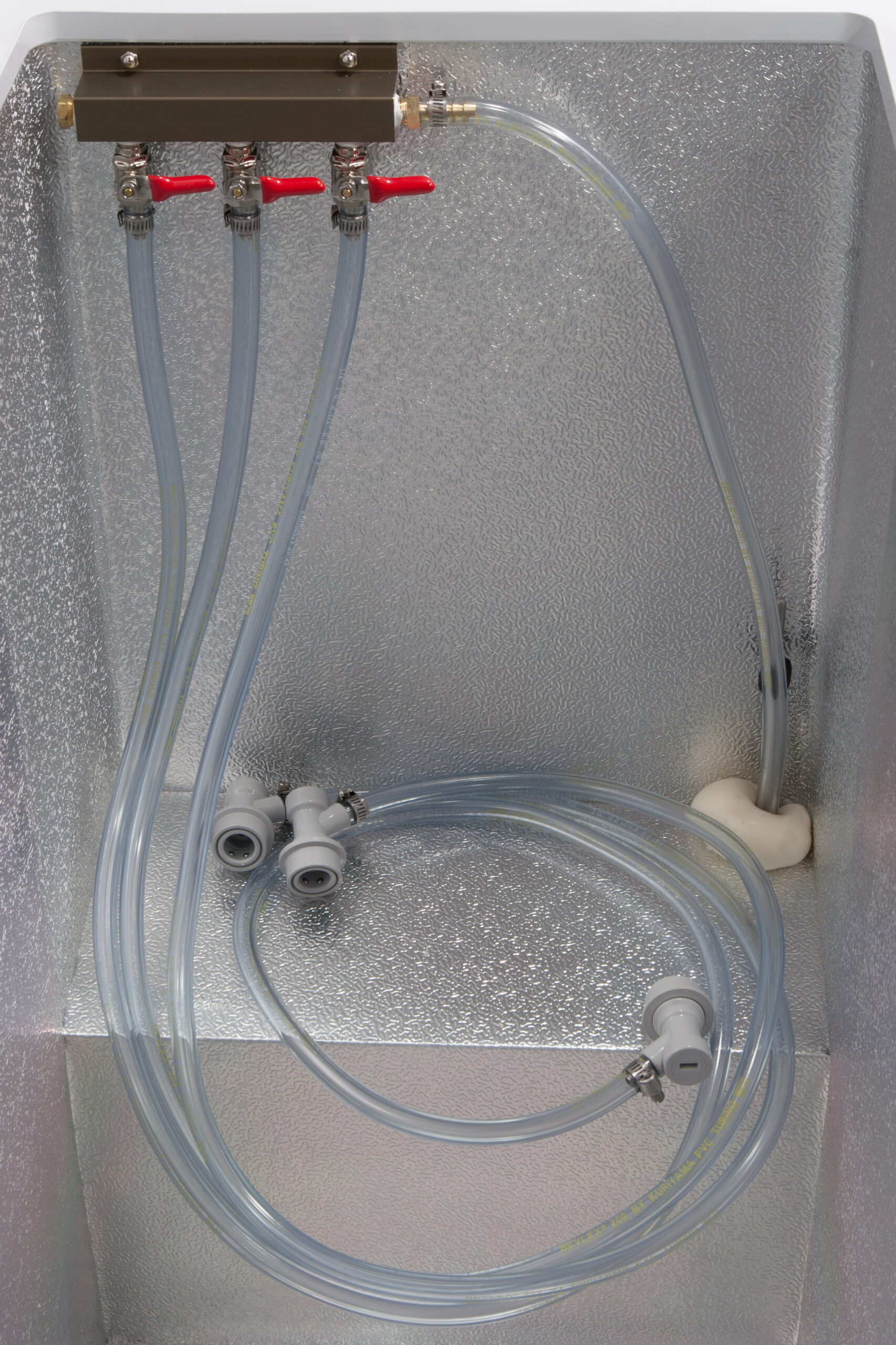
Continuing the project to turn a chest freezer into a temperature controlled cooler for home-brewed beer (previously) I made a hole inside the cabinet (picture) the size of a film canister without hitting any of the gas lines. This was done by marking a hole, then carefully tearing away the aluminum liner with pliers, then digging through the foam with a screwdriver before finishing off the hole with a drill and file. Looking around the basement I came across some plastic pieces that were perfect for the gas and temperature probe ingress fittings, fashioned out of a 10cc syringe and a used bathroom water supply line that I’d once had (incorrectly) fitted to my to my toilet (picture).

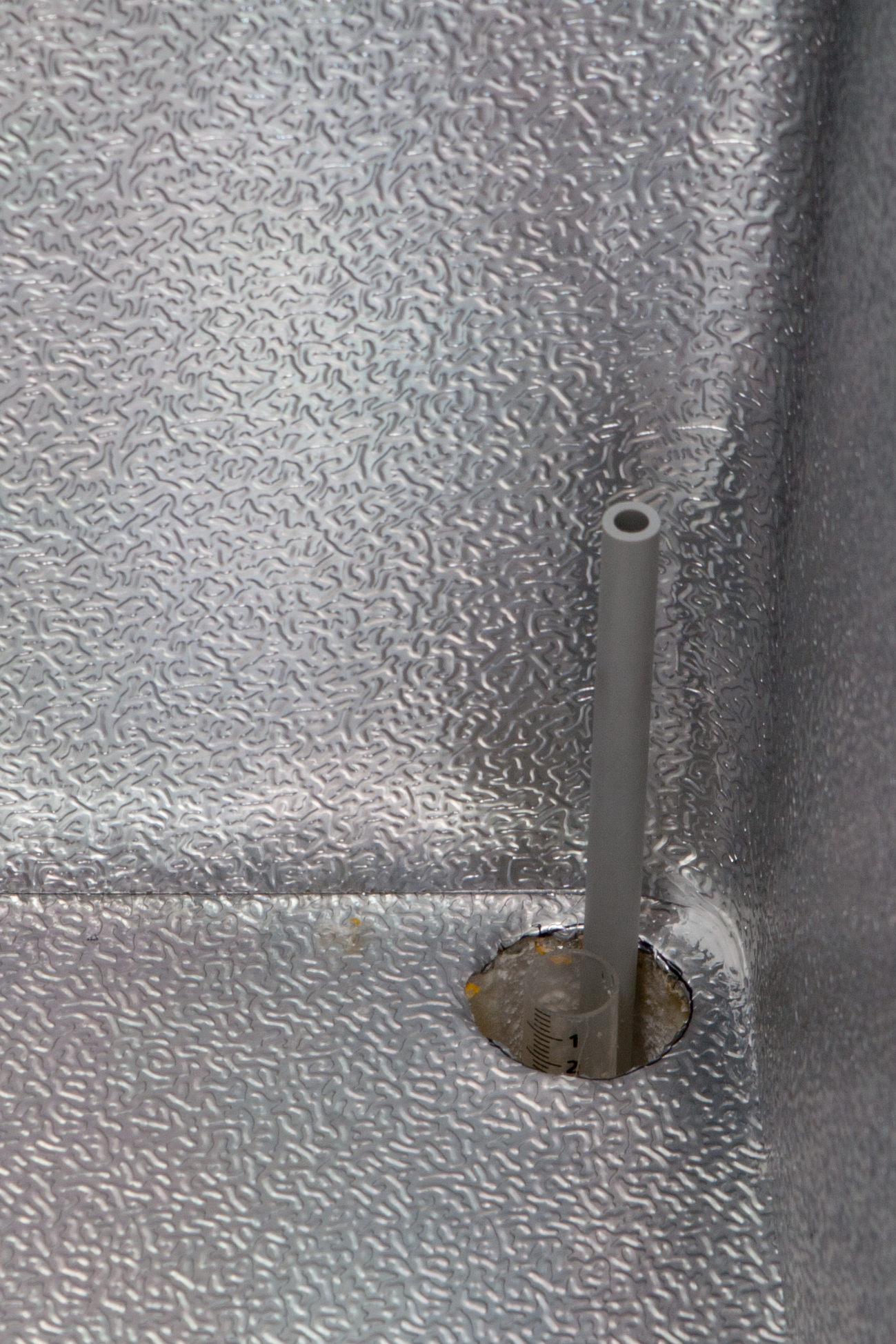
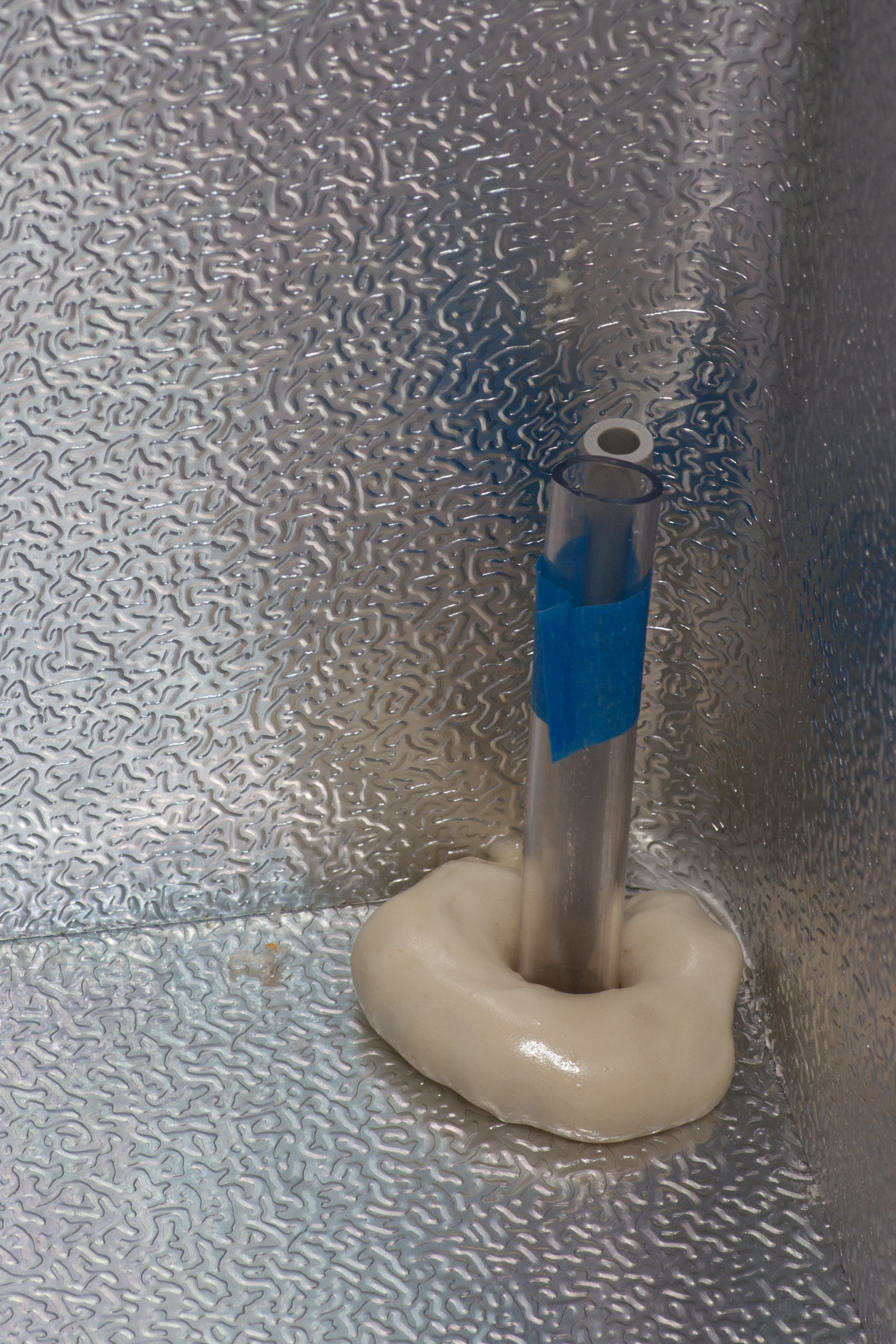
These fit very nicely into the hole. With the flange on the syringe and the water line nicely fitting up against the inside of the freezer’s compressor compartment both plastic bits nicely stayed in place nicely (picture) making surrounding them with spray foam insulation (picture) very easy. I fitted a scrap piece of vinyl tubing in the syringe housing to keep foam out, and it did a great job. Once removed (picture) there is now a clear ingress for gas, and the temperature probe should sit nicely on top of the grey plastic tube holding it nicely mid-level in the unit without touching any sidewalls.

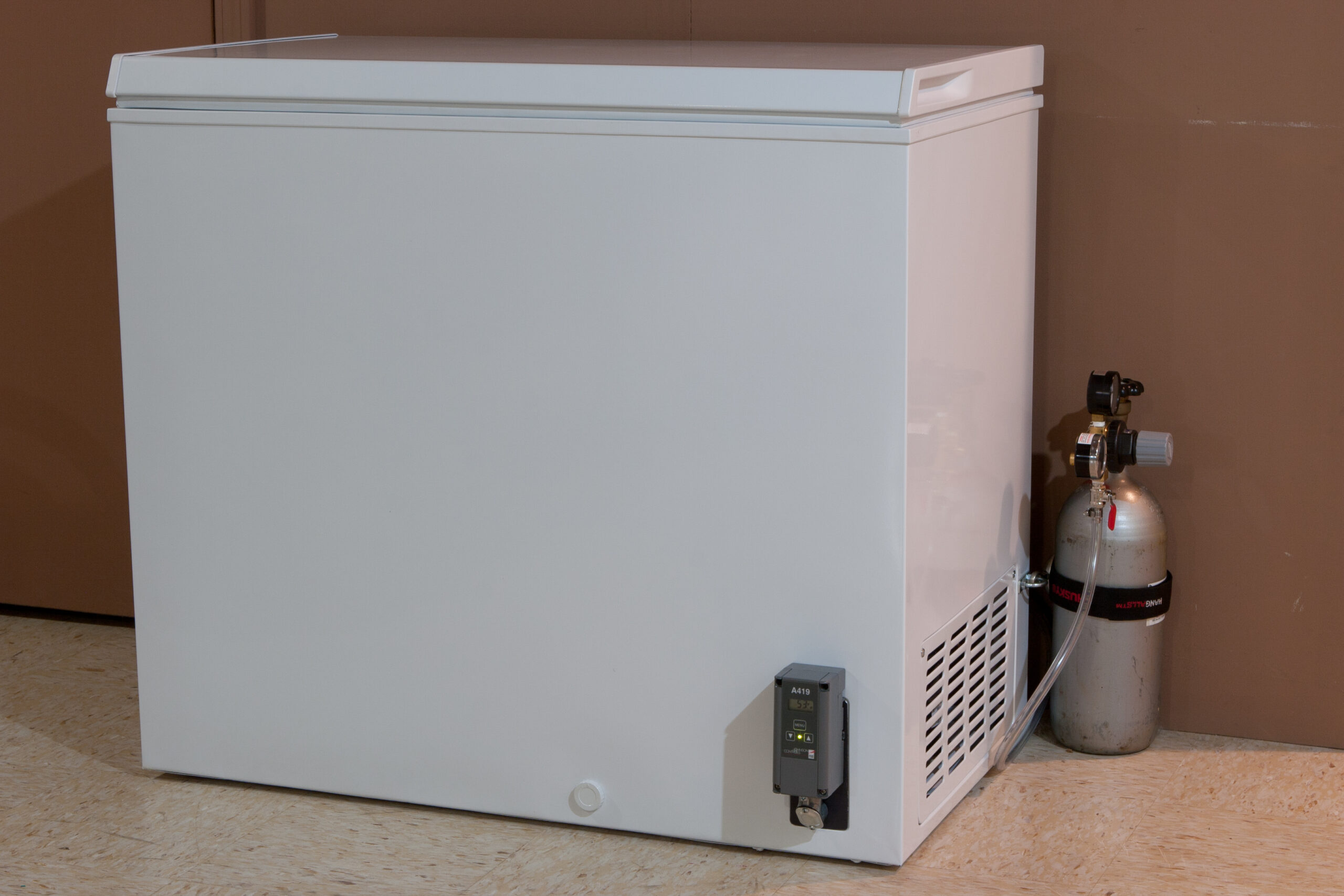
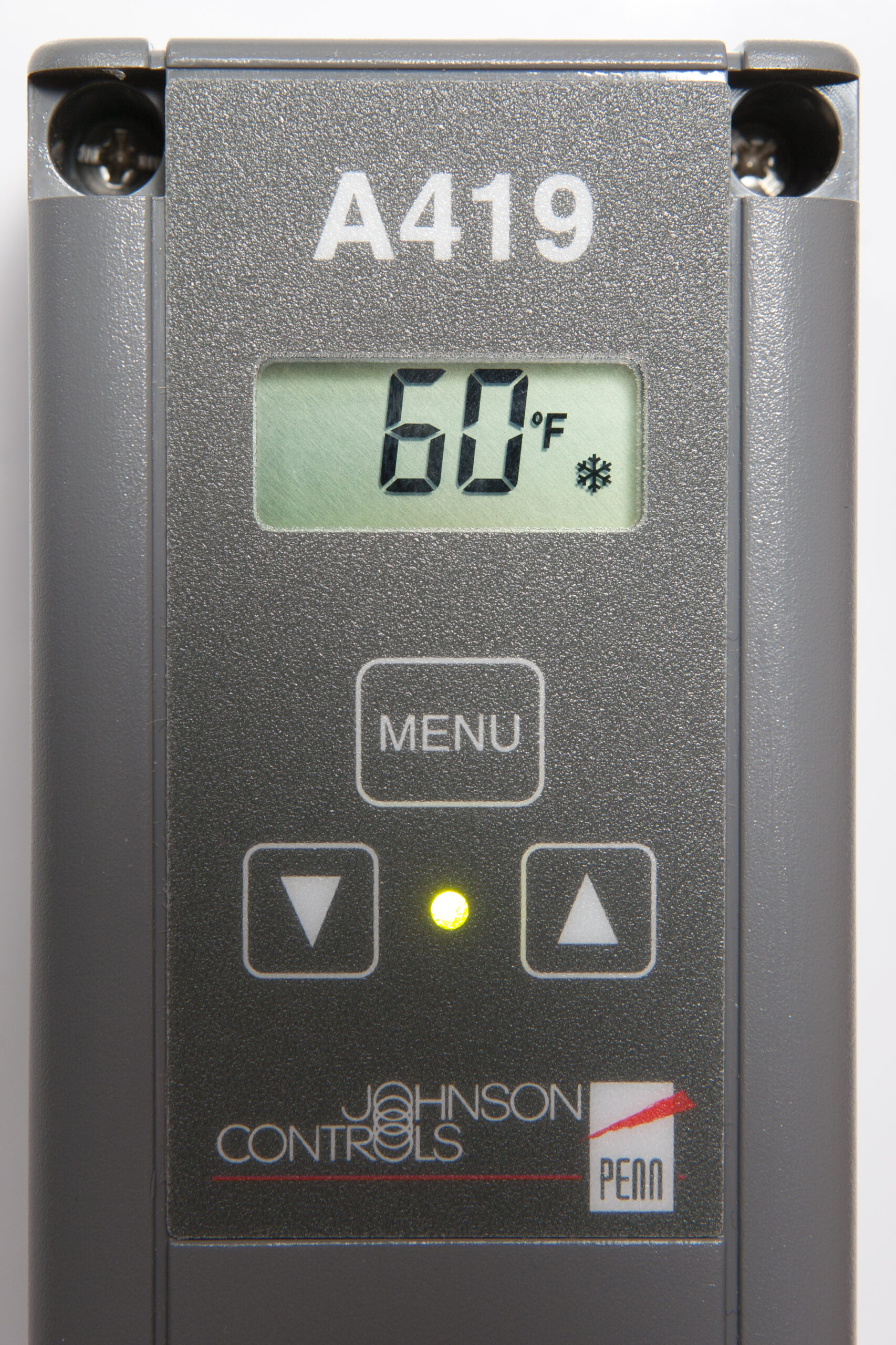
Now all I have to do is fashion a mount for the temperature controller, wire it in, fit the temperature probe, run gas lines, and build a CO2 tank retention system. This is probably only a couple more evenings worth of work, which should be right in time for the wit that I’ve currently got aging and which is due to be kegged on Monday. Oh, and I might cover the lid with some horrible contact paper design, perhaps even something as bad as butcher block.

(Yes, this does mean that all beer served from this cooling unit will be heavily dependent on both an old (but unused) syringe and something which once supplied water to one of my toilets.)
Leave a Comment

Chest Freezer First Steps

Now that I’m brewing beer again and kegging it (1 · 2 · 3 · 4), the approach of warm weather means that I have to find a way to keep the kegs cool so that I may serve them. To do this I purchased a chest freezer and am in the process of adapting it to use a more precise temperature control system so that I may try and keep the kegs at a consistant 40°F.

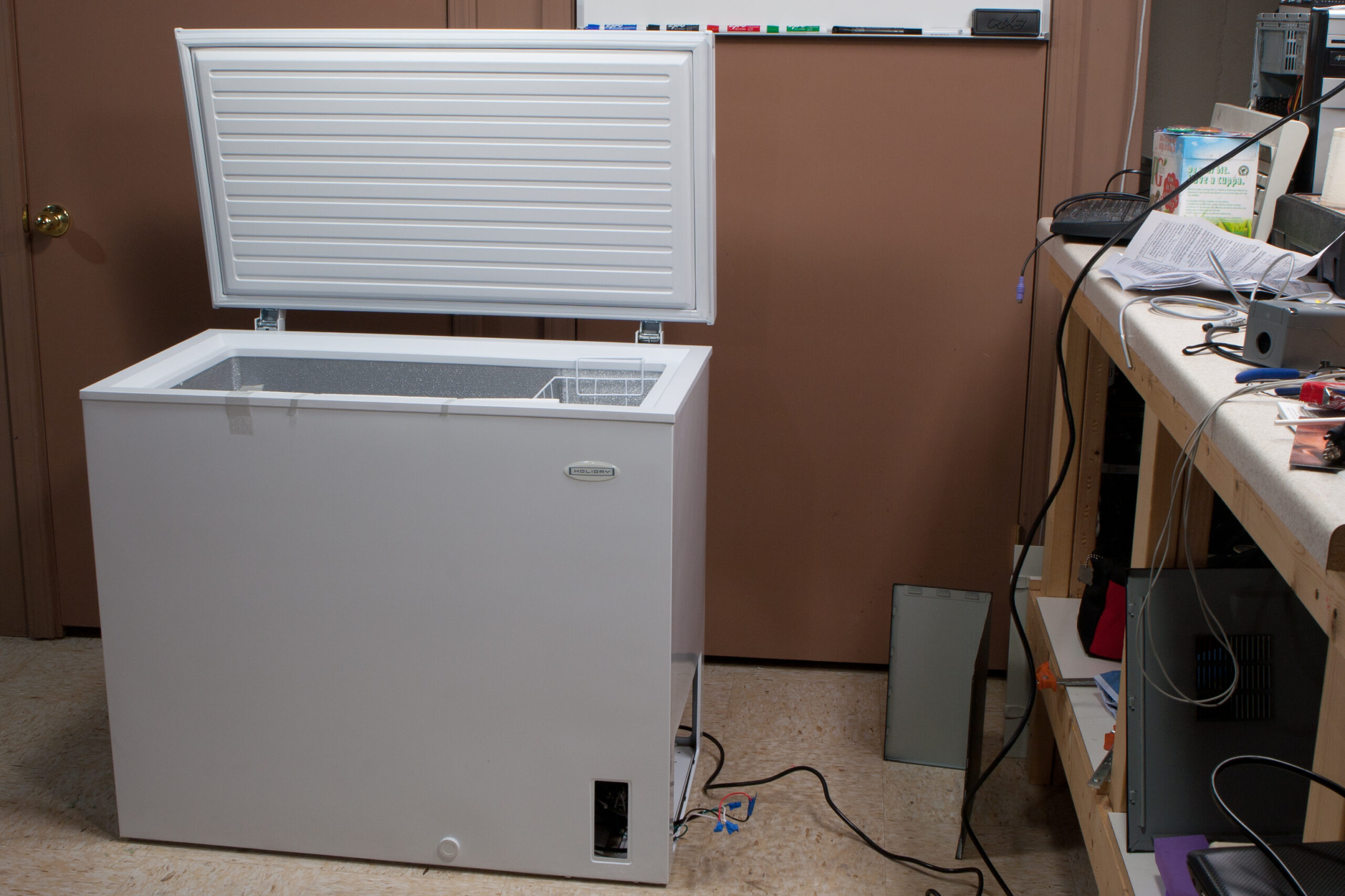
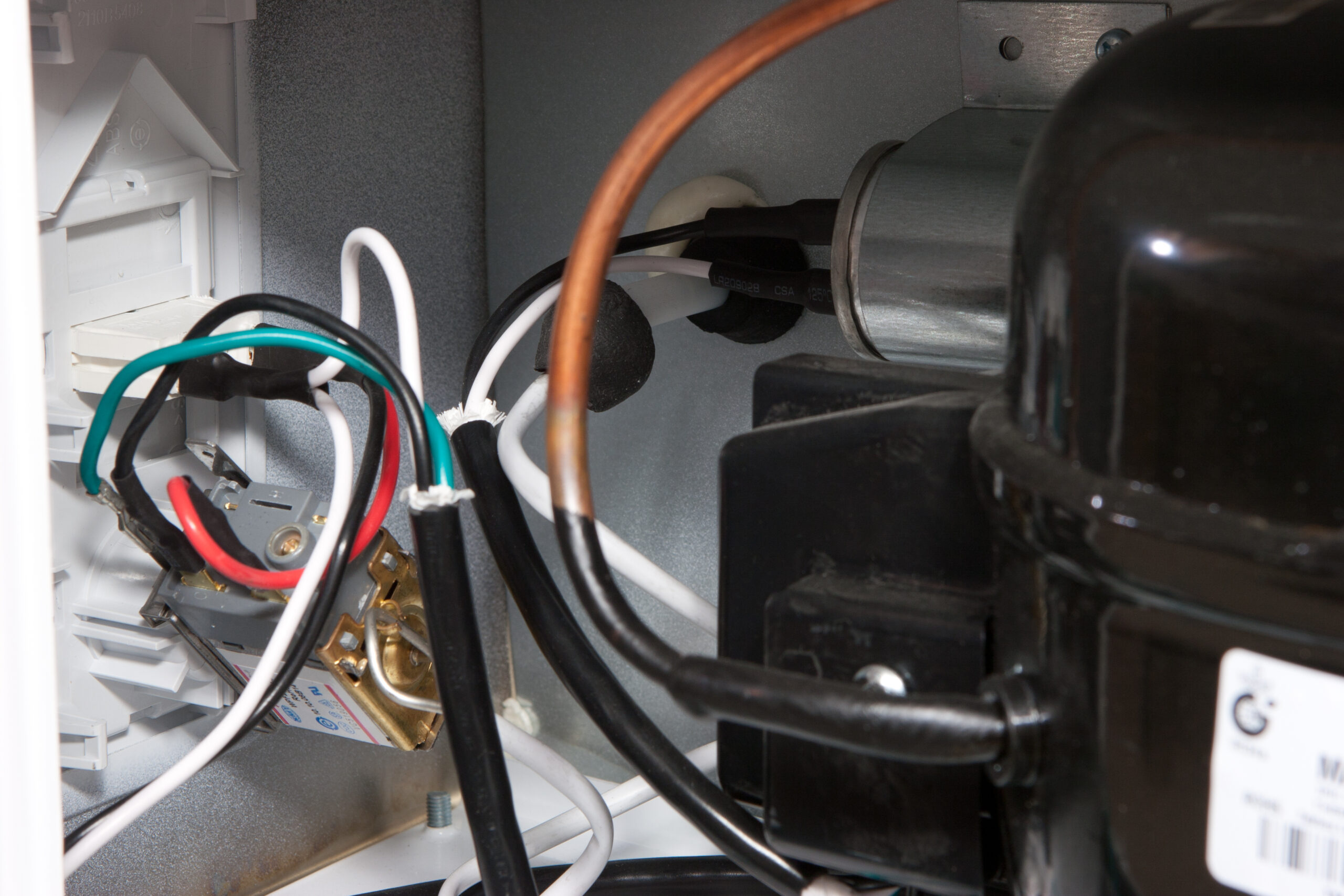
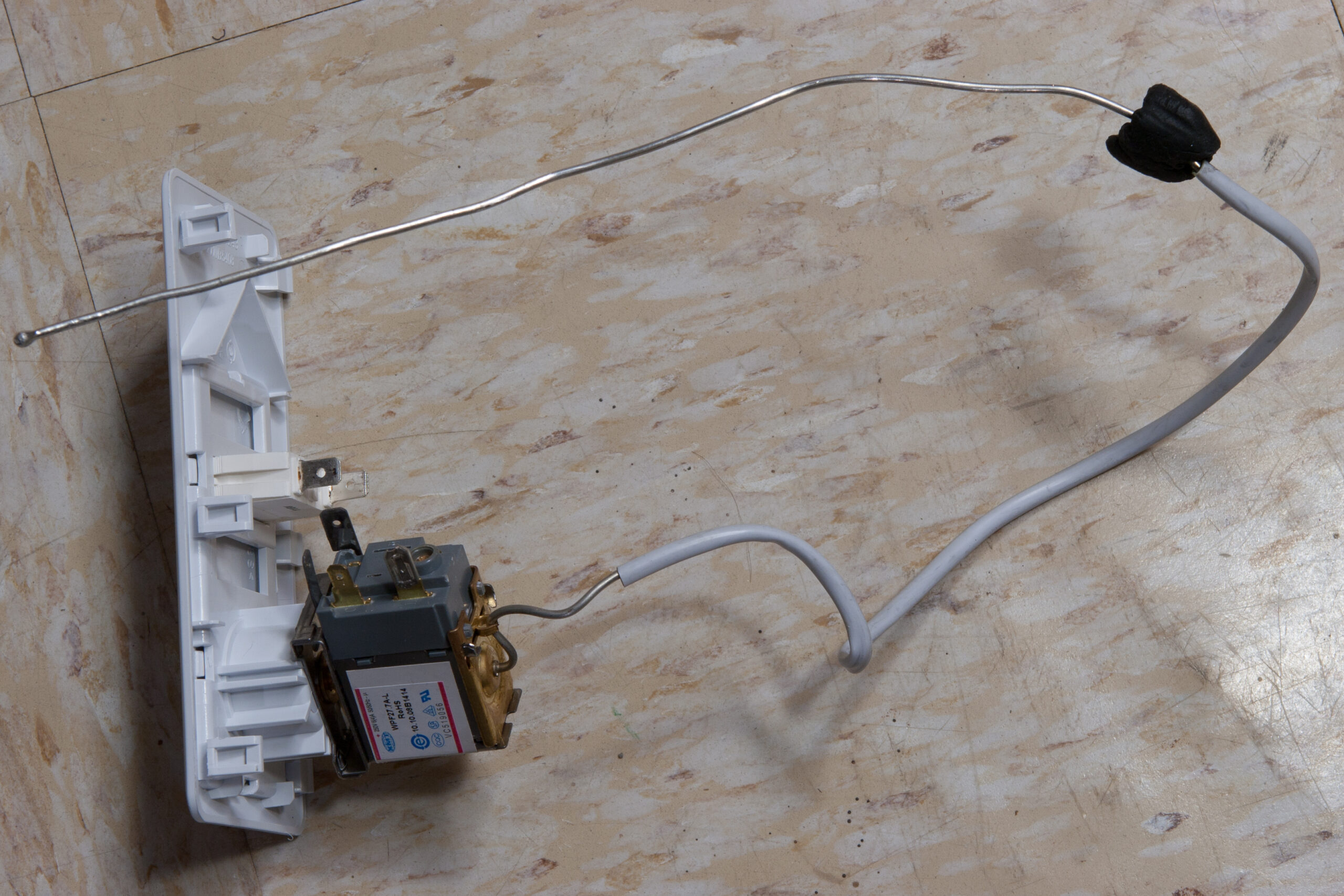
After receiving a Johnson Controls A419ABC-1C temperature control I opened up the 7.0 ft3 Holiday-brand chest freezer acquired from Lowes (item number 0073849) and set to understanding it’s temperature control system. It turns out that this chest freezer just has a basic on/off control that switches mains on and off for the compressor based on a temperature probe fed into the wall of the freezer. This should make it very easy to replace the controller with the A419.

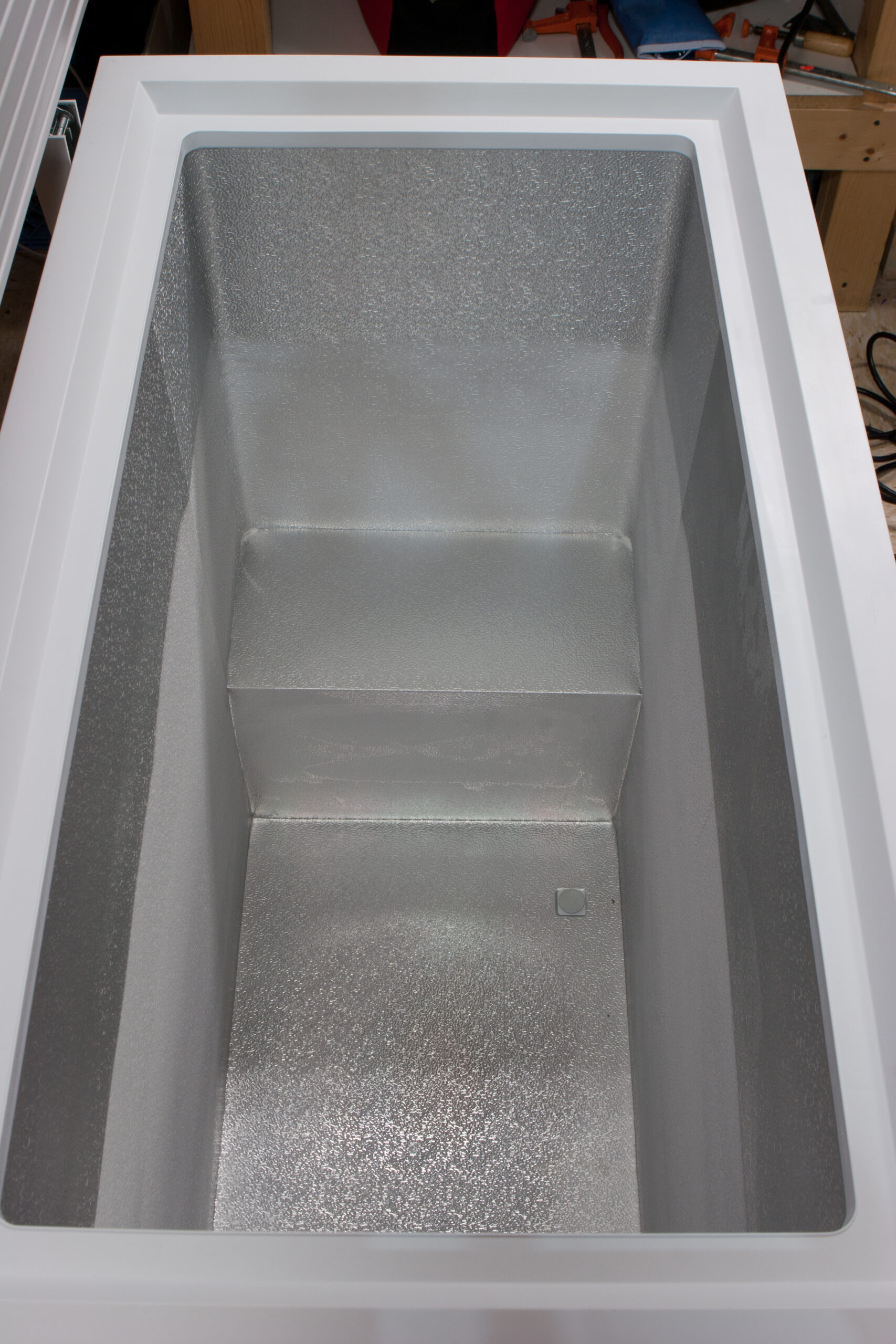
Part of converting a chest freezer to beer keg holding requires one to drill holes for both CO2 and the temperature control, which is a very risky task because hitting the refrigerant lines will vent the freezer’s cooling system rendering it useless. To try and understand where the coils are I started the freezer, let it run for a bit, then placed 1L of boiling water in it with the lid closed. The result was this, a nicely frosted freezer showing that almost all of the bottom part contains coils. Knowing this I’m going to attempt to drill the gas/probe holes by first carefully removing some of the lining metal then picking away at the foam to be sure that I’m not going to hit a line when widening the hole. I will start in the corner in the upper right of this picture, as this will allow for both easy gas and temperature probe access once everything is assembled. Hopefully that’ll go well.

If you’re interested, my first photos from this project can be found here.

Leave a Comment

Roomba is Not So Smart

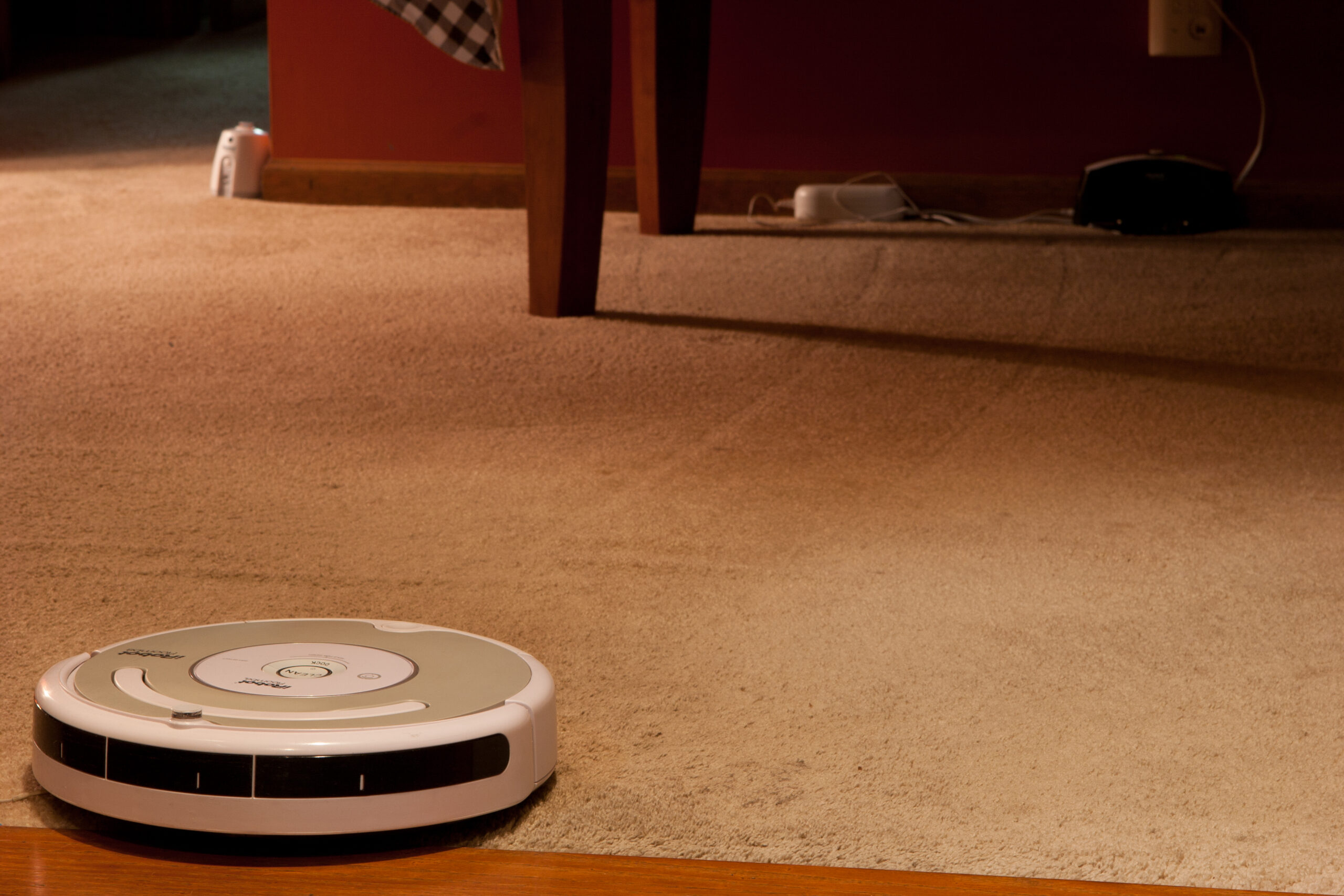
Upon arriving home today I found this. Danielle’s Roomba had driven away from next to its dock, leaving telltale tire marks the whole way, and died. Before leaving for work I set the Roomba up with a virtual wall so that it’d run in a small part of my living room and the kitchen, all of which is within sight of the dock and no more than 20′ long. Once again the Roomba died before it found its way back to the dock.

I’m starting to think the battery is going dead. Thus far it hadn’t docked successfully except for the few times that I placed it in front of the dock and commanded it to charge itself.

Leave a Comment

Riding In Circles

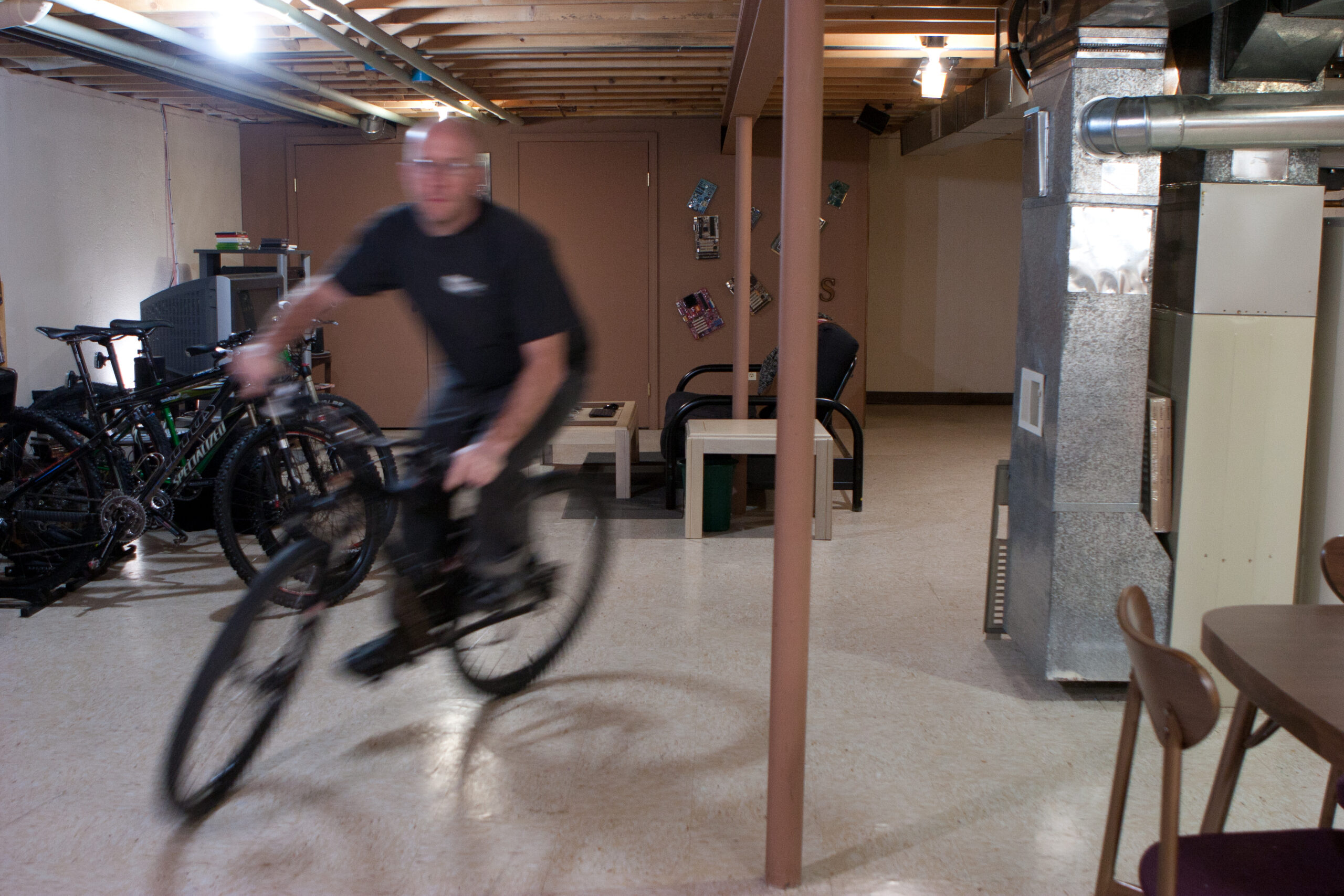
In a fit of boredom I just rode a bit over a mile indoors by doing laps of the basement. With it cleaned up there is a clear figure eight-like path around the futon then around the table near my workbench and I was able to ride a whole mile without running into anything or putting a foot down. This took roughly 15 minutes, as I was probably averaging around 4 MPH. I was riding Danielle’s bike (it’s the only one currently with platform pedals) and its computer doesn’t do elapsed time or average but (strangely) it does do maximum speed, which was 5.2 MPH.

Leave a Comment

Successful Ceiling Fan Modification

For the last two or three works the ceiling fan in my bedroom hasn’t been responding to signals sent by the remote control leaving us with only a dim table lamp to illuminate the room. Not long after cleaning the contacts in the remote the fan would occasionally fail to respond to signals from the remote unless its power was cycled by the light switch under the remote holder. After flipping the switch off then on it would then work for a few days before needing another reset, but this failing state only lasted for a few weeks before the system simply failed leaving neither the light nor fan usable.

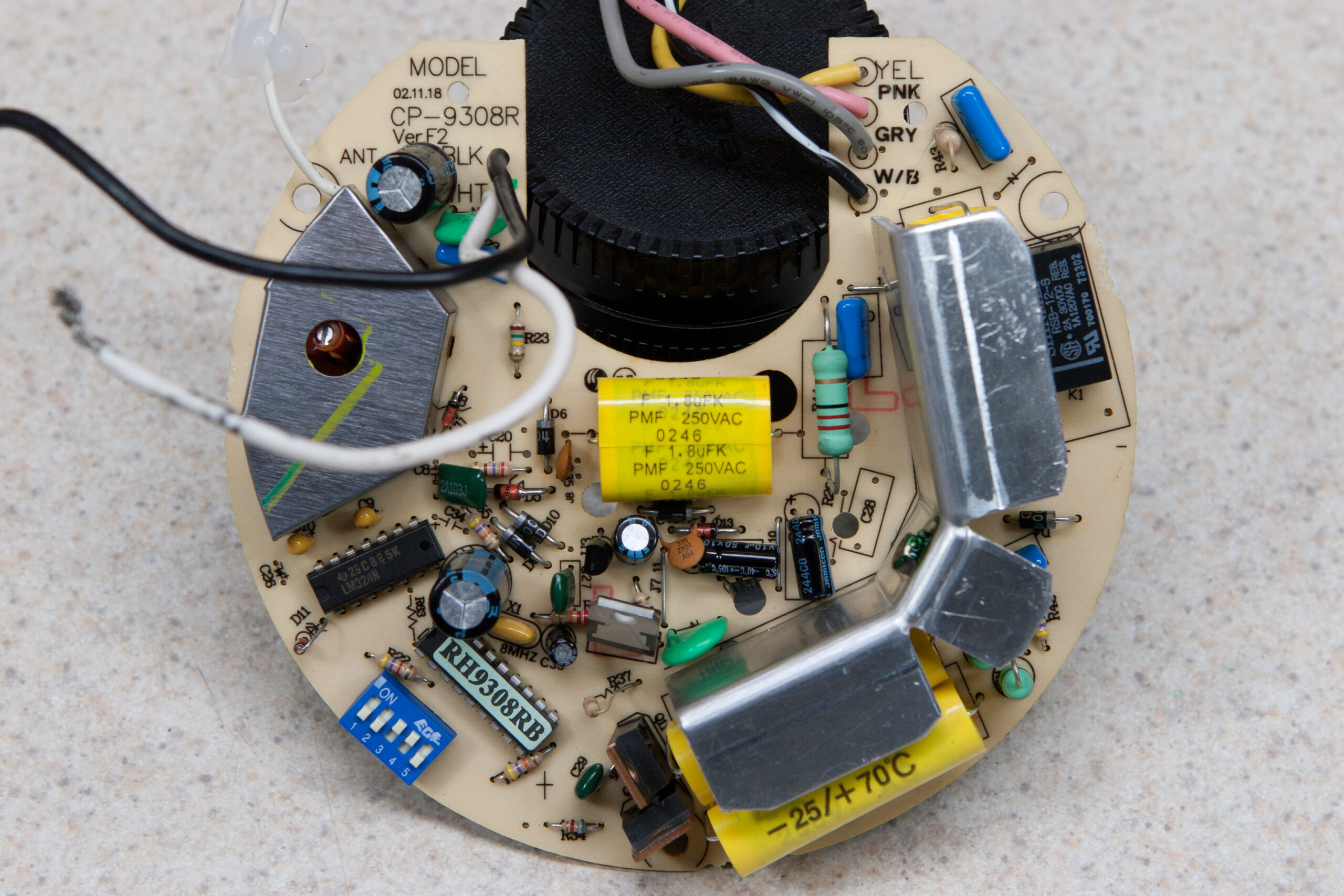
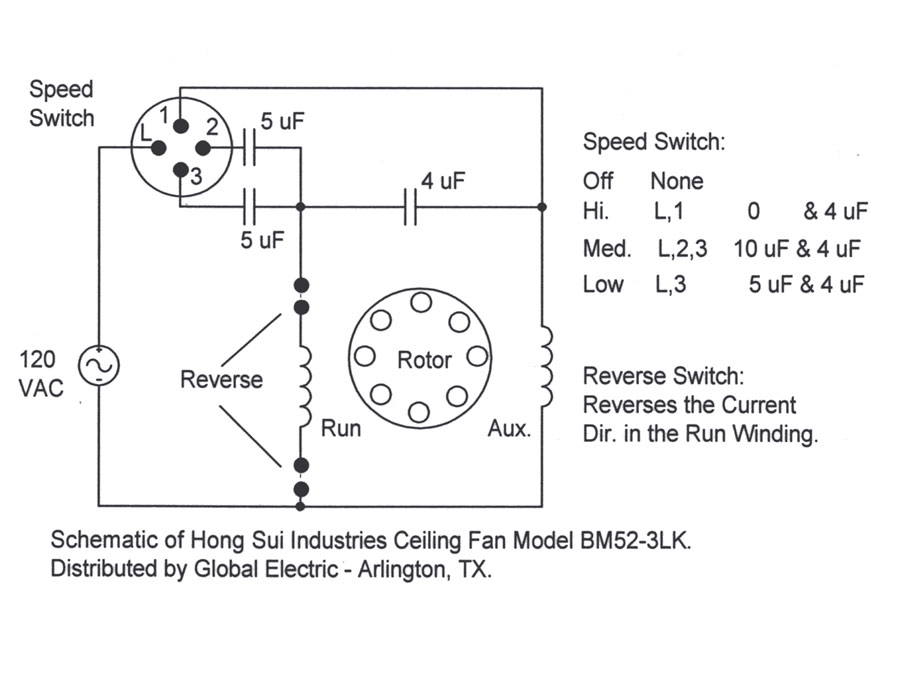
Frustrated by this I decided to bypass the wireless entirely and switch the unit to a typical fan/light dual switch setup on the wall. I figured that the light kit and fan motor itself were still fine so I set to work eliminating the failed fan control module. Having a spare dual-switch for the wall and a third (red) wire already between the electrical boxes made the house wiring part easy, but I still had some work to do modifying the fan. By reading Ken L. Klaser’s article Ceiling Fan Capacitor Solutions I was able to understand the basics of fan speed control, but this this schematic which he linked to was most helpful.

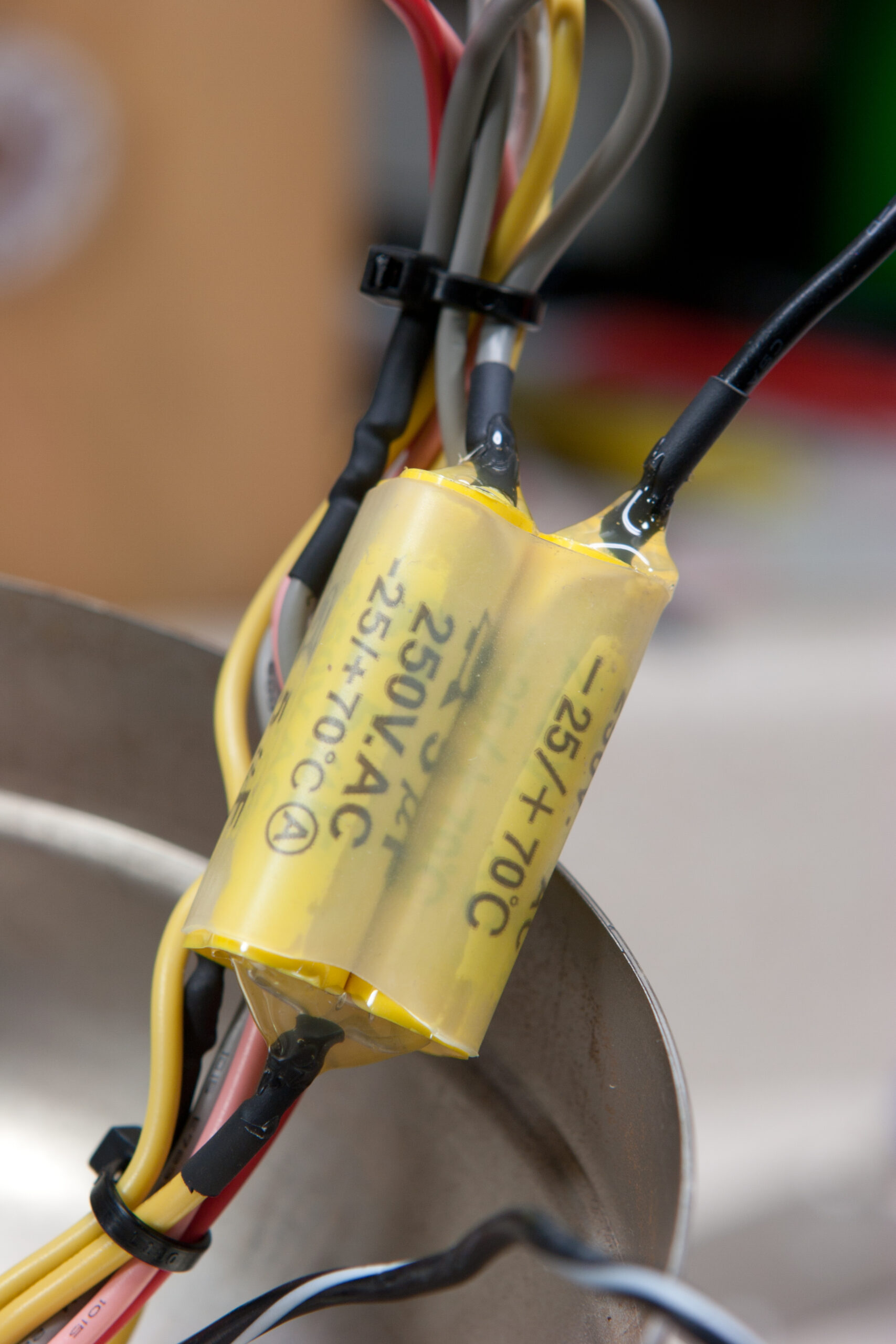
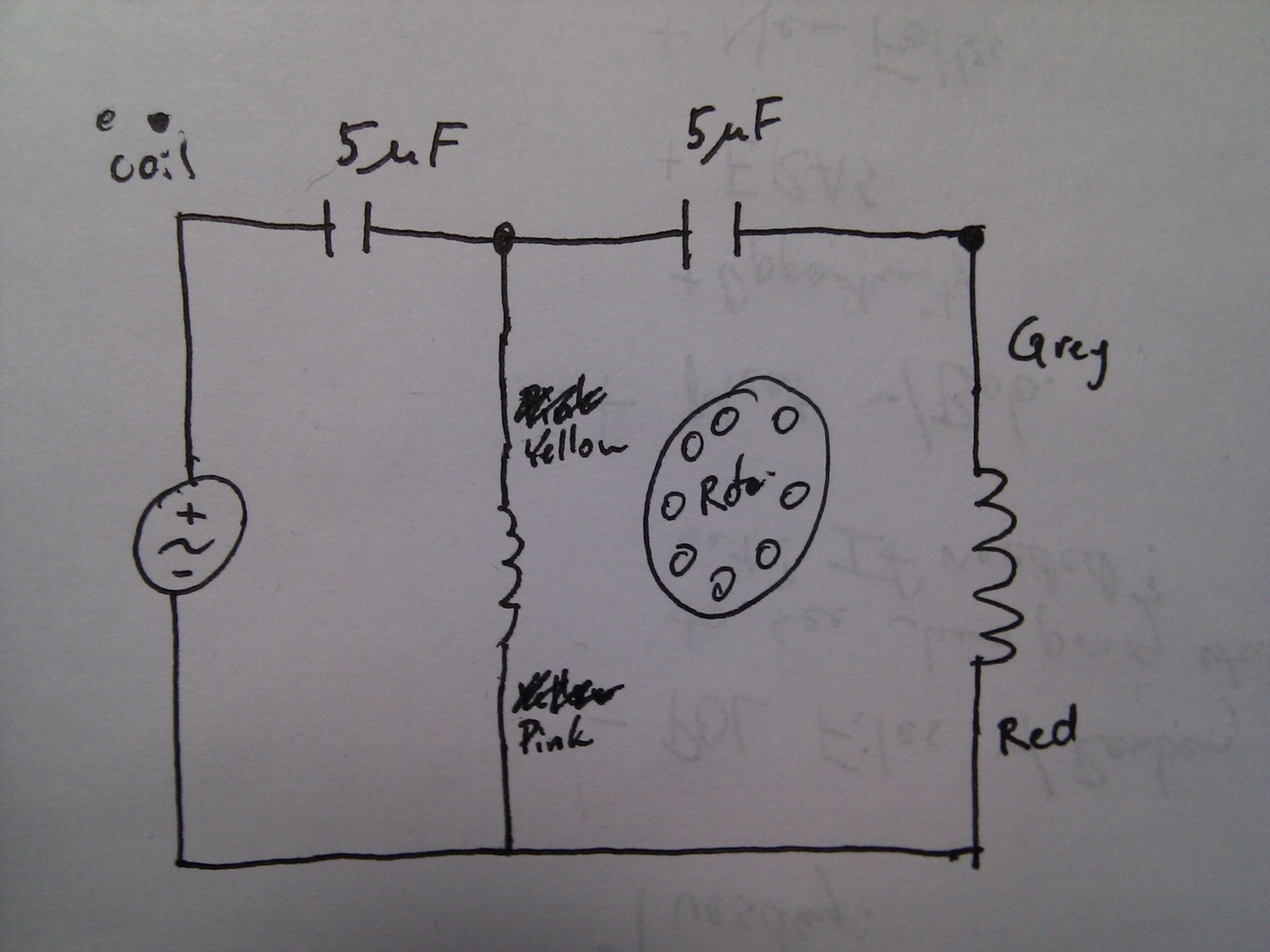
After looking over the control board to understand how the wires to the two coils in the motor were connected I came up with this schematic of how I felt the fan would be powered when set to run slow and in reverse. Removing the capacitors and building a test assembly showed that my initial thought was right, and this resulted in my building the assembly shown above. The fan now runs in reverse and on slow speed when powered and the wireless circuitry has found its place in the trash.

I could have purchased a new selector switch and capacitor assembly to have variable speeds and fitted both it and DPDT switch into the housing to offer the original control selection, but throughout its life the fan was almost exclusively used on low and in reverse, so I didn’t see the need. The fan also looks as it originally did with no new switches sticking out of the side or bits hanging off. I may add these selectors in the future if they are needed, but I don’t see that happening. Thus this was a $0 modification, costing only a few hours of time to learn something new and then redo the wiring.

(Yes, I realize that I should have used a longer piece of clear shrink tubing to better facilitate potting the ends. By the time I realized this I had most of the harness together and decided that simple stress relief and a bit of insulation should be sufficient.)

15 Comments

Snow! (Late Autumn 2010 Version)

Well, there it is; the first that I’ve seen near home this season. En route to Traverse City for Iceman we drove through a quite-strong snow squall between Kalkaska and Acme, but this is the first bit here. It won’t be long before it’ll be time for winter biking season and cross-country skiing! Yay!

(Hmm, I should get those 29er Nokians broken in soon. I keep putting it off. Maybe Saturday…)

Leave a Comment

Ceiling Fan Light Working Again

The ceiling fan in the bedroom has a remote control to turn it on and off. Over the past few weeks it’s become increasingly hard to turn it on and off, with the switch inside the remote feeling like its failing. Taking apart the remote tonight I found that instead of small tactile switches (like I thought it had from the feel) it instead has cheap, printed contact switches actuated by conductive rubber on the back-side of the buttons. As common with switches like this some of the rubber had worn off on to the PCB, fouling the copper and causing the buttons to not work well. A bit of quick work with a pencil eraser and alcohol-soaked paper towel cleaned the contacts up nicely and everything is working great again.

Click here to see a high-res version of the photo above, clearly showing the bits of rubber stuck on the PCB.

4 Comments

Found an Extra Paper

My mailman is great. Apparently he found a copy of October 6th’s local newspaper (the one I was on the cover of) and saved it for me, dropping it in my mailbox with a note on some junk mail saying that he found it.

This shows some interesting things, like that the mailman recognizes my name on newspapers and such and knows where I live, but I guess that’s expected since his job is to pay attention to names on mail and where things go and such. I know that I’ve waived to him while biking, so I wonder if he associated that, receiving cycling catalogs and magazines, and this.

Either way, I think it’s really nice and I appreciate it.

2 Comments

Relay Failure Means Fridge Failure

Three days after defrosting my freezer to get the whole refrigerator working Danielle noticed that the fridge was no longer cold. The evening after Danielle rushed most of the food stores over to my parents house I set out to try and diagnose the fridge. After I’d spent a few hours fruitlessly looking it over without any documentation I decided that the best thing to do would be to call a repair person. I normally don’t like doing this, but not having a fridge makes things somewhat difficult, and it likely would have taken a few more days for me to figure out what was wrong.

Doc’s Appliance Service (warning: auto-playing video) came out to do the repair and $210.21 later the relay on the compressor was replaced with a new, compatible (but non drop-in) replacement that required cutting the wiring harness to install. As this was the only part the repair person had readily available it was the only choice to get the repair done at that time. While talking to the repair guy (who was quite friendly) afterward and detailing everything I’d looked into, he showed me that Maytag actually ships block diagrams and technical troubleshooting guides with each fridge, sticking them to the bottom of the fridge in a small plastic bag, folded up to about the same size as a deck of playing cards.

I wish that I’d known about this diagram before calling, because that would have allowed me to do all the troubleshooting myself, including finding the failed relay. It also would have saved me the time spent looking at the fridge’s main control board for issues, as the automatic diagnostics would have eliminated the control board and other items that I fiddled with. I would also have then been able to order part 67005560 from Sears for $27.33 and do the replacement myself for 13% of the cost.

In the end I suspect that the relay was failing, keeping the compressor on long after it should have, resulting in the coil freezing up. It’s even possible that the fridge had been running near non-stop for the last few weeks. Turning the fridge off for a while and then putting it back in normal duty cycle then likely caused the relay to fail completely, after which it no would cool. If you’d like to see more photos of the failed relay, part 3ARR65P4E3A6, they can be found here: Failed Fridge Relay (3ARR65P4E3A6).

$69.95 diagnostics charge, $80 labor, $56.85 in parts, and $3.41 in sales tax.

2 Comments

Surprise Freezer Defrosting

When Danielle and I returned from the grocery store this evening we found that the fridge (a Maytag PBF2253HEB) was much warmer than it should be; somewhere around 60°F. When it was still this temperature after eating dinner it was time to try and figure out what’s going on. As the compressor was running and the freezer was still perfectly cold I figured that the duct between the freezer (where the cooling coils are) and the fridge must be misbehaving.

Investigating the fridge portion of things showed that the servo which opens a damper in the fridge (allowing in cold air) was operating, so I started to look at the freezer. Just when I noticed some unexpected frost through the slats at the rear Danielle found this article explaining how the freezer can frost up, leading to no airflow to the fridge and thus no cooling up there.

It suggests replacing the control board to resolve a problem with Adaptive Defrost Control. Before that I decided to do a manual defrost and see if that resolves things. I’ve had the fridge for just under five years with it running non-stop the whole time with a fair bit of ice sublimating in the freezer, so I figure that maybe enough frost could have built up in that time that the automatic defrost couldn’t overcome it.

If the frost issue comes back quickly I’ll look into actually repairing it. I found a copy of the service manual here (mirror) and will just run through the diagnostics and replace the needed bits.

The photo above is the evaporator coils inside of the fridge completely packed with frost. The part that appears to be a frost bottom shelf was a solid block of ice. Here’s a handful of photos taken while defrosting things, including what Danielle feels is an extremely dorky photo of me:

· Wearing a head lamp and defrosting the evaporator coils in my fridge after the fridge stopped cooling.
· Inside of my Maytag PBF2253HEB after the evaporator coil frosted over.
· Partially defrosted evaporator coil in a Maytag PBF2253HEB.
· Defrosting the evaporator coil in the Maytag PBF2253HEB with a hair dryer.
· Shiny, dry, defrosted evaporator coil in a Maytag PBF2253HEB.

2 Comments