nuxx.net
Making, baking, and (un-)breaking things in Southeast Michigan.

CLUSTAL W vs. Mac Pro


Four CLUSTAL W Jobs

In order to help Danielle out with something I currently have four scripts running, each running six sequential CLUSTAL W jobs doing DNA sequence alignment on 500-some sequences. Each core in my Mac Pro (quad core 2.6 GHz Xeon) is chewing away at data, and each of those individual jobs should take around 40 minutes each.

This is v1.81, compiled as an Intel binary with GCC i686-apple-darwin8-gcc-4.0.1 earlier today. I was going to use the pre-compiled fat binary v1.83 version made available here, but Danielle had originally been running this all on her slow(er) XP laptop with v1.81, and I didn’t want to risk any versioning problems.

Hopefully the data will prove to be useful tomorrow. I hope.

If it does, I might have to run more. That’s okay, at least the Mac Pro is finally getting a workout.

computersmoved from livejournal

Aphids! Again!

Arraugh. More aphids on my plants… At least I had some good aphid killer available this time.

Maybe I should just stick with herbs. the things which make them tasty to people make them untasty to bothersome bugs.

around the housemoved from livejournal

Grilled Cheese & Mexican Coke

Grilled Cheese, Wheat Crackers, Mexican Coca-Cola

Here is a photo of my dinner from the other night. It is three small grilled cheese sandwiches made with Meijer-brand bread and generic sharp cheddar, Meijer-brand organic wheat crackers (like Wheat Thins™), and Mexican Coca-Cola (made with real sugar and no HFCS).

foodmoved from livejournal

Power Mac G5 Shipping Problems

Arraugh. The guy who purchased my Power Mac G5 received it and found it to be not seeing the hard drives. When he opened it up he found that the drive latches were up and the drives were dislodged. Here is the message from him:

Hi Steve, I received the item. There was a bit of a scare though.
I turned the computer on and all I got was a flashing folder with
a question mark. So I started up on the OS X DVD you included
and tried to run Disk Utility. To my surprise, there were no hard
drives in the computer. So I opened up the computer and
noticed that both hard drives must have been dislodged from
the case during transportation. And both of the gates that hold
them in position were in their up position. And the bottom HD
had the interconnects damaged in the process. Fortunately, I
was able to straighten the pins and reconnect the wires and
everything seems to be working fine. Just wanted to let you
know. I am still testing the machine right now. I will keep you
posted if there are any further problems. Thanks Steve.

This is kinda frustrating. If you take a look at this photo you can see the latches holding the drives in place. I wonder if it got dropped during shipping in a combination of ways which caused the latches and drives to become dislodged?

Uggh.

UPDATE: I sent the photo of the latches and such off to the person, and he replied with this:

Yeah, it looks like the source of the problem must have been in the
shipping. The foam inside the box looks damaged. And there is a
hole in the box. I will take photos and post it up soon. But so far,
everything seems to work fine.

So, it sounds like UPS sure bounced the package around a bit.

acquired thingscomputersmoved from livejournal

Worky worky worky…

After feeling kinda crappy about my current project last night I ended up going to bed and laying there for a while thinking about things. As a result of talking to a friend online about some electronics stuffs, I decided this is what I need to do:

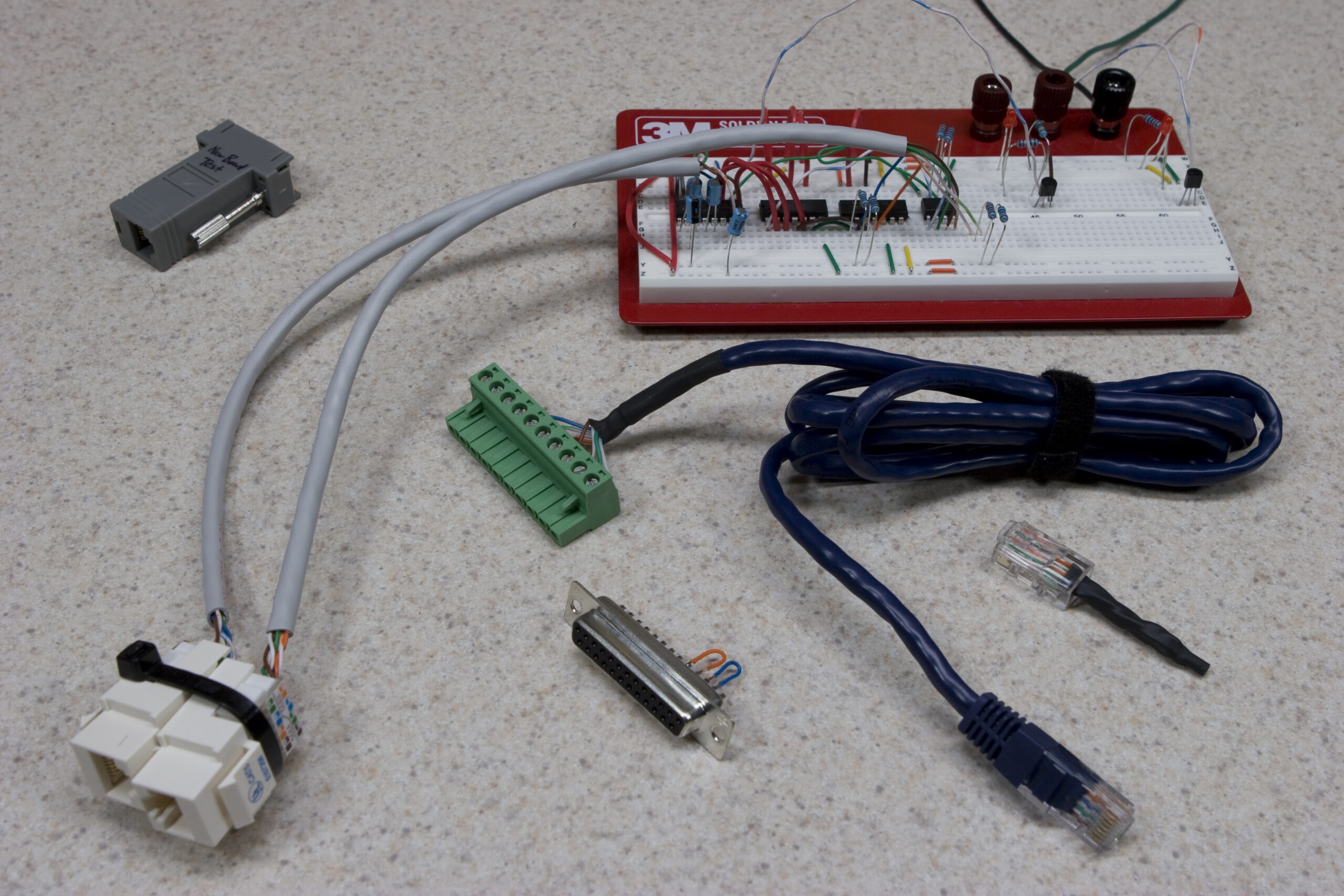
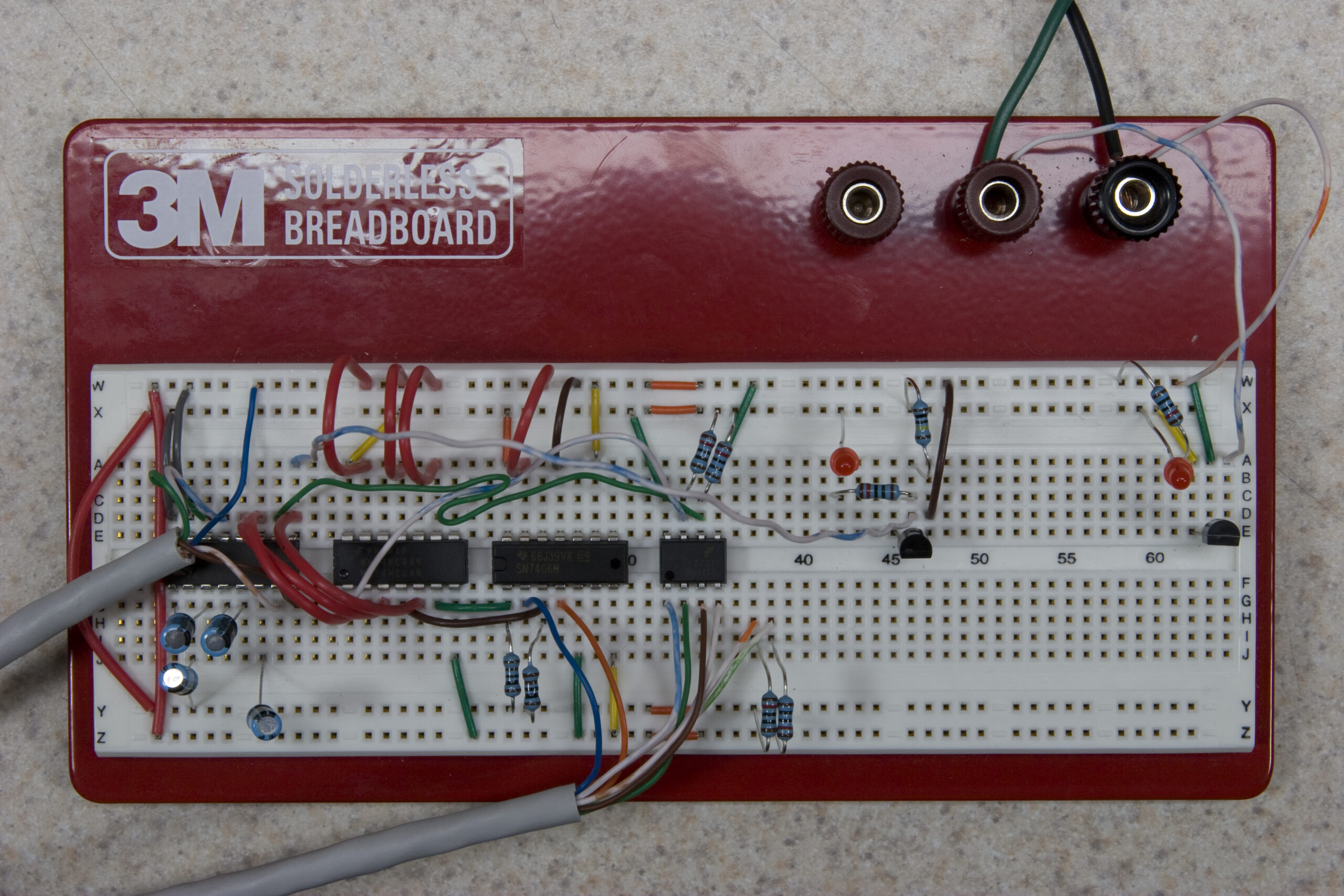
Breadboard the whole damn thing, so that changes and new features are easy to implement, and I can work around the inverted data problem more easily. It really is the “proper” way, as opposed to what I did before: come up with what I think should work and spend time hand-etching a PCB.

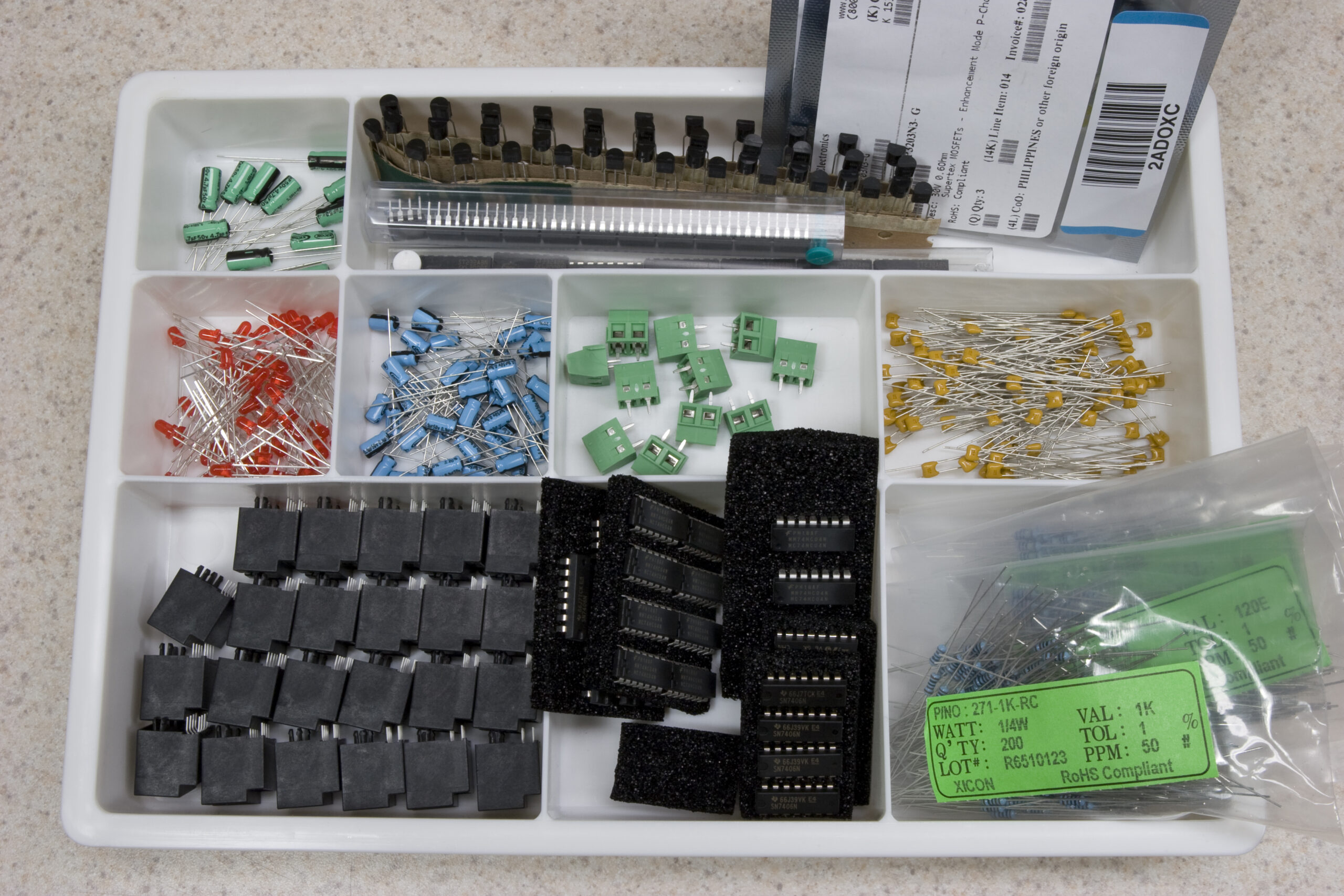
So, today I went ahead and ordered a batch of new parts, including some I’ll need for assembling the final boards, some I want to try (different FETs, dual optoisolator) instead of the current design, and a few other things. When the parts arrive I’ll breadboard it all, get it working, ensure that my schematic matches, then order the prototype boards.

That same friend also helped me out a bit with the use of FETs for current reversal protection, triggering LEDs, and a few other things. That was really, really helpful.

Advanced Circuits credits one back the price of bare-bones prototype PCBs (no soldermask or silkscreen) when production boards are ordered, so this should work out well. I also won’t have to deal with etching a board by hand.

electronicsmaking thingsmoved from livejournal

Making Stuff

I’m feeling amazingly frustrated with the project I’m working on.

I think I know why the data coming in isn’t working, but the data going out has suddenly stopped working coming out corrupt (test is received as QsT.), and I really don’t know why.

I’m considering taking a bit of a break from it, or maybe stepping way back and taking a wholly different look at it, what it does, and how I could do it better, end to end.

The problems all seem to stem from what a hack the board itself is that I’m trying to clone. Maybe I shouldn’t try to keep approximately one half of it original.

electronicsmoved from livejournalwork

It’s coming along…

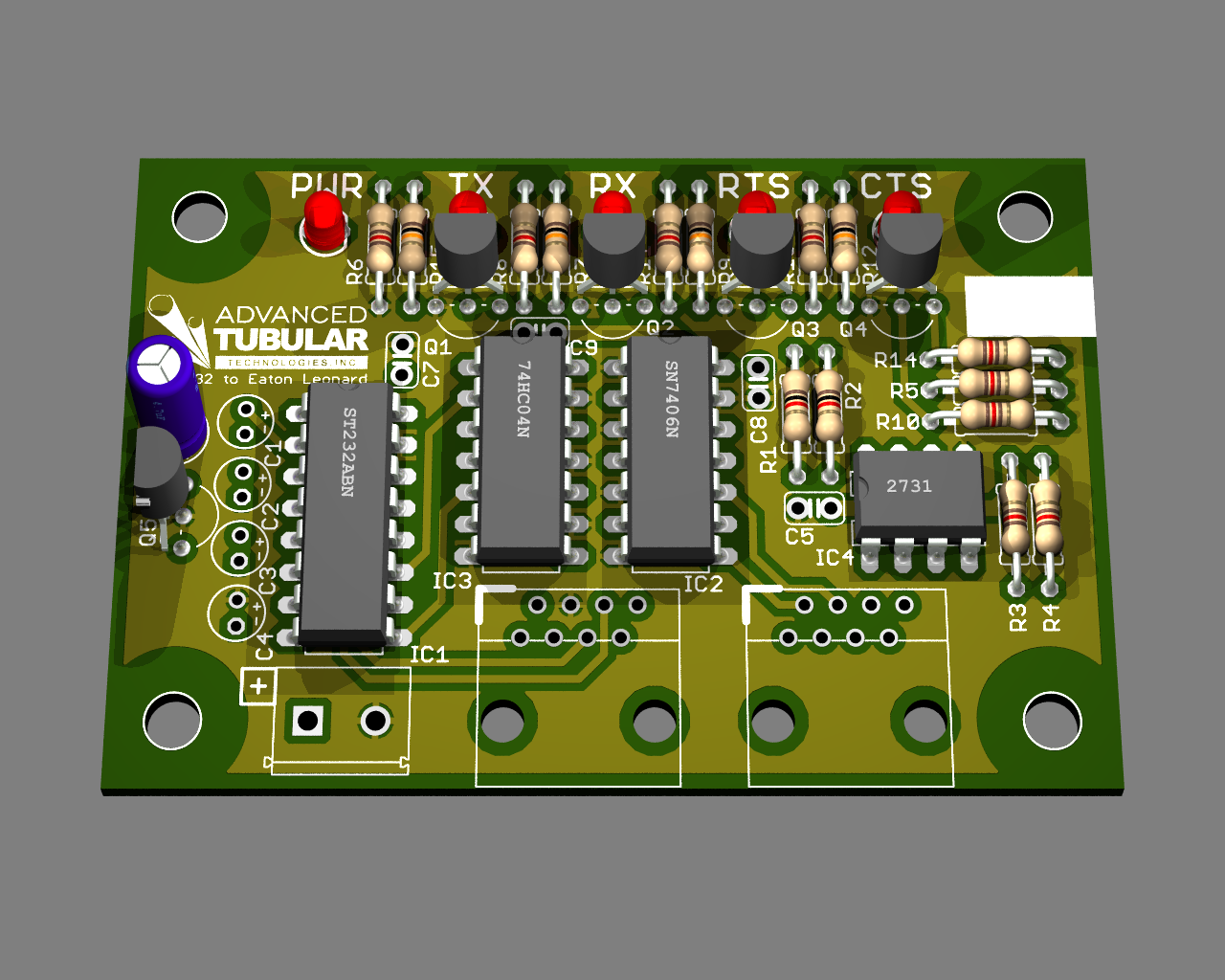
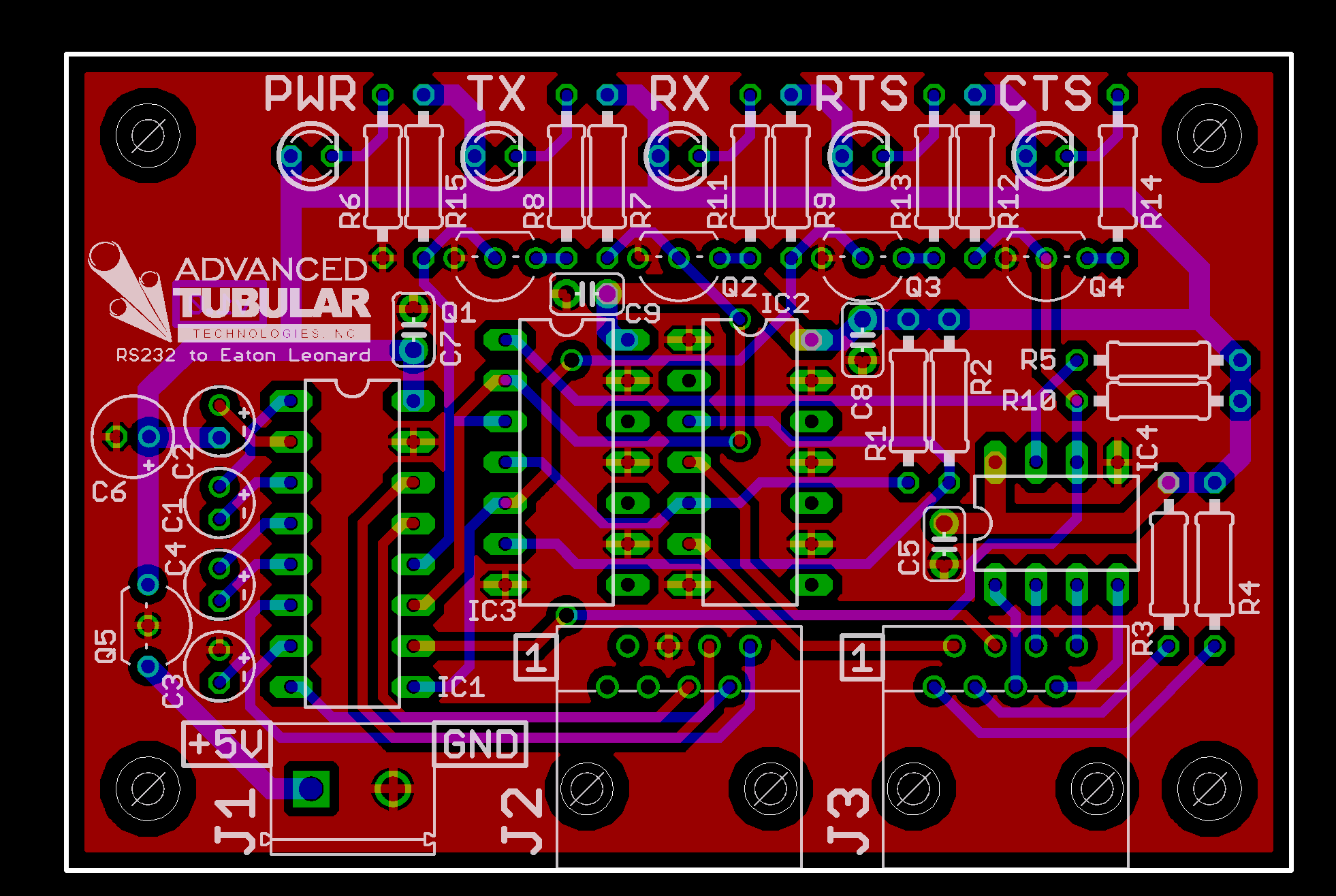
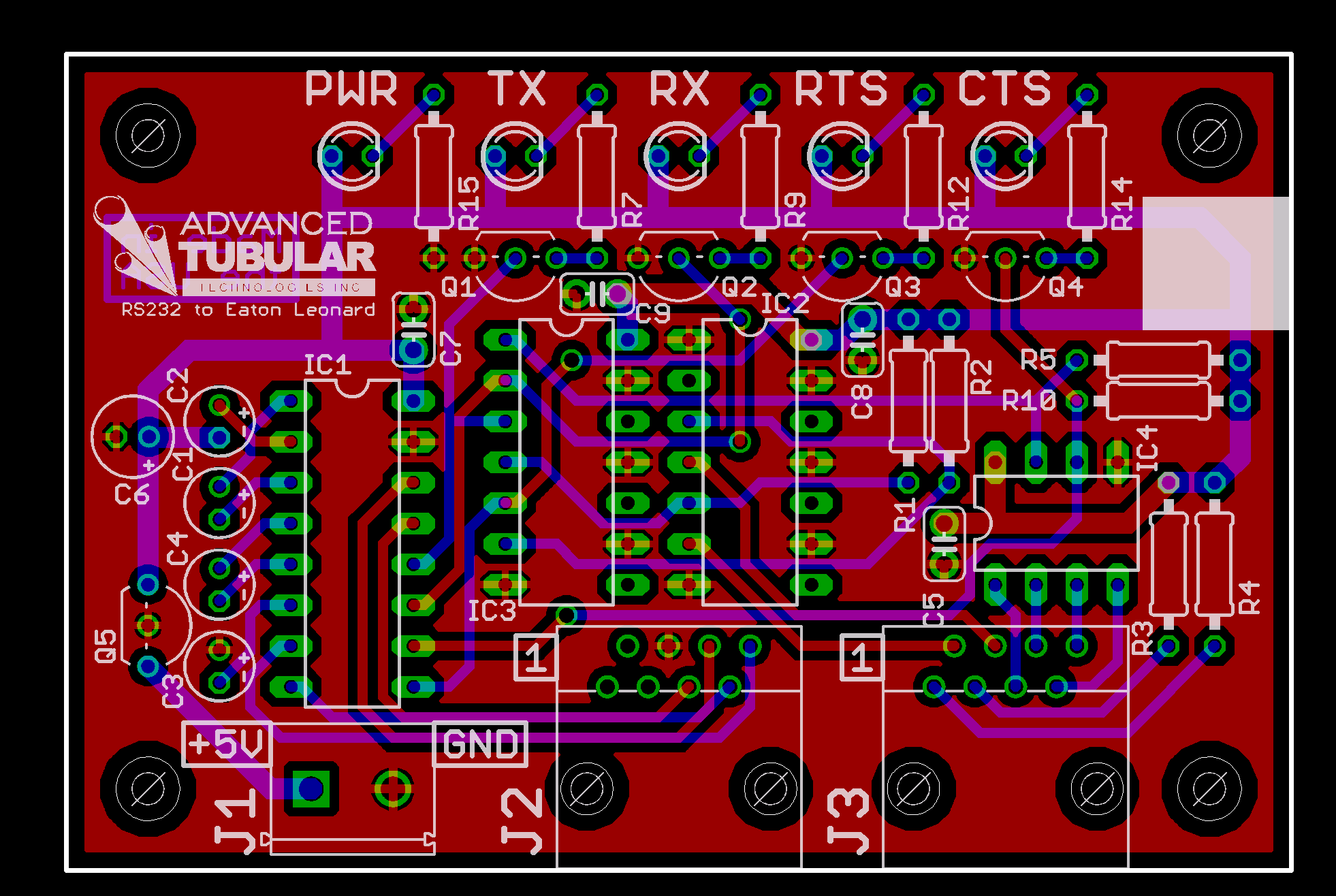
RS232 to Eaton Leonard Test Harness
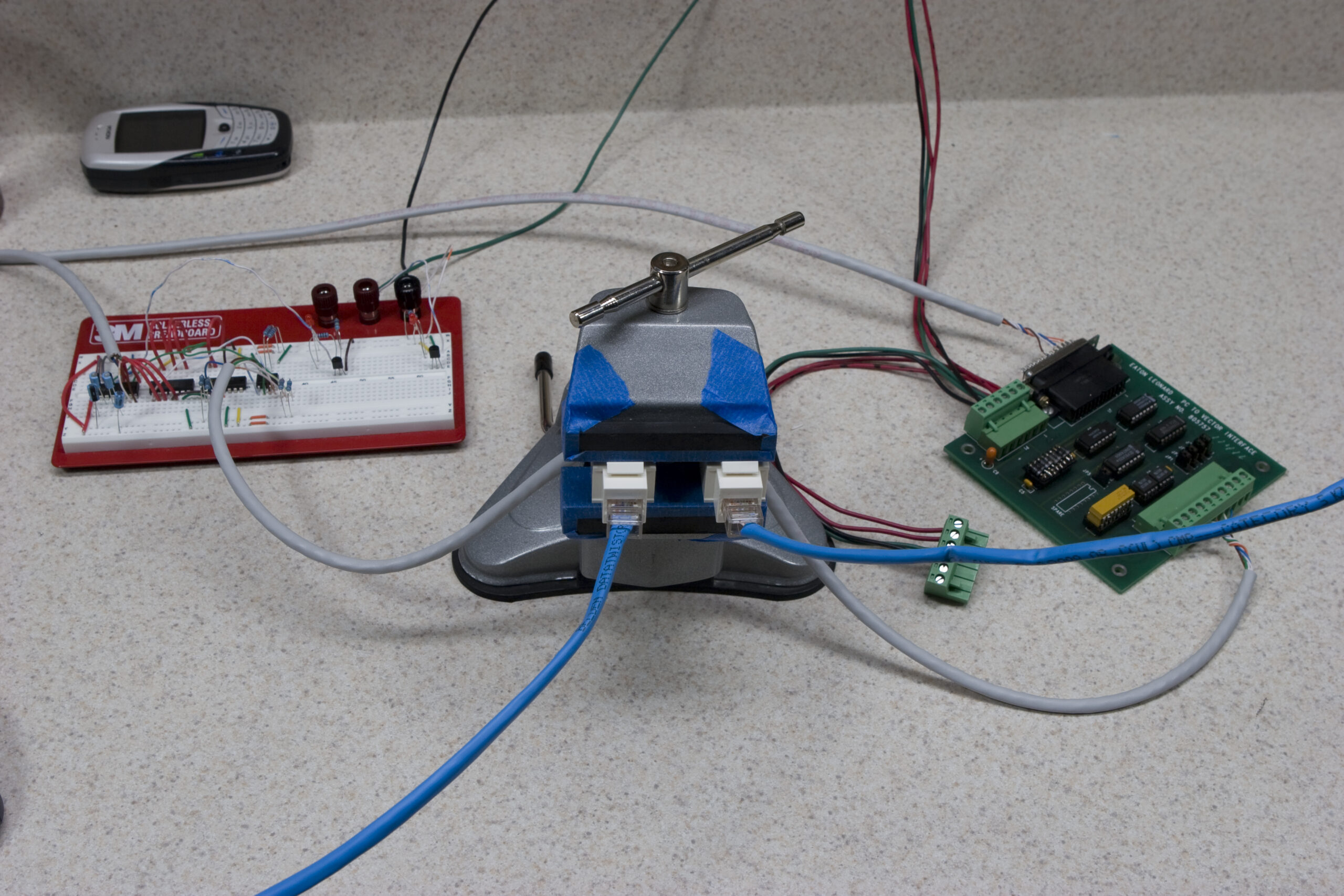
(Click for full resolution image…)

I spent a lot of time in front of this test harness tonight. Most of it was spent thinking and reading and talking with about it. And yes, because I forgot to grab some “Phoenix Connectors” from my friend’s shop, I had to hack together those power connectors seen there. And I had to be VERY careful with them. However, they work. :)

At this point I’m pretty sure I know what needs to be done to make it work. I can send data (and set RTS) out through it, so half of the circuit is working. I’m fairly certain the other half will be done soon.

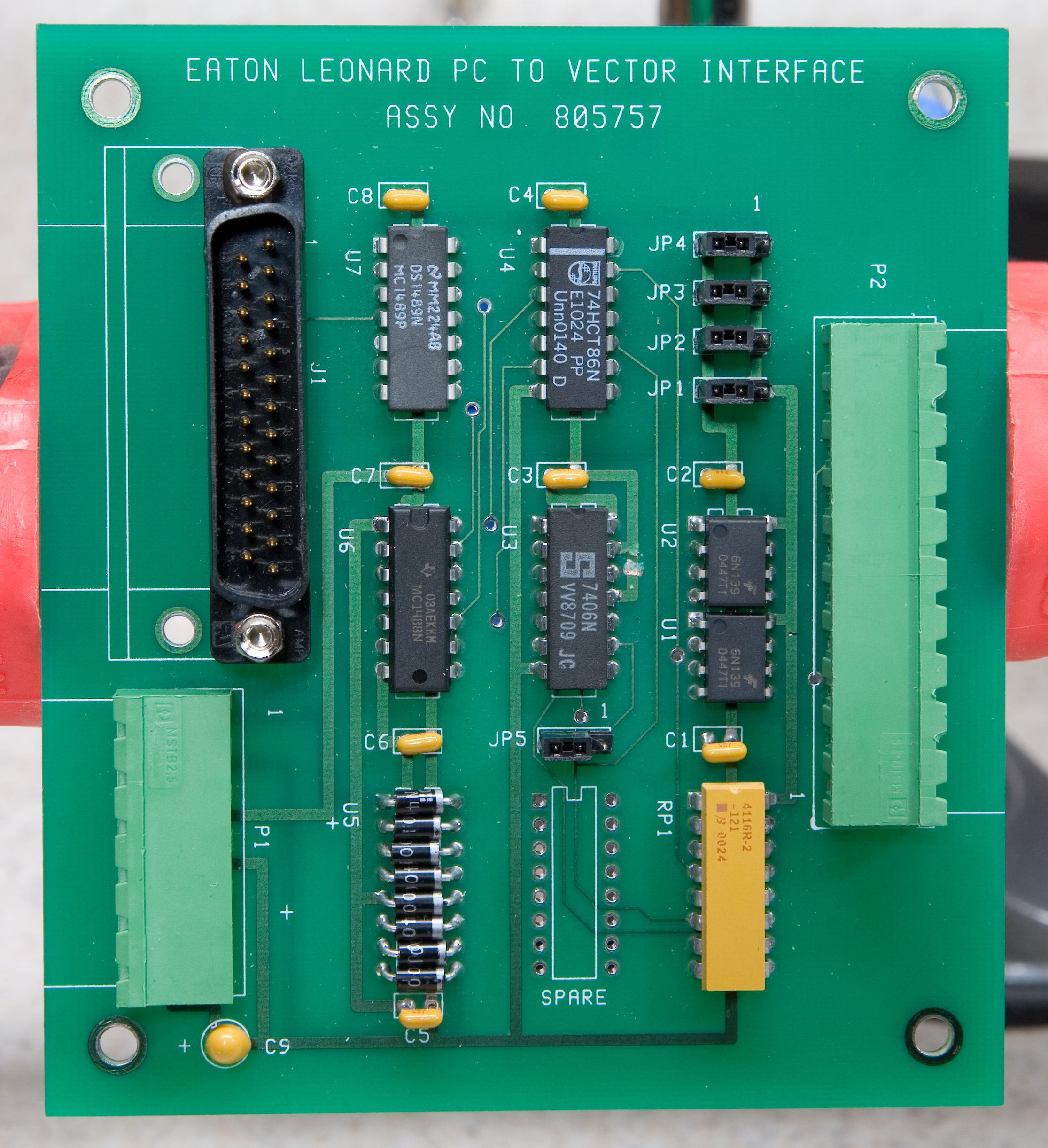
See, the old board has a MC1488/1489 pair used for RS232/TTL level conversion. It turns out that there was another two hidden traces beneath the MC1488. These traces connected the two inputs which were being used with their counterpart on the gate, causing the MC1488 to be used as both a level converter and an inverter. As the MAX232 which I replaced it with can’t invert things, I need to come up with an inverter.

There is an inverter on the CTS line, but not the RX one; the two lines which feed data to the input on the MAX232. Since there’s only one inverter, I’m pretty certain I’ll be able to do this by swapping the circuits which handle CTS and RX, and I’ll test this tomorrow.

Thankfully I was able to borrow the receiving board from inside of one of the machines today, and now I can test the product end to end, as opposed to just making it, taking it all the way to the shop and trying it, watching it fail, thinking about it, making a change, lathering, rinsing, and repeating.

Now I have no reason not to get it working on the bench, and I’m very confidant I will do so, in very short order.

I don’t think it’ll be tomorrow, as I’m heading straight to my parents house after work in order to set up my Mom’s new iMac, get the old one back from her, and other things like that.

electronicsmoved from livejournalwork

Level Shifted!

So, that RS232 to Eaton Leonard (photo gallery retired) level shifter thing I’ve been working on? Well, it wasn’t working. I took a bit of a break from it to get some other stuff done, and tonight I started back in on it. I’m fairly certain I found the problem, and hopefully that’ll be tested tomorrow.

If so, I might have my first for-pay electronics job. Yay!

(This would have been done loads sooner if I had the test environment at home, or a matching board for testing, or something. But, I didn’t, so it was a little more complicated. I don’t mean to blame anyone for this, it’s just the reality of working with one small piece of a puzzle and needing to take it to the customer’s site to test it.)

electronicsmoved from livejournalwork