nuxx.net
Making, baking, and (un-)breaking things in Southeast Michigan.

Category automotive

Honda Music Link, USA Spec PA11-HON2y, iPod touch

Hrm…

I’m very tempted to buy a USA Spec PA11-HON2y and an iPod touch.

The PA11-HON2y would be put in the car, replacing the custom interface I’d made, but using the same iPod holder. The iPod touch would then replace my iPod.

I could then sell the Honda Music Link(s) which I now have and my old iPod on eBay.

This would do a couple of things:

· Get a project off my back (REing the HML’s firmware) and I could abandon it without feeling wasteful.
· Get back some (most?) of the money spent on these projects.
· Put a better quality iPod interface in my car, with next/previous track support. My current setup is also somewhat susceptible to engine noise when the iPod is disconnected.
· Get me a portable data device for checking maps and such while traveling.

On the downside, it’d move me from a 30GB (which is plenty sufficient) iPod to a 16GB, which might be a little tight. Then again, I can wait until MacWorld to see if a 24GB or 32GB is announced.

It’d also be something new to do. Yay!

UPDATE: Hmm… I can get the PA11-HON2y for $119.95 with free shipping via eBay. It’d be best to tear the dash open only once, and that would give me time to remove the remaining cable(s) from the Honda Music Link while cabling this one in. Hmm…

acquired thingsautomotiveelectronicsmoved from livejournal

USA Spec PA11-HON2y Review

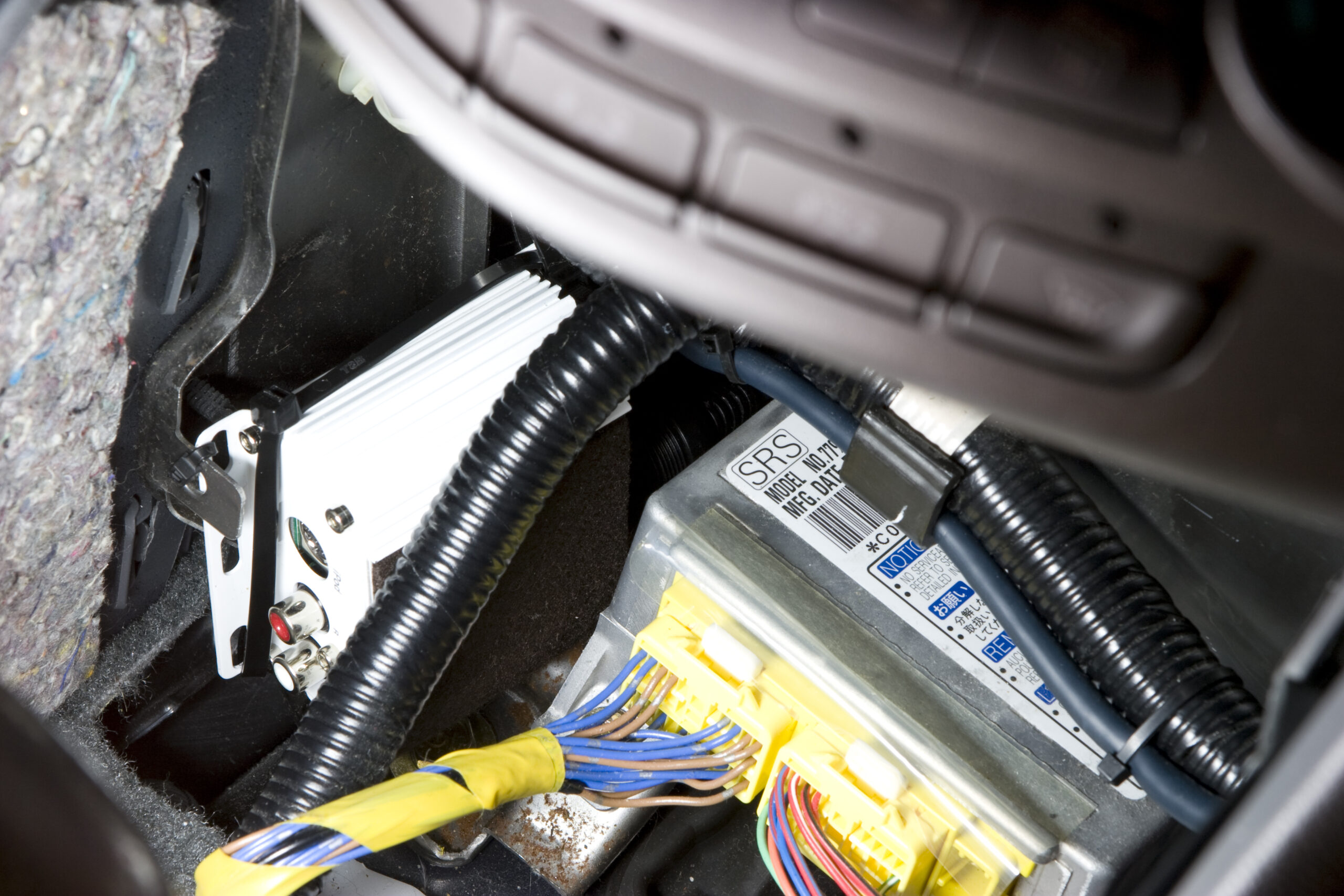
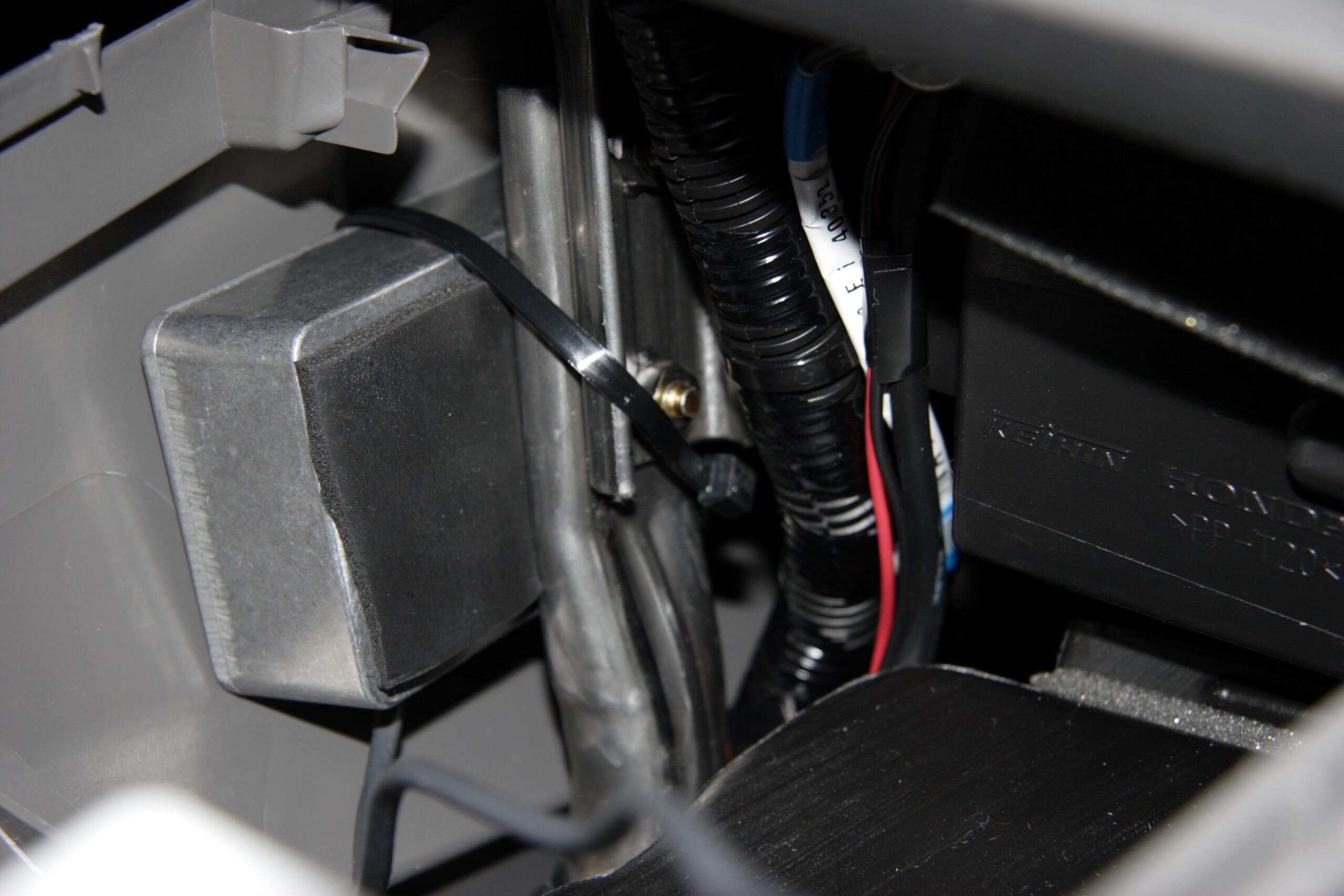
USA Spec PA11-HON2y in 2004 AccordUSA Spec PA11-HON2y Installed in a 2004 Accord

So, long story short, has an iPod and was needing a good way to hook it up to his car, so wanted to get him one for Christmas. I suggested that she get the USA Spec, and said that I’d install it. Well, she did, and I installed it this afternoon.

The install went great and while I don’t have many photos of the installation, I did write up a review of the PA11-HON2y.

In short, it’s a pretty nice device which does exactly what it claims to do: provide a basic iPod input to OEM head units, and provide a basic level of control (next / prev track, ff/rw, pausing when turning off the vehicle or switching away from the iPod).

I have a strong suspicion that the other USA Spec interfaces work in a very similar manner (see here for why), so even if you have a non-Honda vehicle, you may want to look at these interfaces if you are looking for a way to hook an iPod to your head unit.

automotiveelectronicsmoved from livejournal

<fistshake>

Damage To My Car
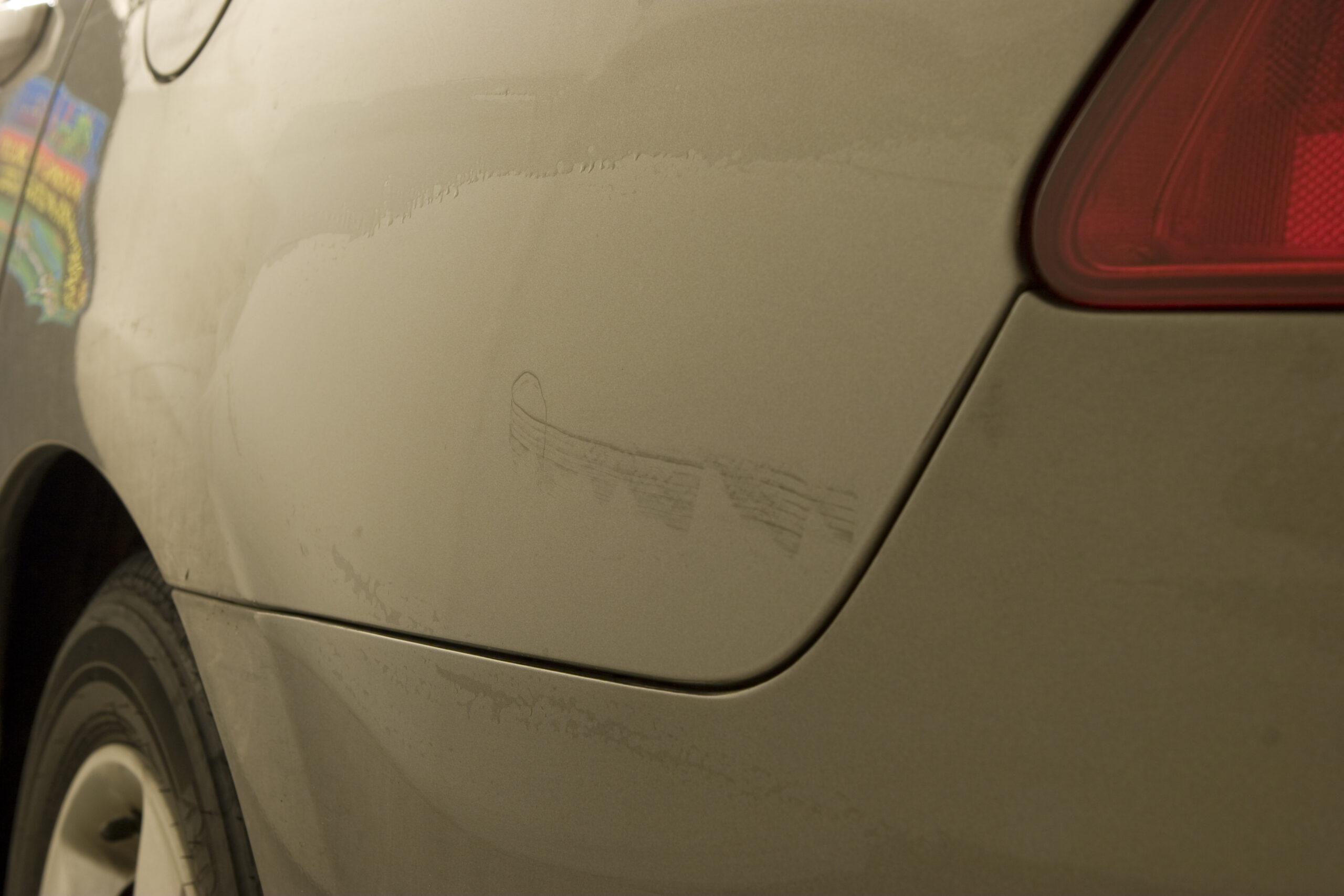
(Click for bigger…)

This is why I can’t have nice things.

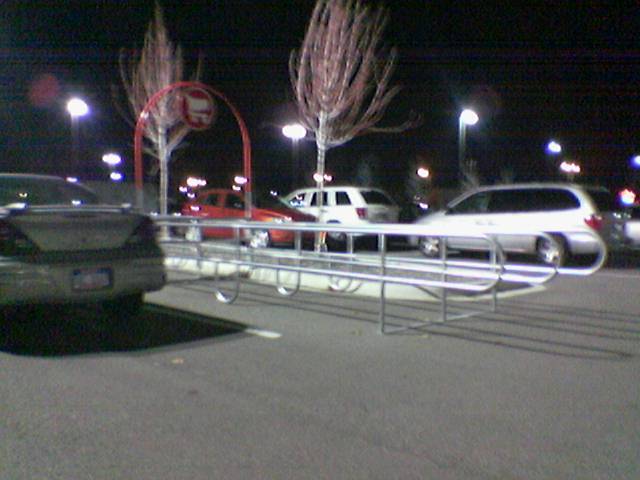
See, I was at the Target / Lowes complex in Sterling Heights to buy a new toilet seat (coming in future post). Well, when backing out of the parking spot I suddenly heard a CLANKgrinnnnnnnnd sound, which stopped when I did. Looking in the rear view mirror (where I had been looking) I saw nothing. Looking in the side view mirror I saw part of the cart corral really close to the back of my car.

I pulled away from it, went and parked, got out and looked, and only saw a bit of scraping to the side of the vehicle near the back. Nothing broken, nothing dented. Looking at why I hit it, the damned cart corral was sticking out into the lane 5′ – 6′! It’s also much shorter than my car’s rear end, so it was pretty much impossible to see. (Use the Grand Am in this photo for comparison; my car’s trunk is about that same height.)

Once I got home I wiped down that part of the vehicle and took the photo. It’s really not as bad as it could have been, as it looks to be only a scuff. There is also a couple small marks on the bumper. I’ll check it all out again tomorrow in the daylight.

While rubbing compound should take care of it, I’m still a bit frustrated. I’ll probably find some way to complain to Target about it, because that corral should not have been positioned that far out in the lane. I don’t really want anything for it, I just want it fixed so no one else hits it.

automotivemoved from livejournal

Stuff Gets Done II

Today / Tonight’s Accomplishments:

· Car oil changed.
· Bathrooms cleaned sufficiently.
· Solution book to K&R’s C book ordered from Half.com.
· Old built-in soap dispenser removed from kitchen sink and replaced with metal plug.
· Beer poured, leftover Thai food microwaving.
· Bathroom rugs and floor towels in the dryer.

around the houseautomotivemoved from livejournal

Protocol Disappointment

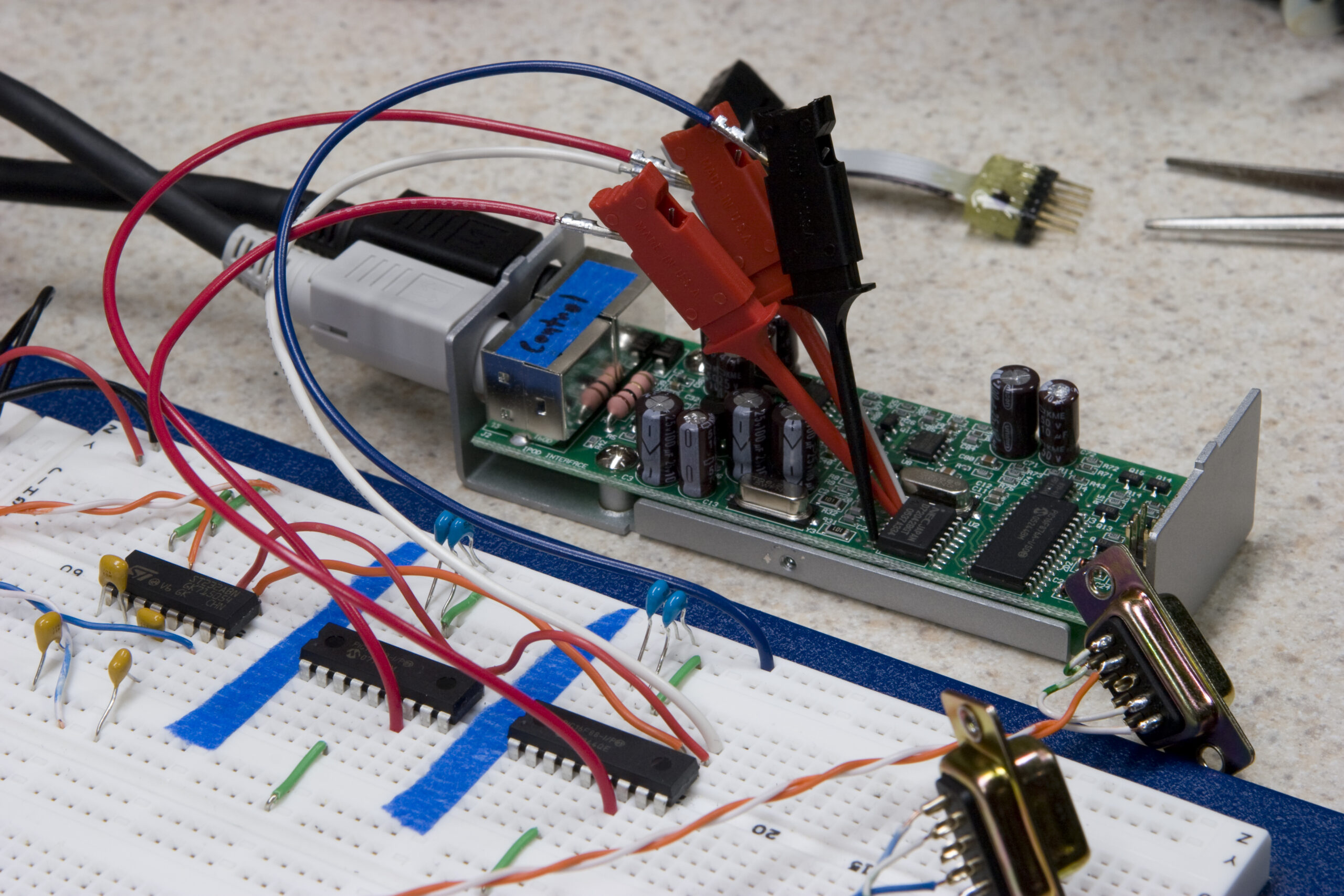
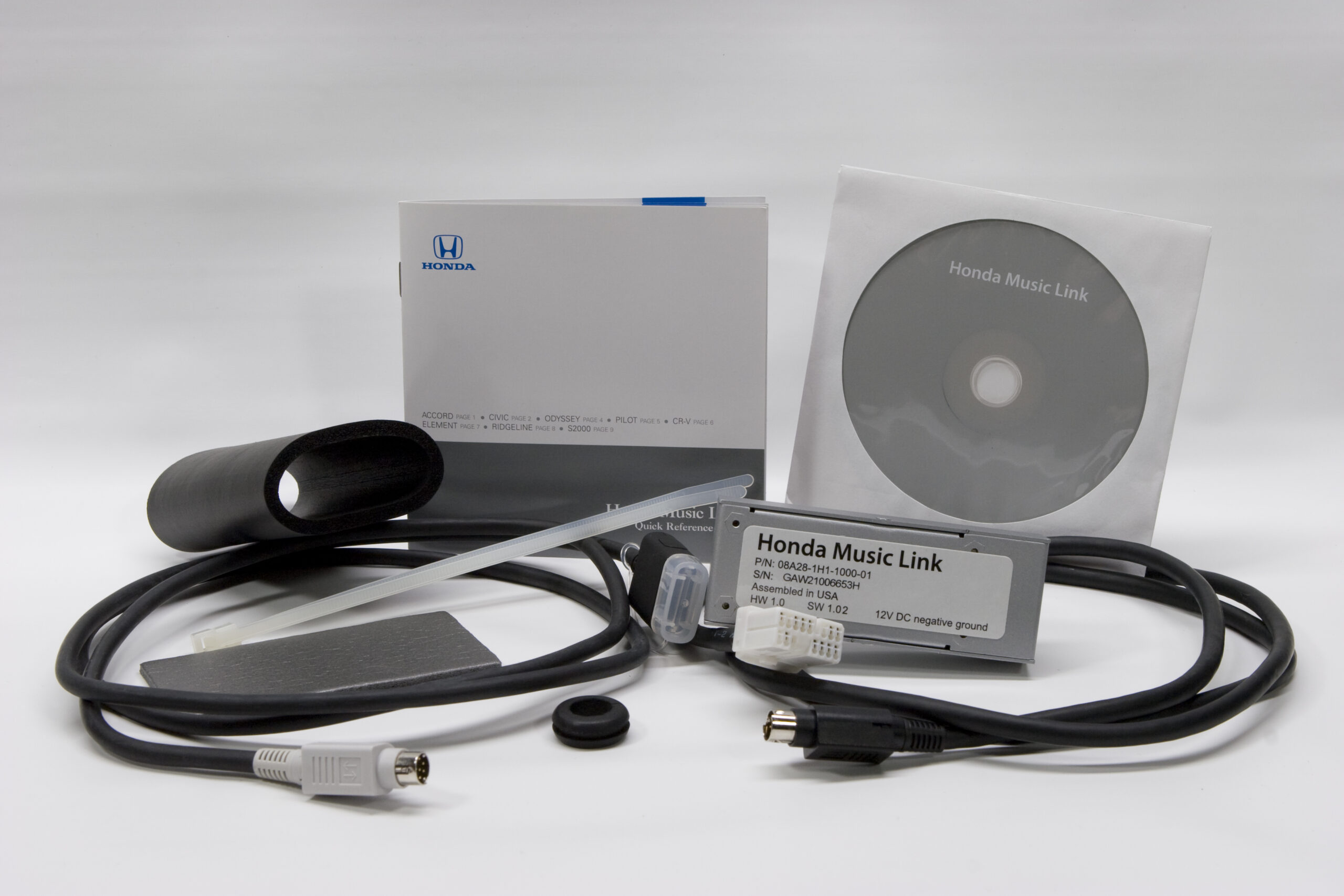
I ran into some headaches with electronics tonight. First, I tried to get recognizable data out of the Honda Music Link, using most of the hardware mentioned last night. Unfortunately, this didn’t work out as I hoped. While the PIC and NEC-branded IEbus controller communicate via SPI, a Control / Data line is also used. This means that the data I sniff in either direction could either be control or data, and without knowing the state of that line it’ll be even harder to figure out the protocol.

I’m thinking that the best thing to do (if I want to continue the project) is to pick up a PIC with two SPI lines, so I can read both of them into buffers at the same time. Then I can also check the status of C/D, bundle all this together, and easily output it to the PC, already in a somewhat readable format.

Or, I can just stop working on the project again.

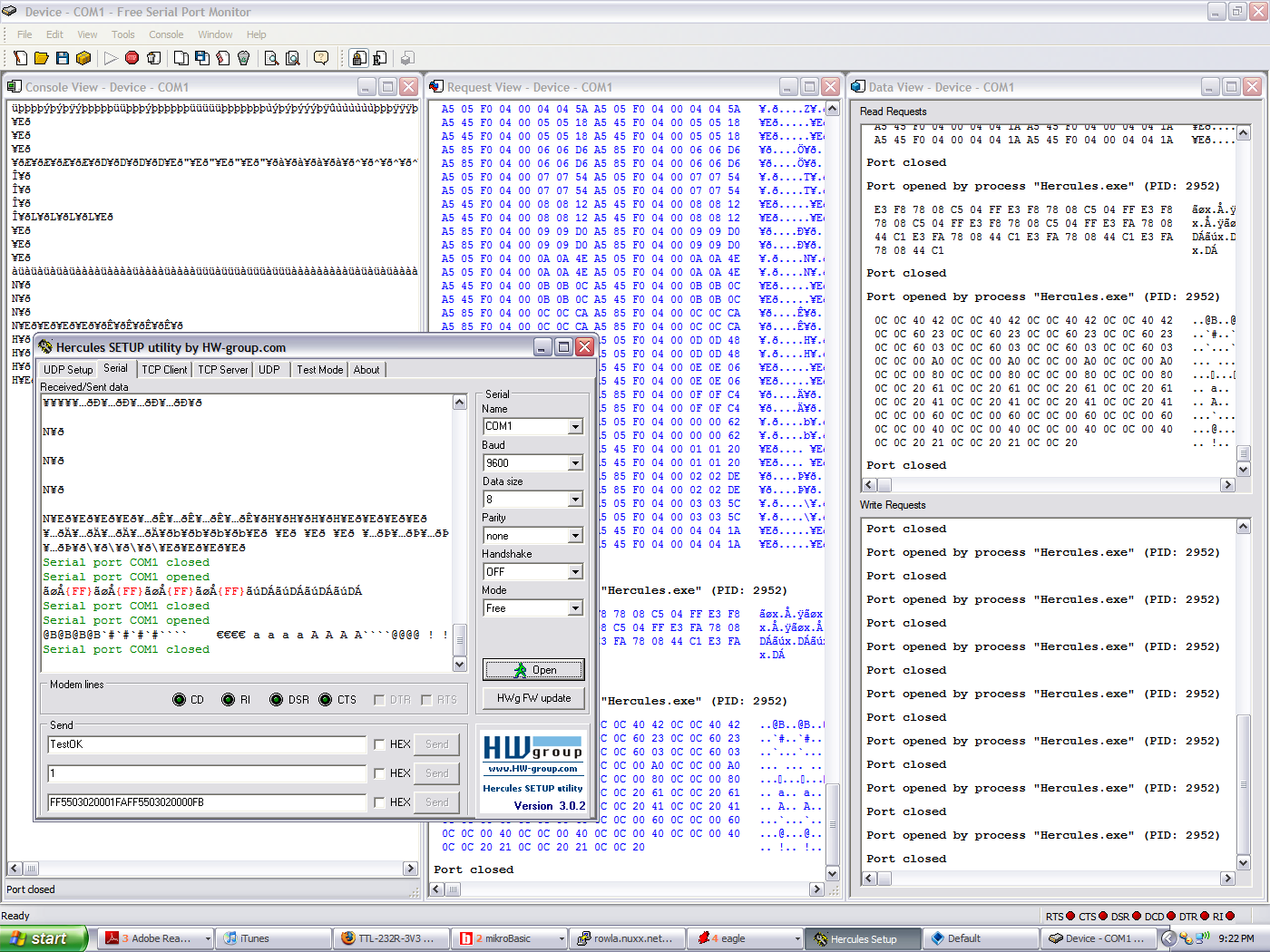
After getting frustrated with that, I decided to tear into the Xbox 360 Chatpad (photo gallery retired) and see if I could figure out what it is spitting out. Well, the short answer is that I couldn’t. I was able to see something, but I’m not sure what it is. (Screenshot of data being captured.)

The serial data is 0-2V when coming out of the 360, and it appears to do some regular polling, back and forth. I couldn’t figure out the baud rate and whatnot, so I couldn’t really tell if what I was seeing was valid data or not. That said, it’s a start.

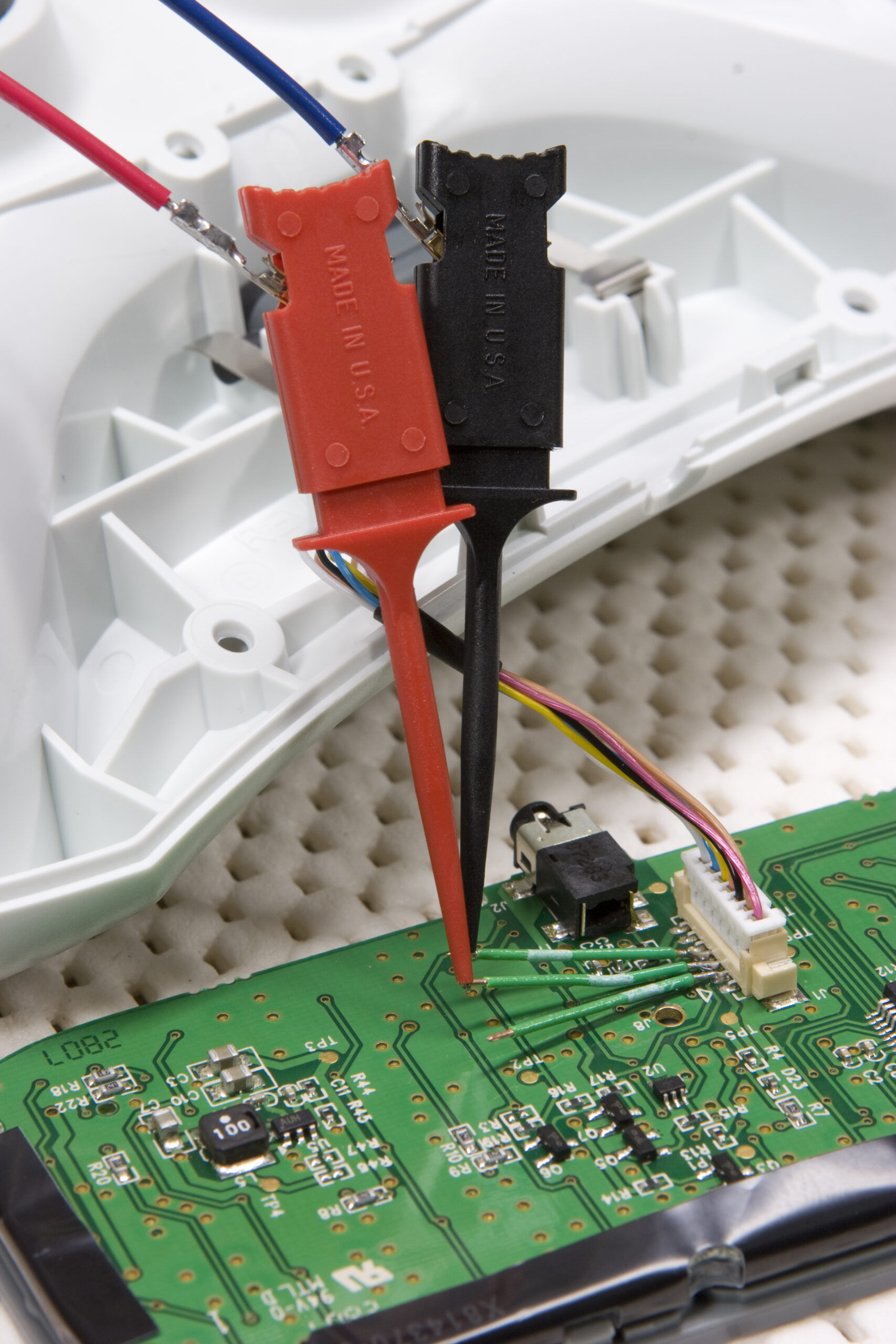
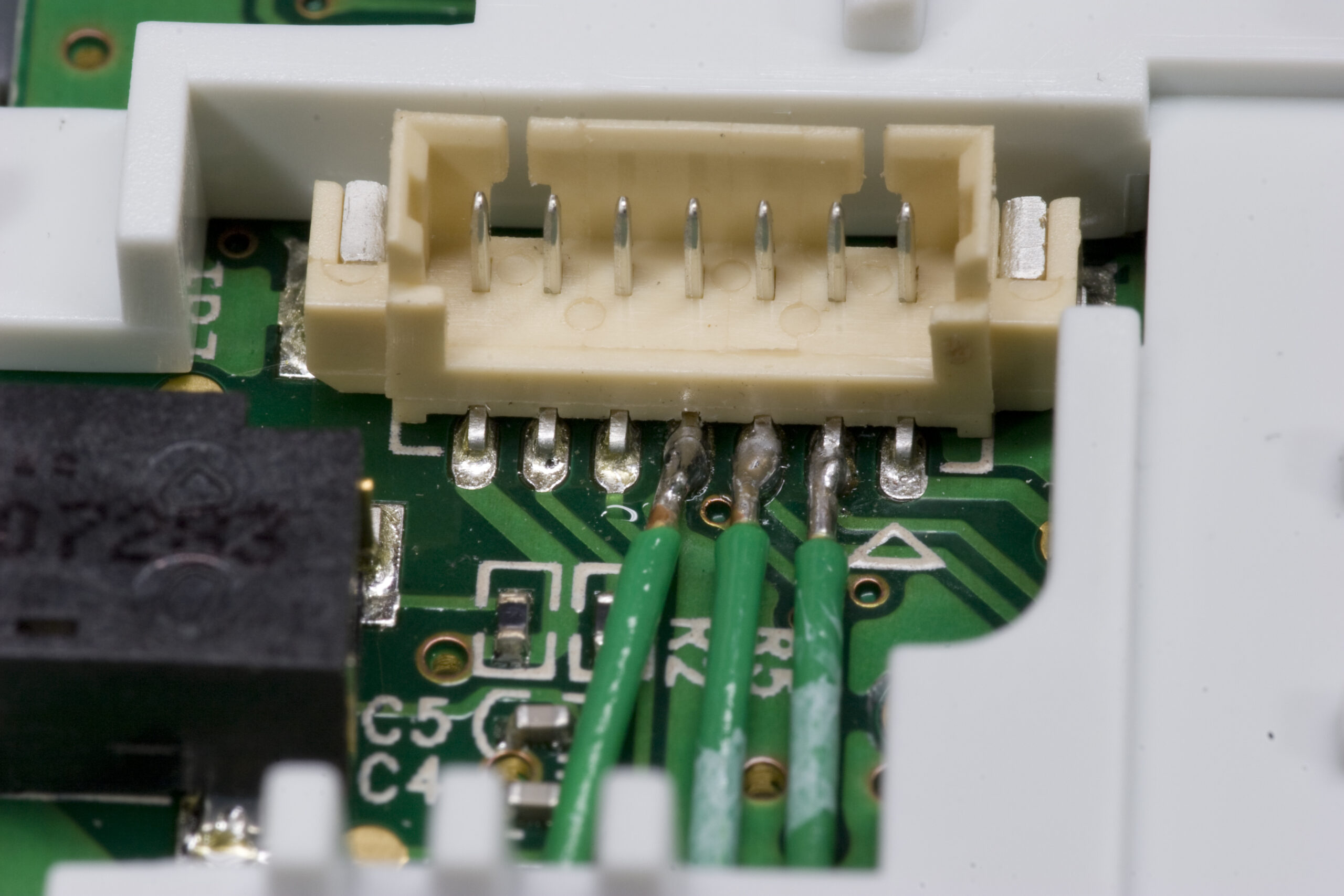
Here’s two more photos:

· Test leads connected to Chatpad.
· Detail of leads soldered to internal Xbox 360 Chatpad connector.
automotiveelectronicsmoved from livejournal

HML Sniffer

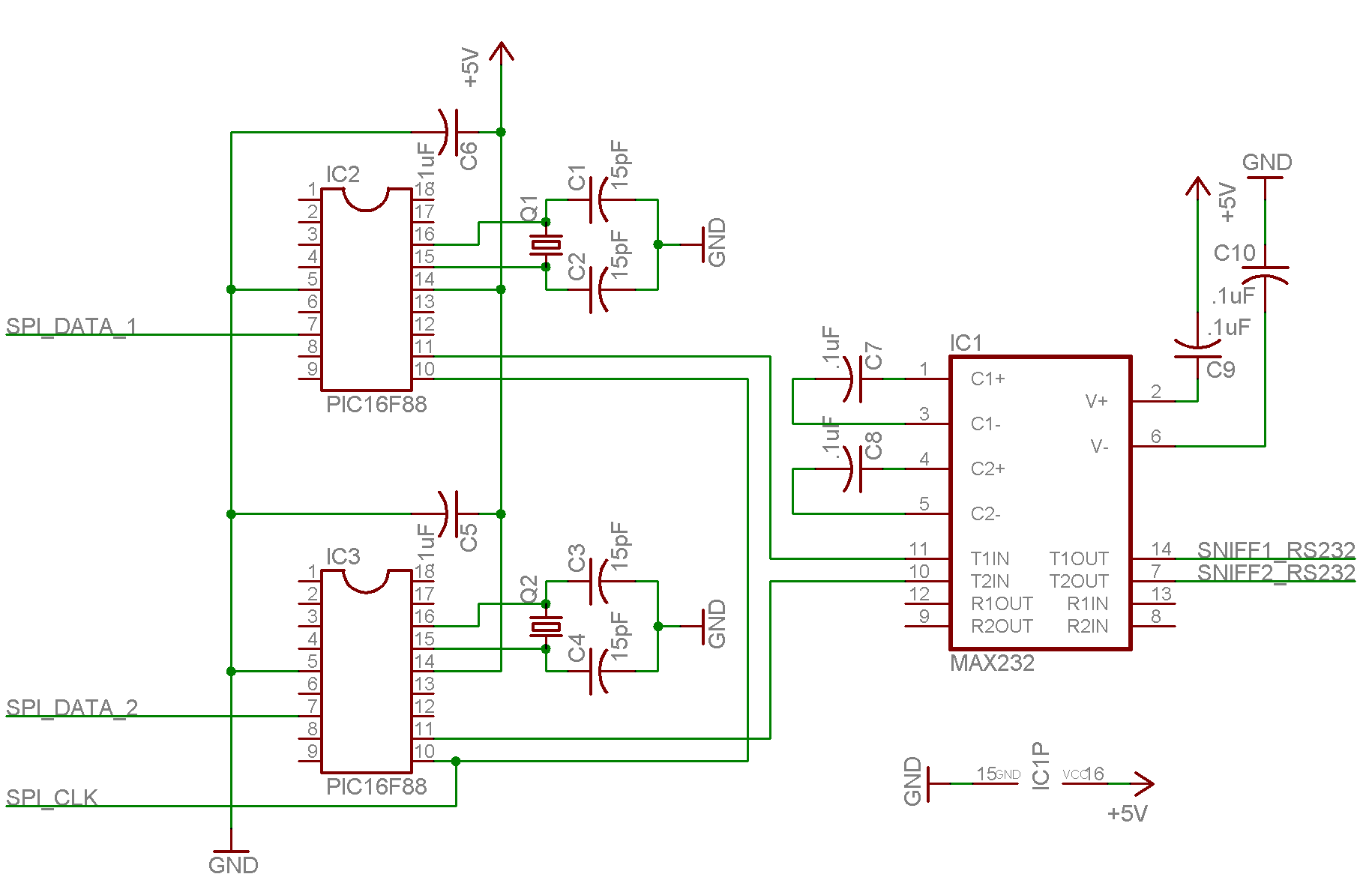
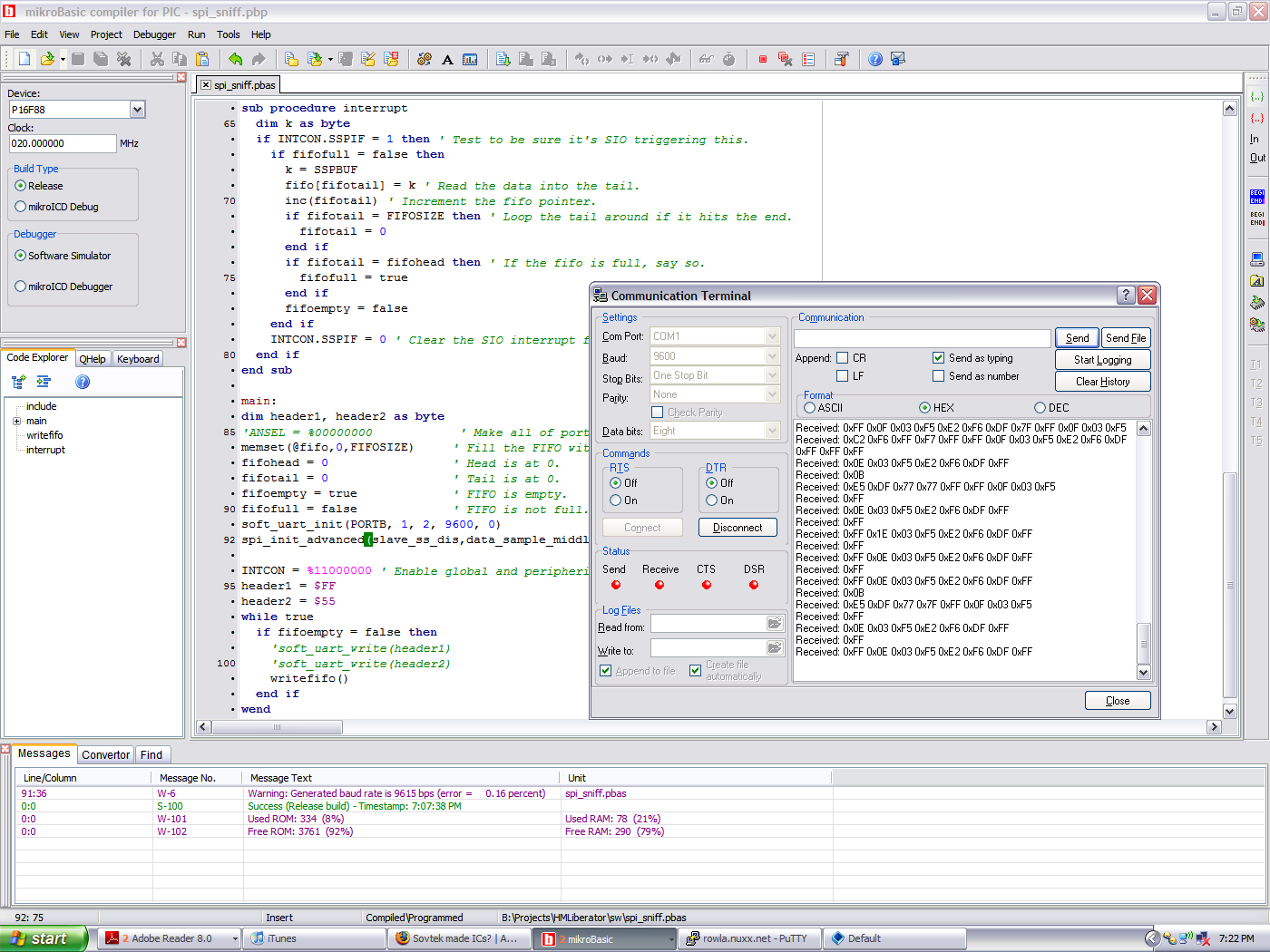
I finally got around to putting together the SPI sniffer I mentioned back on 26-July. The only problem is that I left all the crystals in my cube at work, so I couldn’t give it a test run tonight. I think the software is functional, but I have no good way of being sure yet.

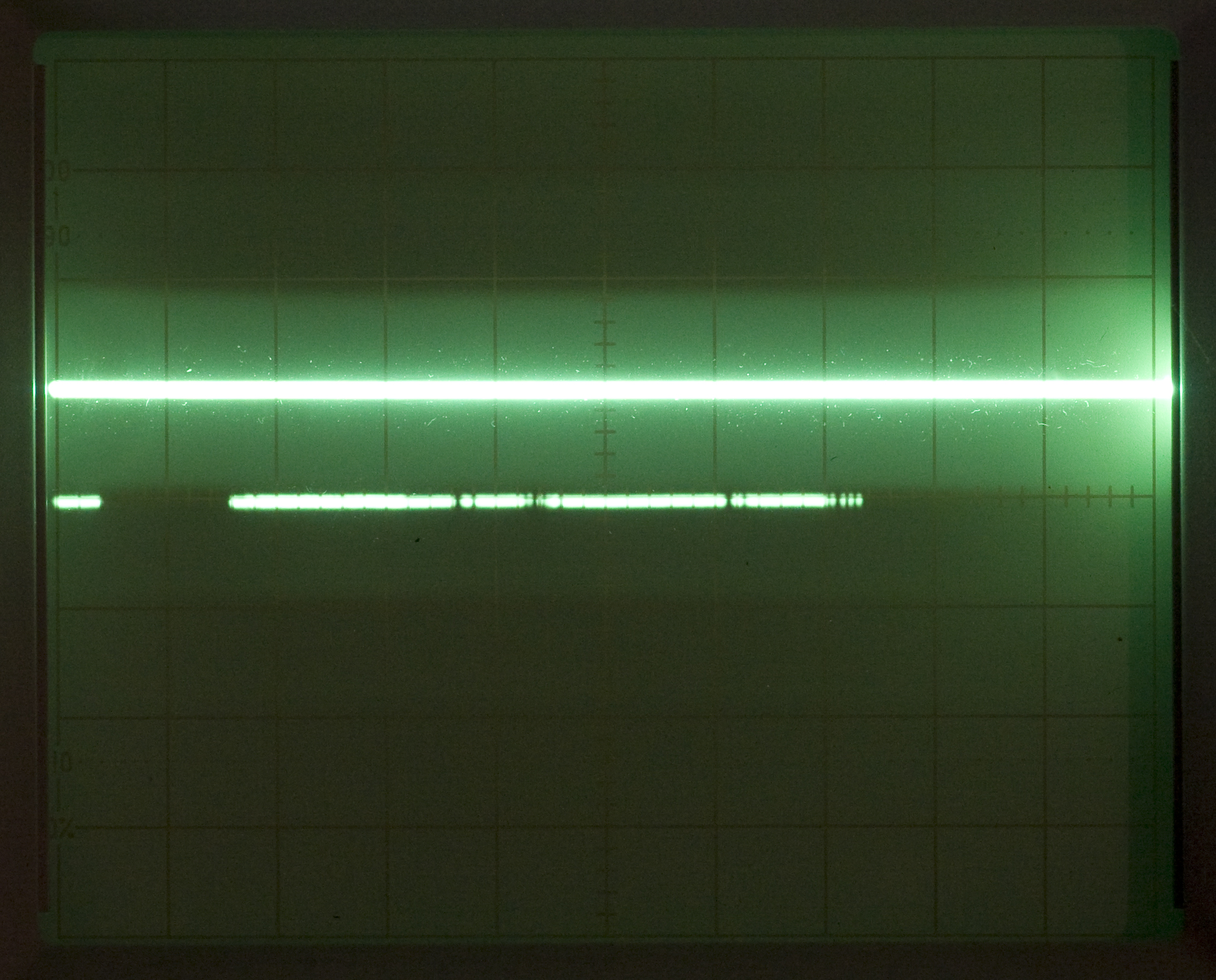
Oh, there is also this photo of the oscilloscope screen showing little blips of data, from when I hooked the scope up to one of the SPI lines, just to be sure that I could see something.

Most of tonight was spent putting together things on the breadboard, making the DB9 cables, making the leads for the micro clips, and writing the interrupt handler (feeds SPI data into the FIFO for writing out via the UART). Hopefully I’ll get more done tomorrow. My hope is that by the end of the Thanksgiving weekend I’m able to understand what is going on between the PIC and IEbus controller, and thusly (hopefully) the rest of the vehicle. From there I will (hopefully) be able to start getting an idea of what actually needs to go into firmware for the HML itself.

automotiveelectronicsmoved from livejournal

Rusty Tailpipe

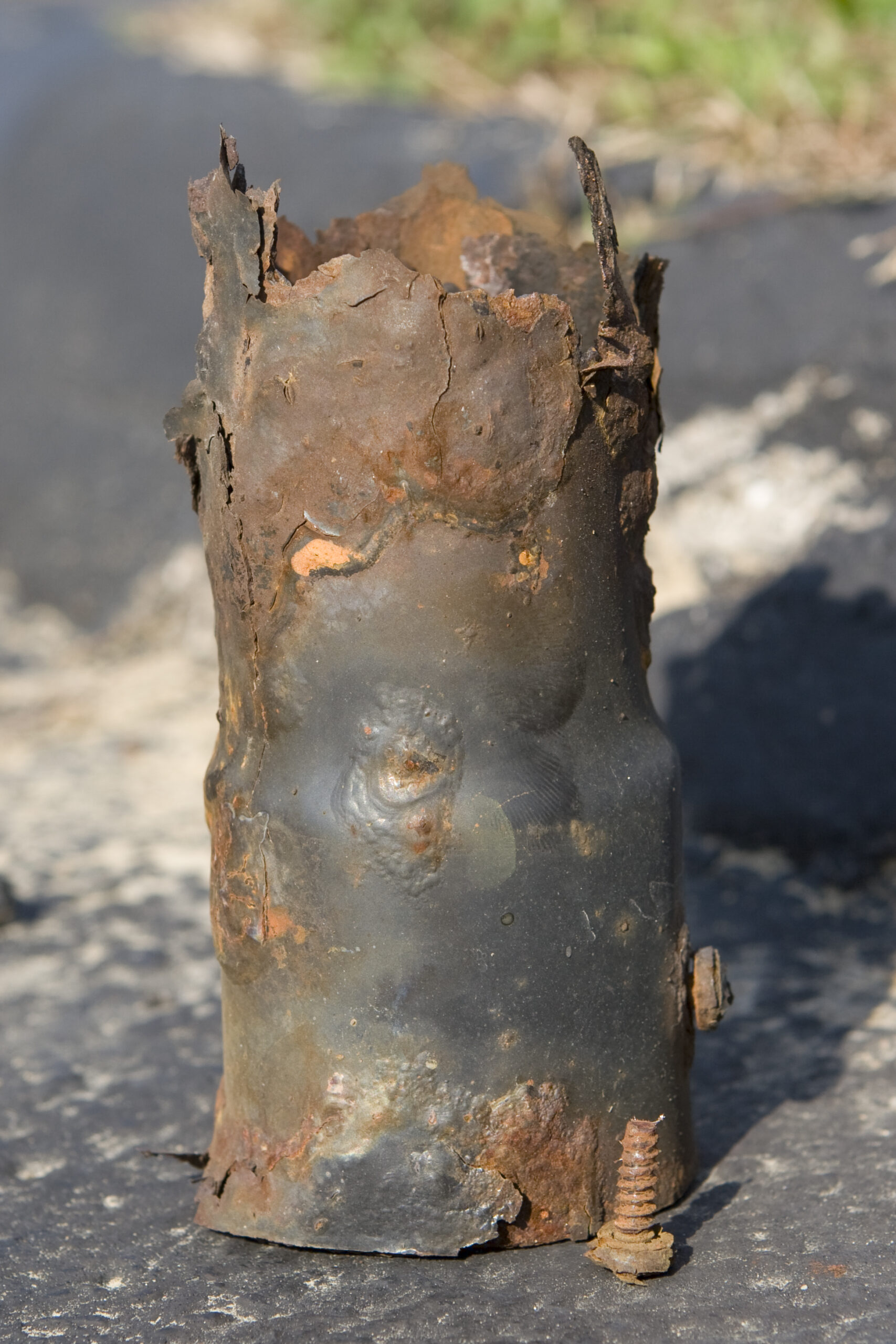
This is what happens when someone puts a cheap chromed tailpipe cover on a car: it gets rusty and ugly and difficult to remove.

Danielle’s car had one of these tailpipe covers on it, and knowing for a few weeks that she would really prefer it to be gone, I removed it. The two screws holding it in place were quite tough to remove, but I was still able to get them out with a screwdriver and a bit of elbow grease. I’m really surprised they hadn’t seized.

At least that’s sorted out. Now to sort out dinner… Thai food, maybe.

automotivemoved from livejournal

It works…

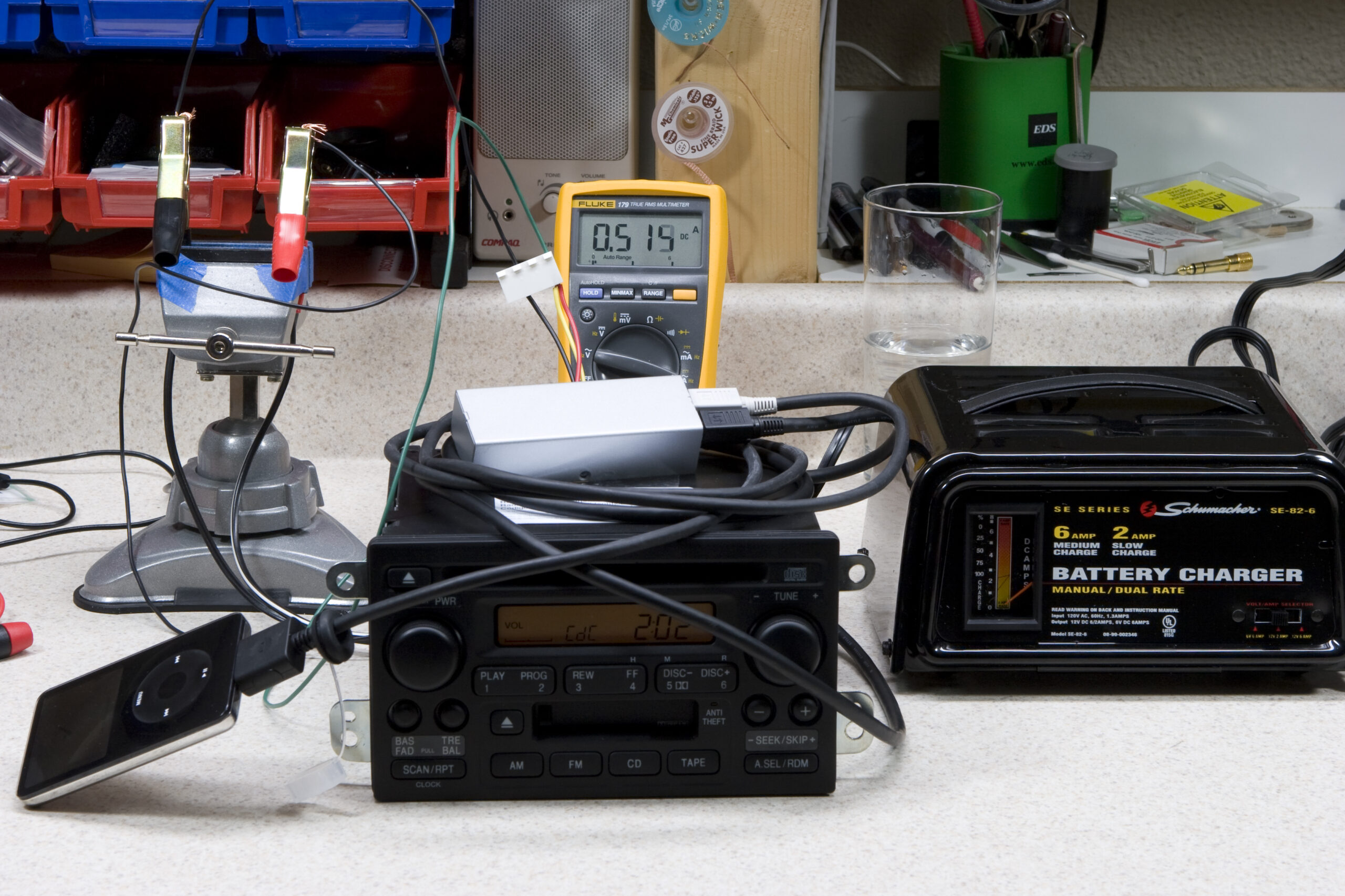
2006 Honda CR-V Head Unit, Honda Music Link, and Battery Charger

Well, that works. I had no problem supplying the head unit there on ~500mA, and per the meter it only maxed at just about 1.1A on startup. So, I’ve got no idea why the Skynet supply used earlier didn’t work. I’m thinking it was not able to deal with the inrush, so the next thing I’m going to try is to put a switch on the 12V line for the keyed power, starting it up in stages, as is normally done in a car.

That battery charger was only $32 at Meijer, so if I really need to keep it I can, but still… If I do, I’ll probably add some banana jacks to the back or something. At least this stage is almost set and I can get on to building the logic analyzer. Well, only after I get the headphone amp working reliably…

automotiveelectronicsmaking thingsmoved from livejournal

Fuses!

Start of the Honda CD Changer Protocol Test Rig
(Click for bigger image…)

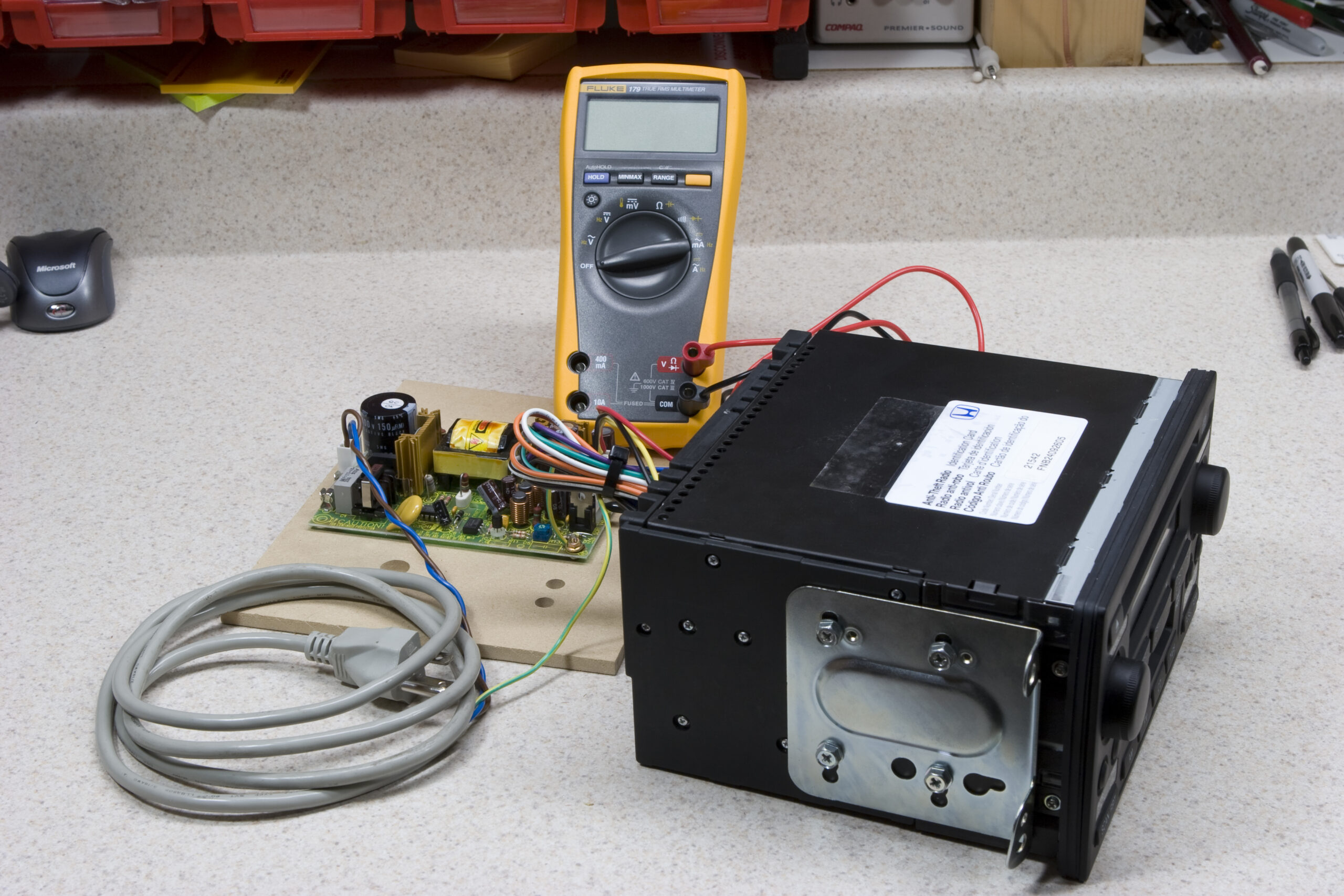
I also can’t seem to power up the car stereo that I have for testing the Honda Music Link stuff. It’s not working. I hear a faint click from the supply as it starts up, then a loud CLICK from the head unit (sounds like the tape deck doing something), then it starts over again. I think it’s not enough power…

That supply is rated for 3A, but I’ve got no idea what the stereo pulls. I figured 3A would be enough, but I’m not sure. I’ve got the keyed and always-on power lines connected at the same time, though, so maybe the inrush current of starting the entire stereo is too much. Maybe I’ll throw a switch on the keyed side of the line and see if that sorts it out. If not, I might just go buy or borrow a car battery charger. That should give a good 10A. If that’s not enough, something in the stereo is likely wrong.

My new amp also keeps blowing fuses, and I’m not sure why. Previously the only time I could make it do this when tubes were pulled, but now it seems to happen with them fitted. It’s frustrating. Either I’ve got misaligned tube holes (they look pretty good) or else something else is wrong. I’m almost tempted to try a different set of tubes.

Part of me is tempted to build a solid state headphone amp (β22 / σ22 combo) and use that instead, but that’d be a lot of work, and I’ve got other projects to do right now. Or maybe I’ll build one of these and use it as a speaker amp with some nice near field monitors in my office. That’d be excellent.

automotiveelectronicsmoved from livejournal