SCPH-1080, Meet Saw Blade
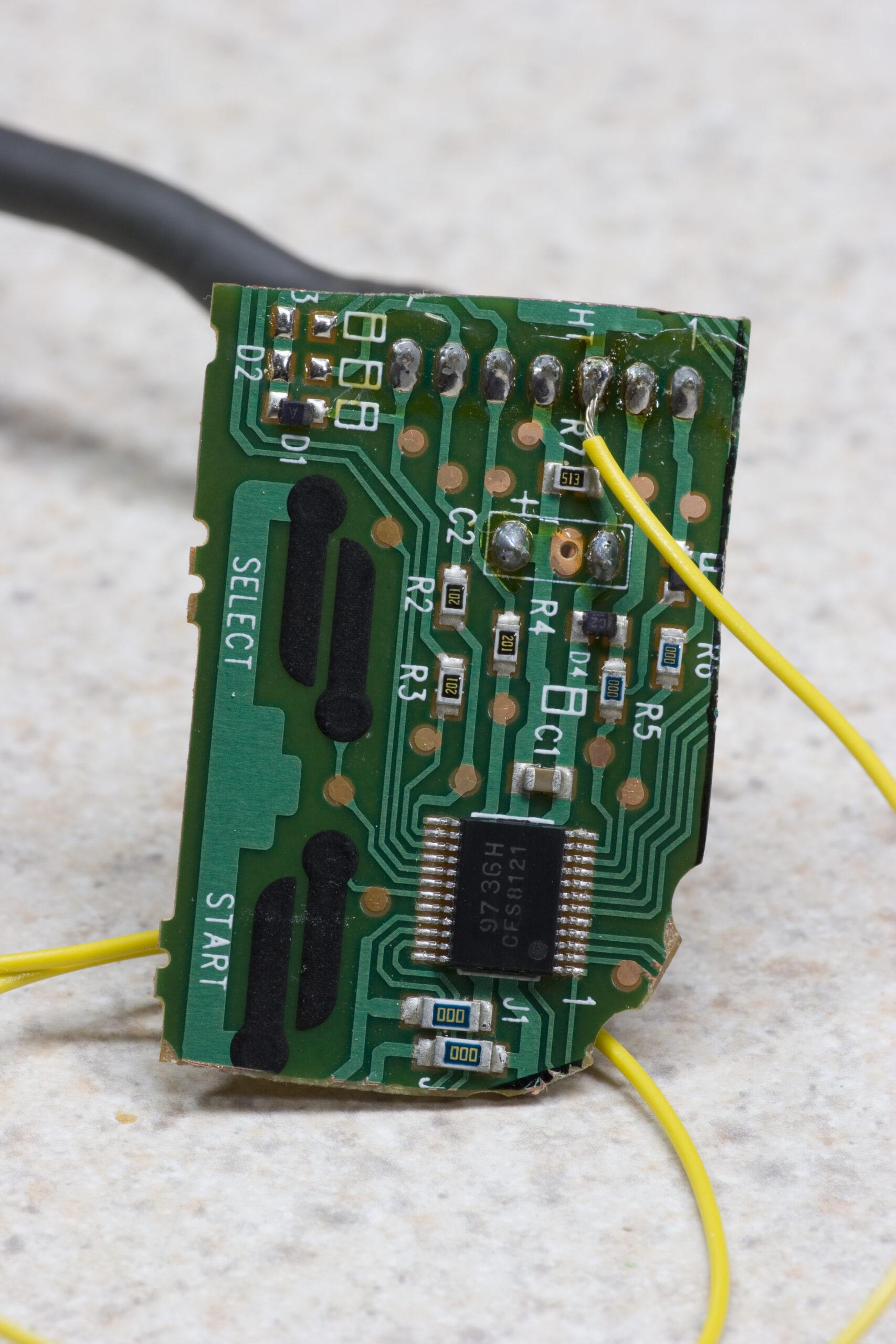 SCPH-1080 Playstation Controller PCB, Cut To Size, With Test Wire
(Click for more photos…)
A little while back I posted something which showed me using a SCPH-1001 Playstation as a CD player with my recently completedMillett Hybrid Maxed headphone amp. Well, after taking the SCPH-1001 apart over the weekend I picked up some overpriced buttons from Radio Shack (so I could get started on things today) and… got to work on it.
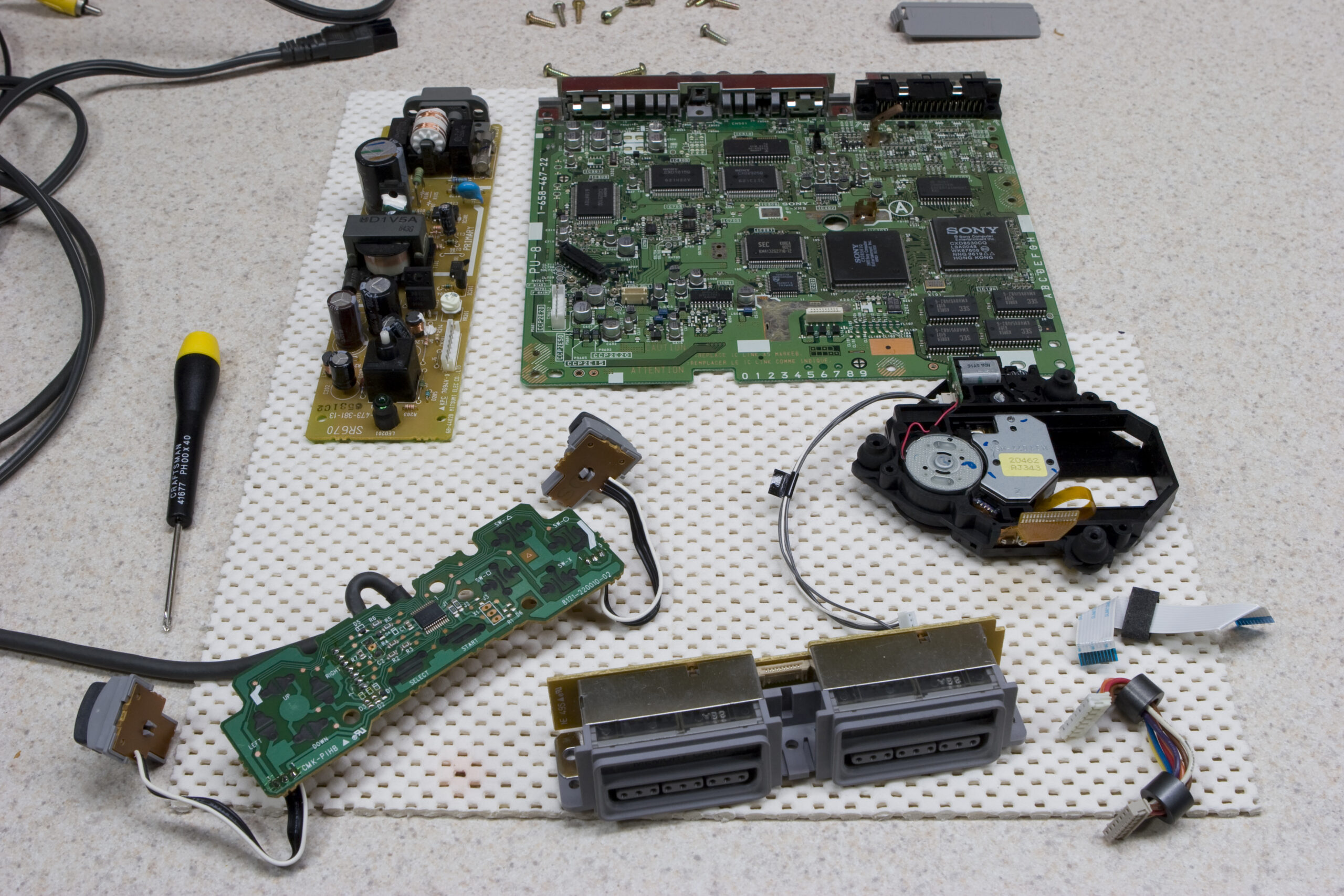
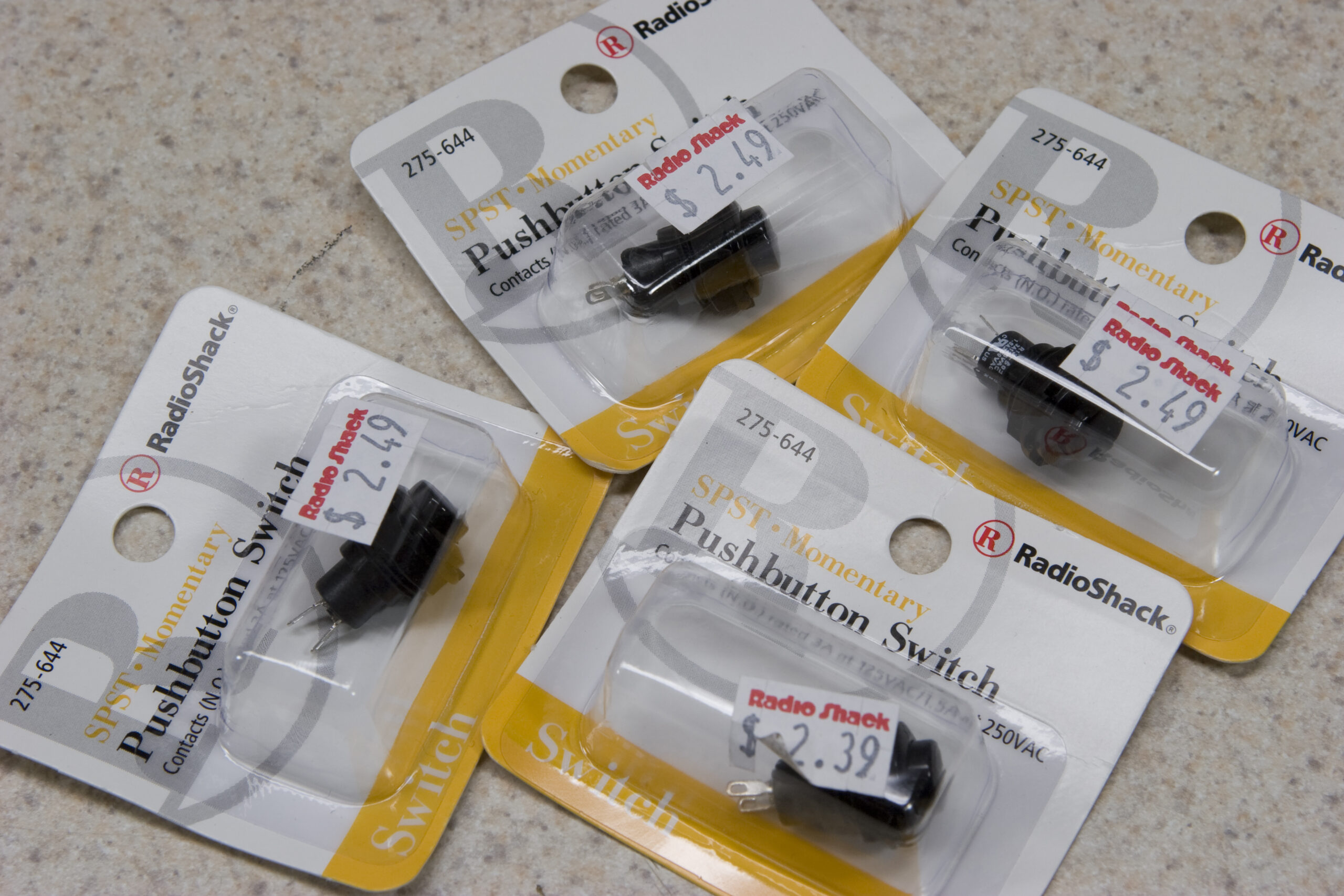
I don’t have much to say yet, as I’m only about half-way done, but I think it should work. Basically, I’m taking the PCB from inside a controller, cutting it down to around the minimum needed (as seen above), and wiring it up to some buttons on the top of the case to act as the controller buttons needed for CD playing. The buttons will be Play/Pause, Stop, Prev Track, Next Track, Rewind, Fast Forward.
Yes, it’s a massive hack, and I normally don’t like the cutting-down-the-PCB idea, but I just wanted this done quickly and cheaply. I thought about lifting that IC and making my own board for it, but that wouldn’t provide any benefit, and would just be more effort. So, I’m doing it this way.
More pictures of this can be found here (photo gallery retired). Tomorrow I’m hoping to finish it up, and I think it’ll be possible. I’ll post more photos and maybe do one of my cheesey project writeups then.
You know, it would be interesting to run some tests like frequency sweeps, total harmonic distortion + noise, dynamic range, etc on that Playstation. A DAC is only as good as the analog section that sits between you and it. If Sony didn’t bother to put in high quality filtering, amplifiers, etc, the thing may not be all it is cracked up to be.
But hey, if it sounds good, it is good.
I only gave it a cursory listen a week and a half or so ago. It sounded very… stark. I imagine that’s the one-bit DAC and the good quality headphone amp doing its thing.
If you take a look here you can see the output schematic.
Is there any way I can do tests like that with the equipment I have? Just a good multimeter, so-so scope, and not-well-trained ears.
Good question. I’d gotten so used to having an Audio Precision at my disposal at Dolby that everything else seems like… a waste of time.
Basically, to test an analog signal you need something with high quality analog inputs, or do everything the really old fashioned way with the scope.
The most important tests are:
Frequency response: basically check the amplitude at all frequencies from 20 Hz to 20 kHz. Pretty easy to do with the scope, but you first need to figure out a reference voltage for converting the voltage to dB. You probably want to do this with a signal (on a CD) at 0 dBFS and -20 dBFS. The -20 signal might be more accurate for the frequency response, but the 0 dBFS signal will assist you with your dynamic range test. You’ll also use these two to calculate your volts-to-dB reference.
Dynamic range: generate some LSB dither and measure how quiet the output is. Sometimes done with a 2 kHz tone in the signal which is notched out by the measuring device to focus on the noise in the signal (this is done because some DACs actually turn off if the signal is too quiet and will get a false-positive passing of the test). Then compare this to the max output level you got with the 0 dBFS signal from the frequency response and you’ll know your dynamic range (difference between loudest and quietest signals).
THD+N: very tricky to do without test equipment. You can kind of look at the sine-ness of your sine wave during an amplitude sweep, but that doesn’t tell you as much as you’d find out with equipment designed to perform the test.
There’s a whole host of other tests you can run, but those are the key ones. I’ve got a friend who has an Audio Precision at home and he loves debunking audiophile myths just for fun. I should buy him a PlayStation.
Hmm, yeah… I can see why that’d be hard to do by hand.
I think those SCPH-1001s can be found pretty cheaply, and the only thing to worry about with them is the transport itself.
I’d love to see his results, and I’d gladly re-post them when doing a write-up on my silly adding of buttons.