Elenco XP-720K
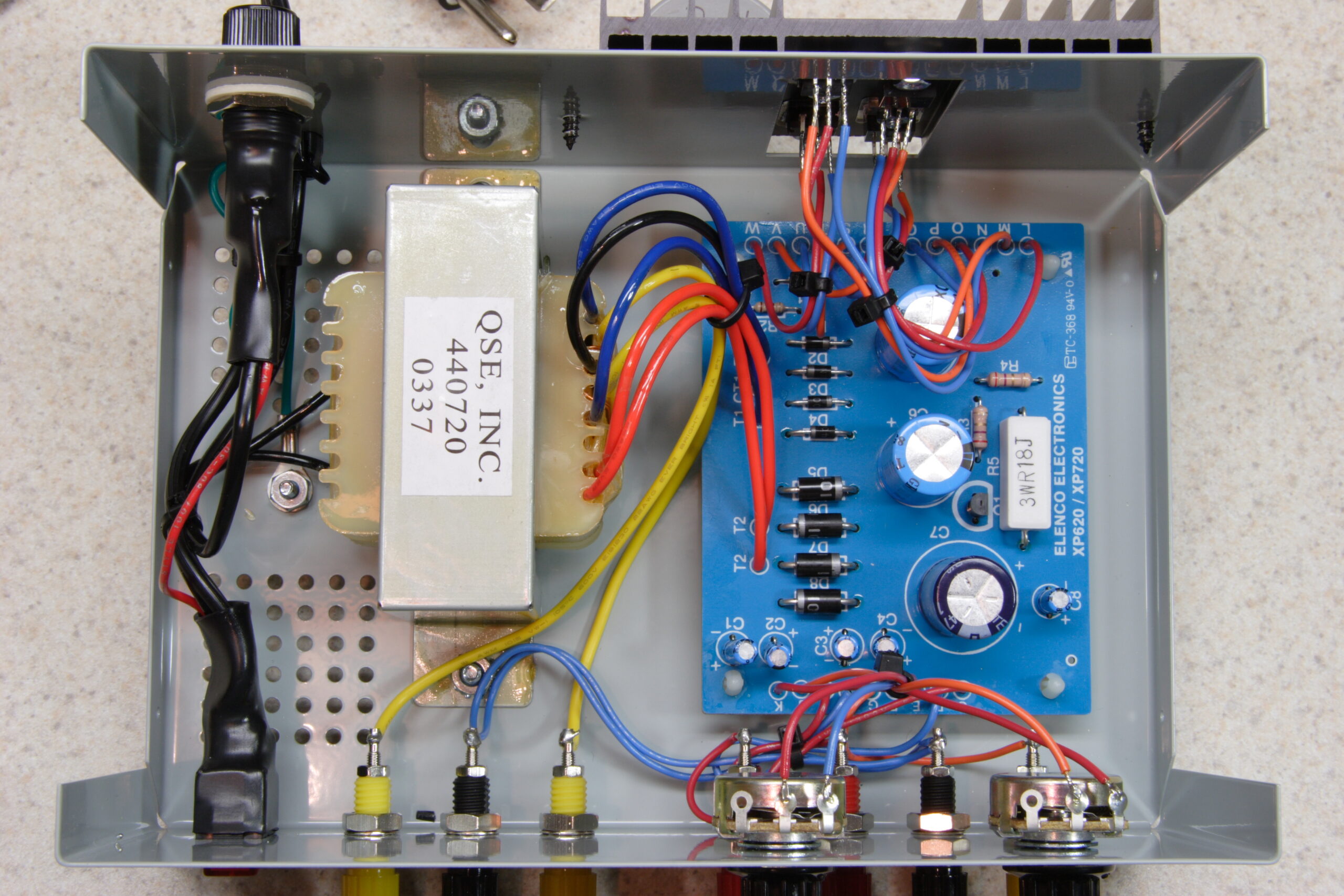
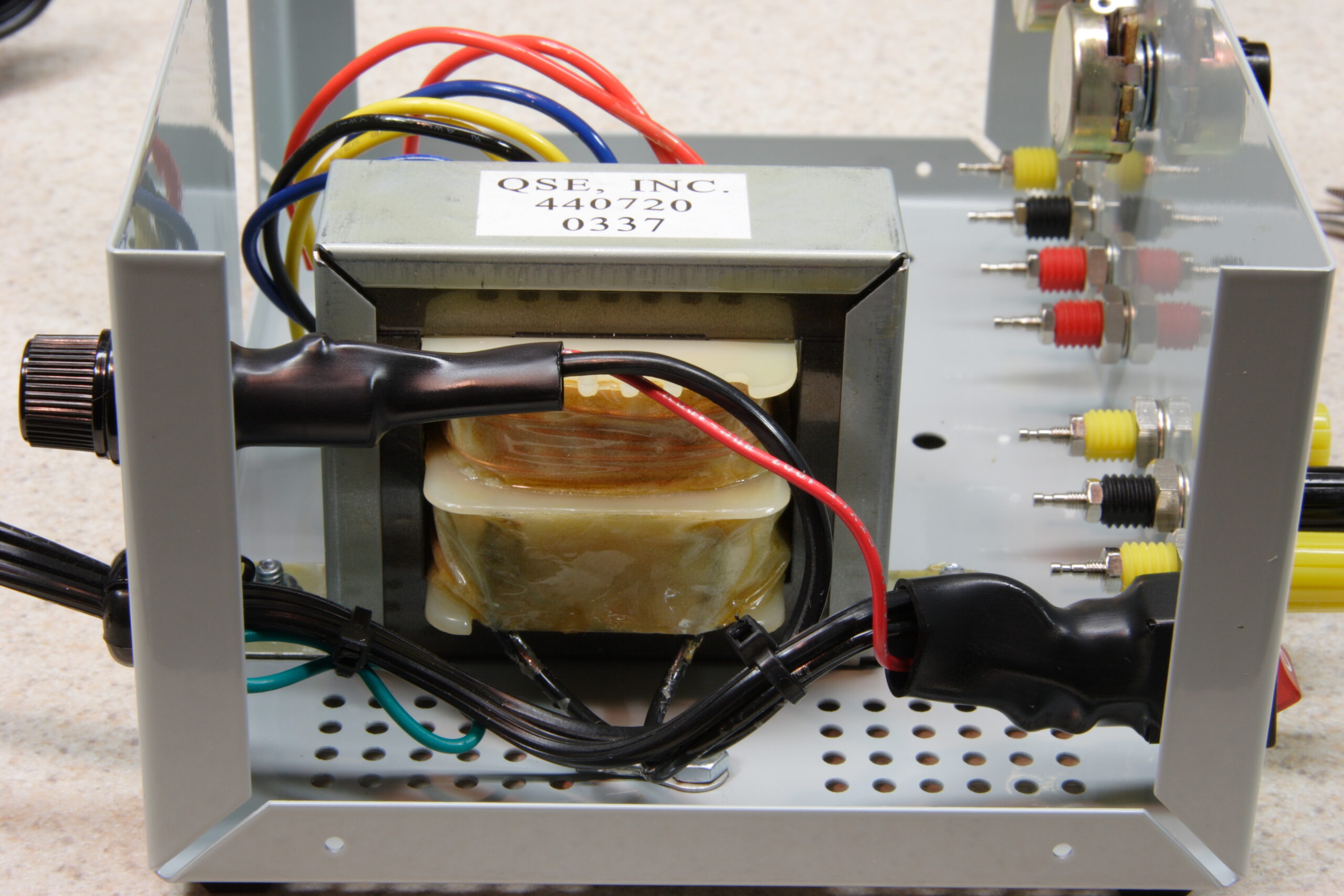
Inside of the completed Elenco XP-720K
(Click for more…)
Yesterday I received the Elenco XP-720K kit which I ordered last week from KITS USA. Their price of $44.95 for it was far cheaper than most other places, so I was able to get it with a few lead sets (banana plug to alligator clip, banana plug, and micro connector) for around US$60 shipped. Not a bad price at all for such a well made kit power supply, I don’t think.
Anyway, building it went rather well, and the biggest problem I had with it probably revolved around the detail of the manual. The problem was not with too little detail, but actually too much. It seems that this kit has its manual designed to be used in school for learning purposes, so it goes rather step by step of hooking up every part. It wasn’t a big issue to deal with, though. The nice thing about it being this sort of kit is that the function of the entire supply is clearly detailed in the back of the manual, wholly explaining how a rectifier works, what each part does in the circuit, etc.
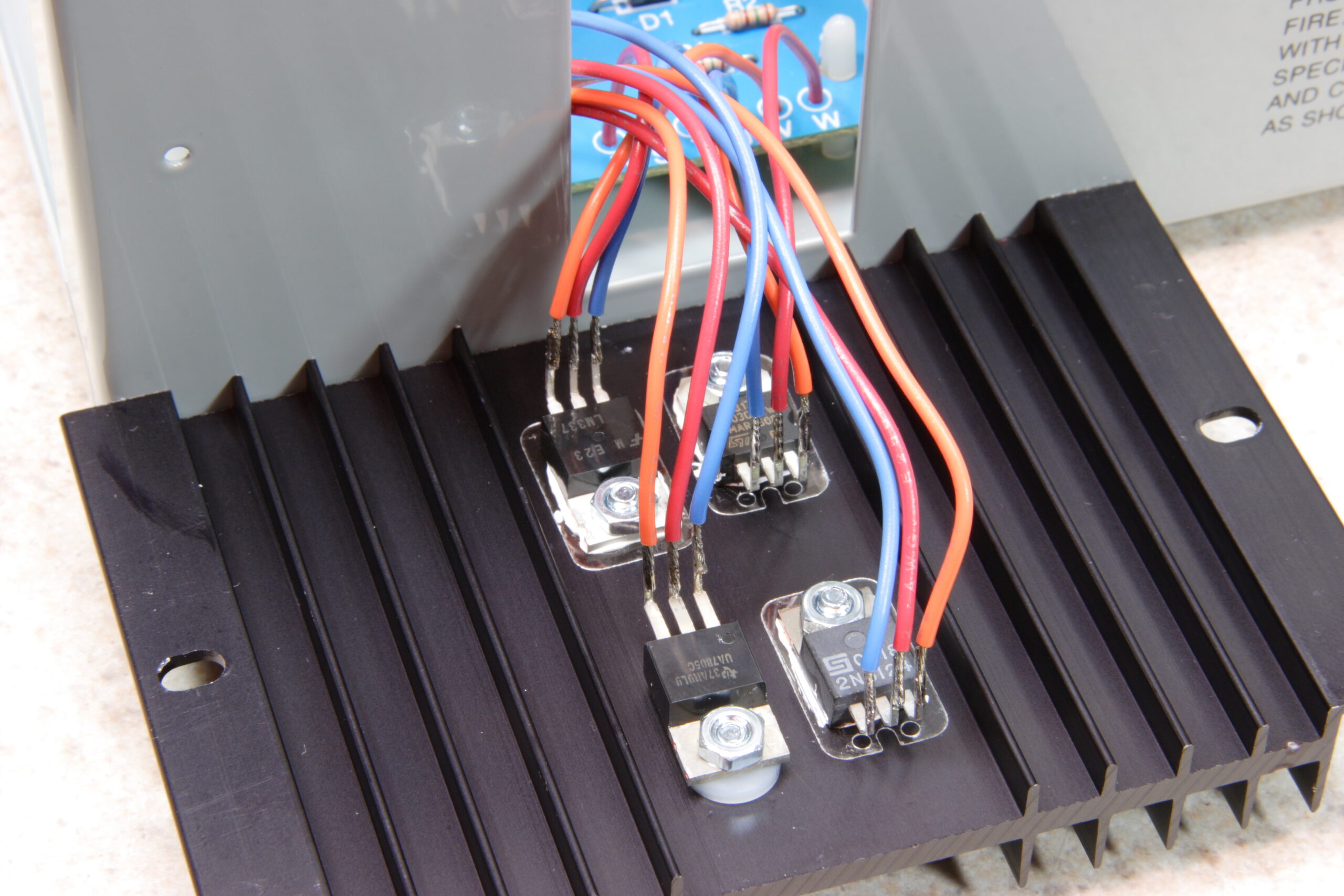
The biggest problem I have with the kit is how the leads connect to the heatsink’d ICs and that the front mounted pots aren’t fine enough for my needs, but it should be trivial to work around this. I’ll just add another pot in series with the existing one, probably something an order of magnitude lower than the current one, and it’ll function as a ‘fine’ control. When the chassis is open for adding these fine controls, I’ll also add some heatshrink tubing around the leads on those ICs. This is just to ensure that a solid physical jolt to the chassis won’t inadvertantly cause some of the leads to touch, causing a short.
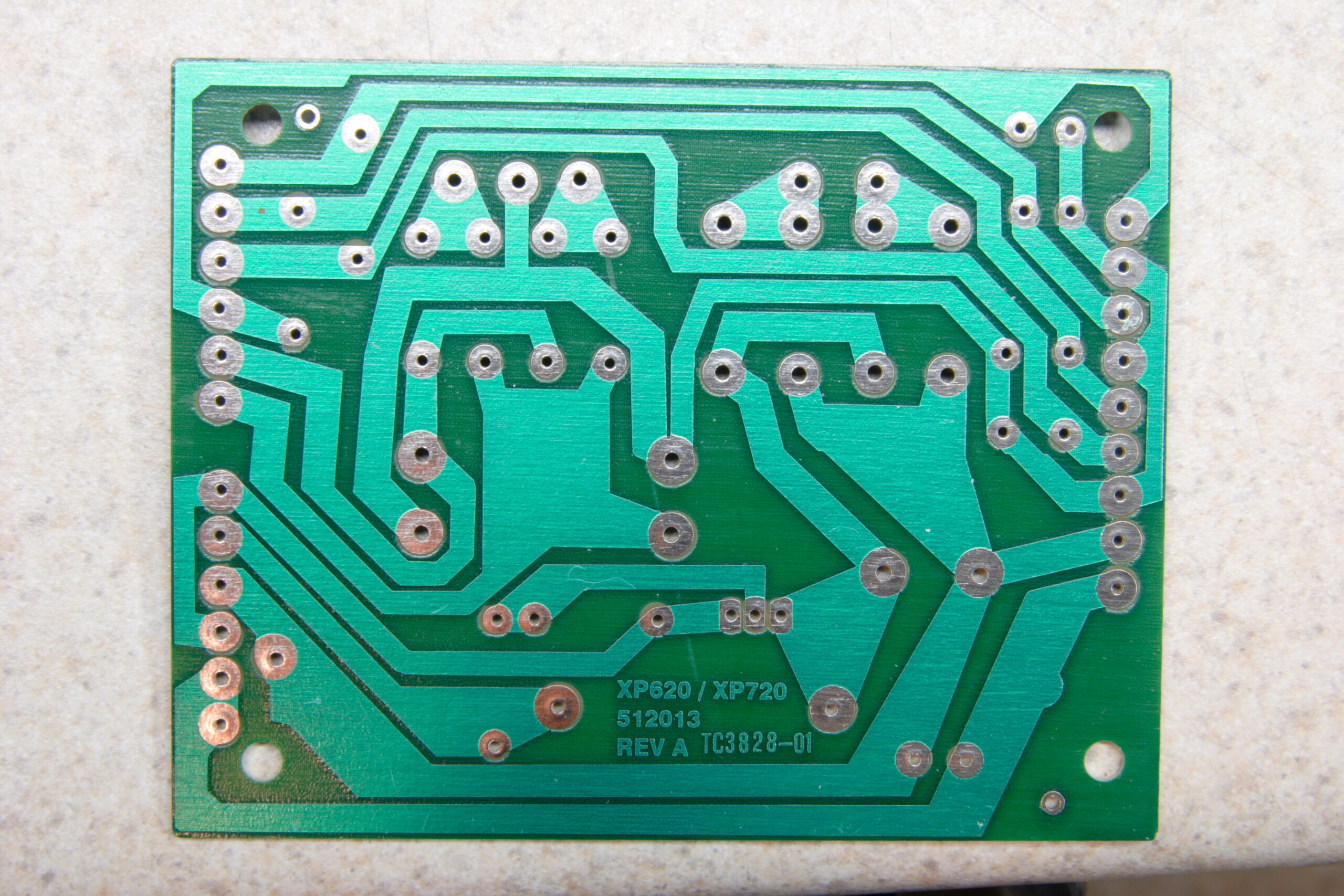
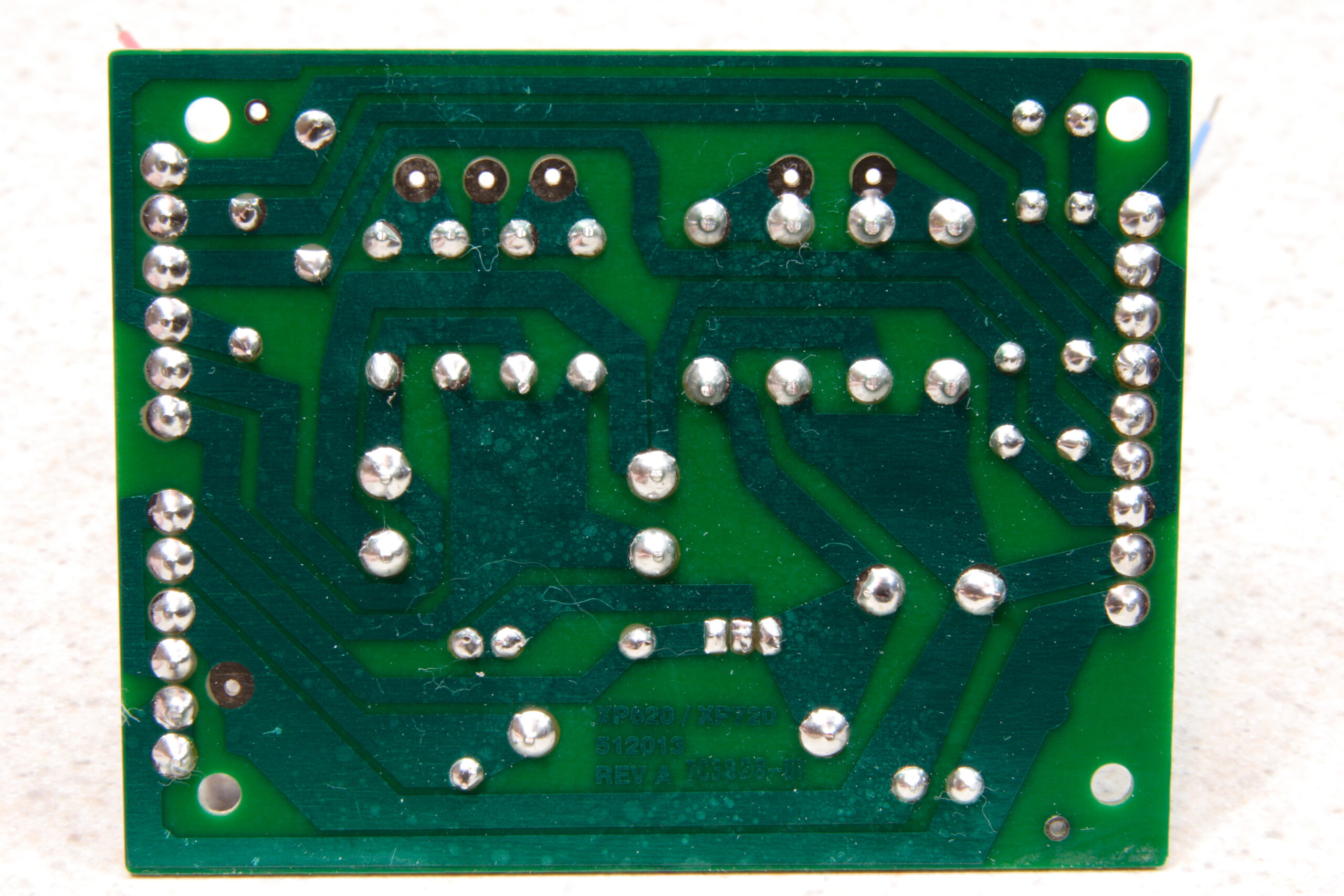
Oh, the only other complaint about it (and this isn’t much of a complaint) is that the pads on the bottom of the PCB are gigantic. While this may be appropriate for some of the larger diodes, it took quite a bit of solder to cover the pads, and it seemed overkill for the various leads. It’s possible that this kit’s educational nature may be another reason for the large pads, though. Maybe to make it easier for those with large-tipped irons or those just getting started to successfully complete the kit. Again, not much of a complaint, just something which was a bit of a frustration.
In the end, I’m quite glad I picked up this kit, and I’d have to recommend it to anyone else who needs a simple, low-cost benchtop power supply. It was easy to build, went real smoothly, gave me something to do for an evening, and it works as advertised. With the addition of some stacking banana plug cables, you can hook it up to a spare DMM and whatever you are powering at the same time, making it easy to see exactly what voltage is being sent, and change things without re-plugging anything.
Here’s some photos from my gallery showing various stages of the construction of the Elenco XP-720K (photo gallery retired):
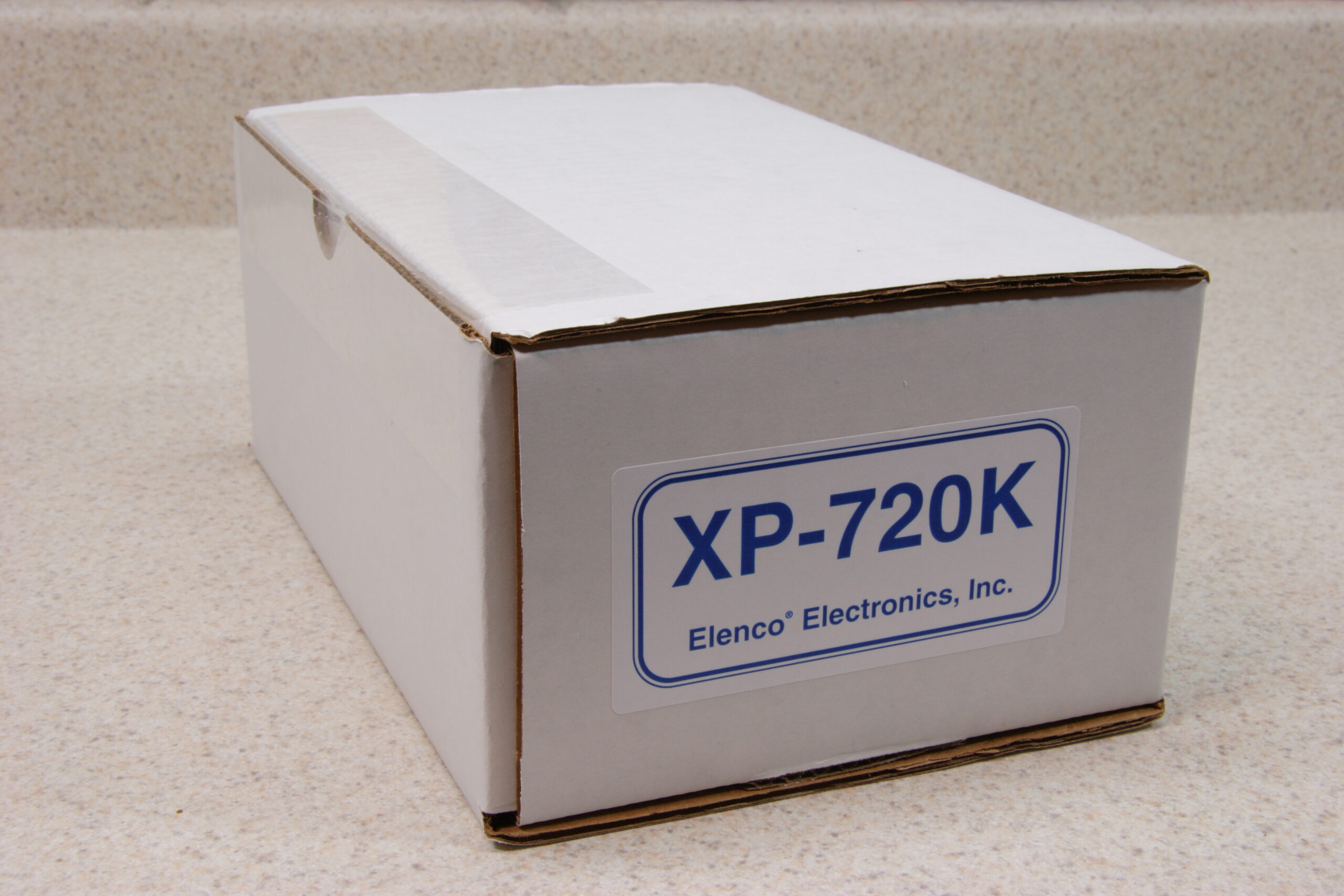
· The Elenco XP-720K comes in a nice, simple box.
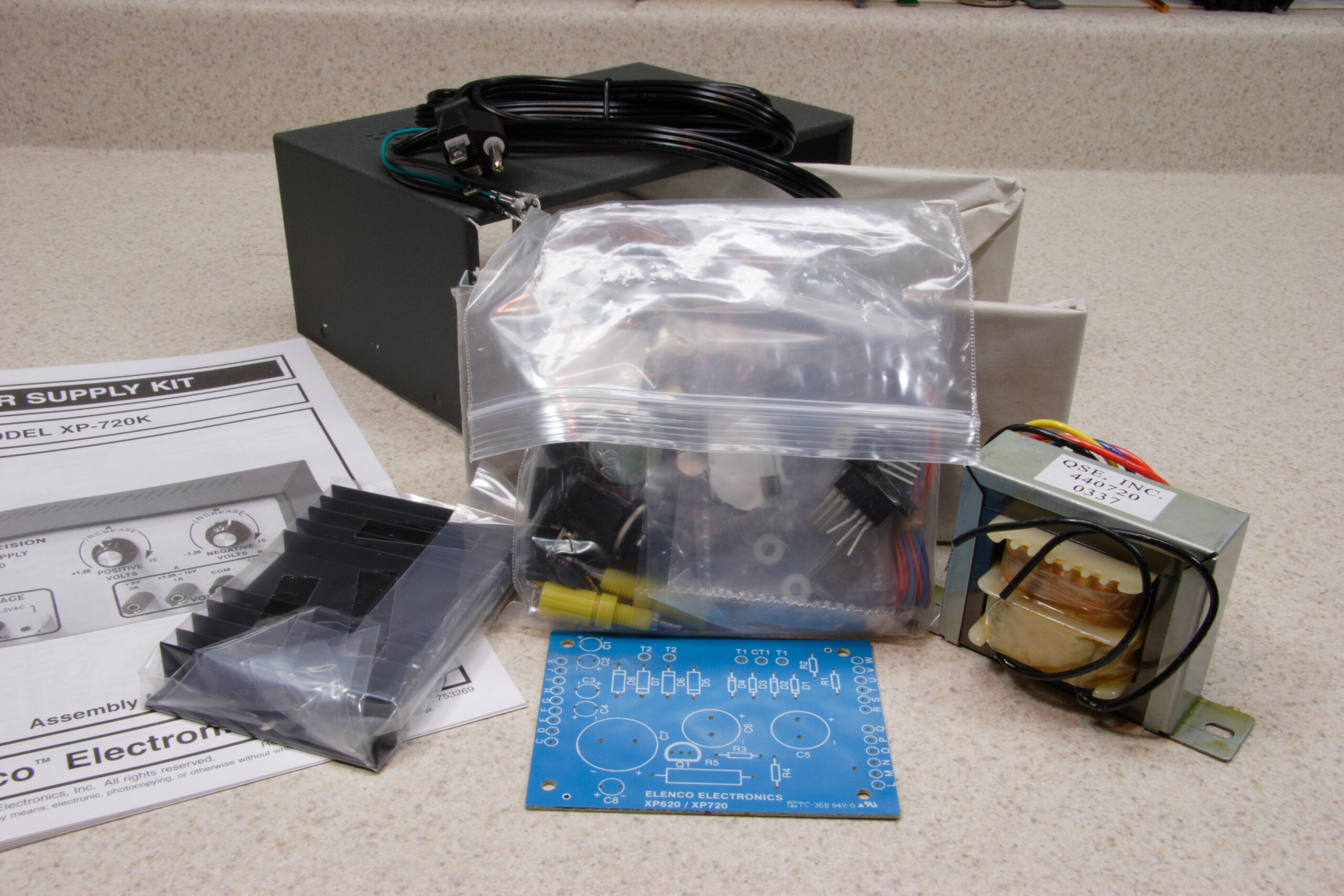
· The pile of parts which came in the box.
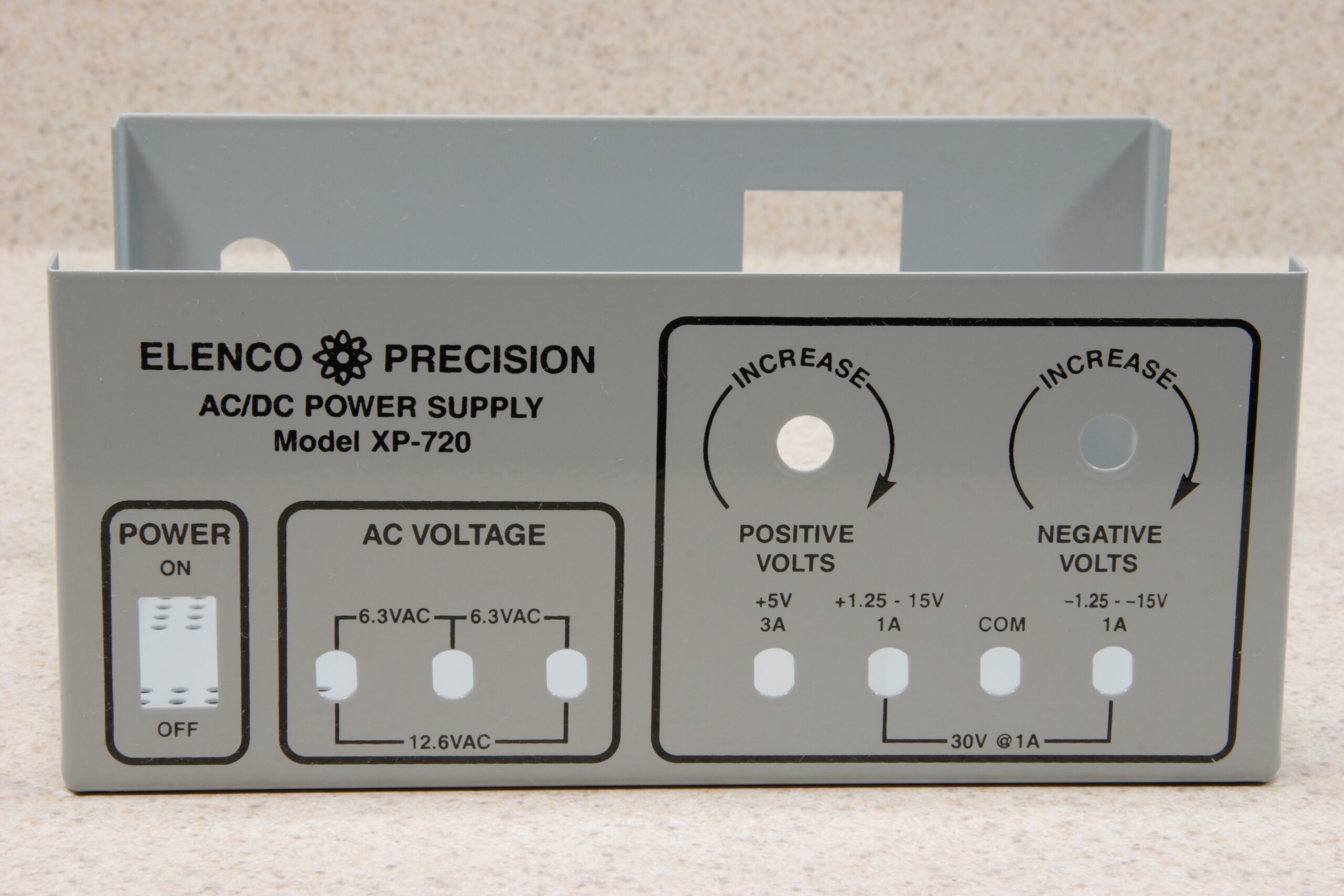
· The enclosure is nice, thick, enameled steel.
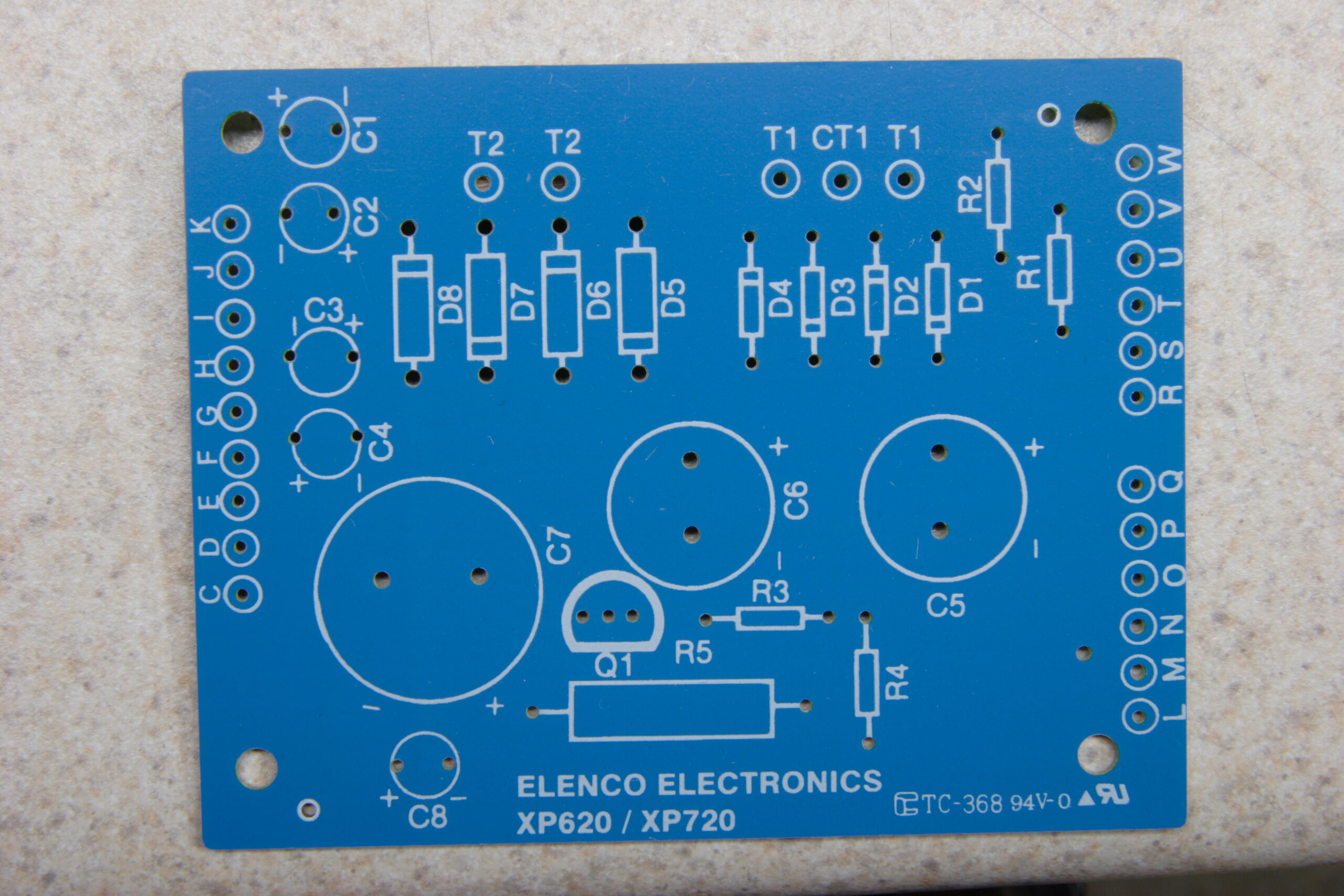
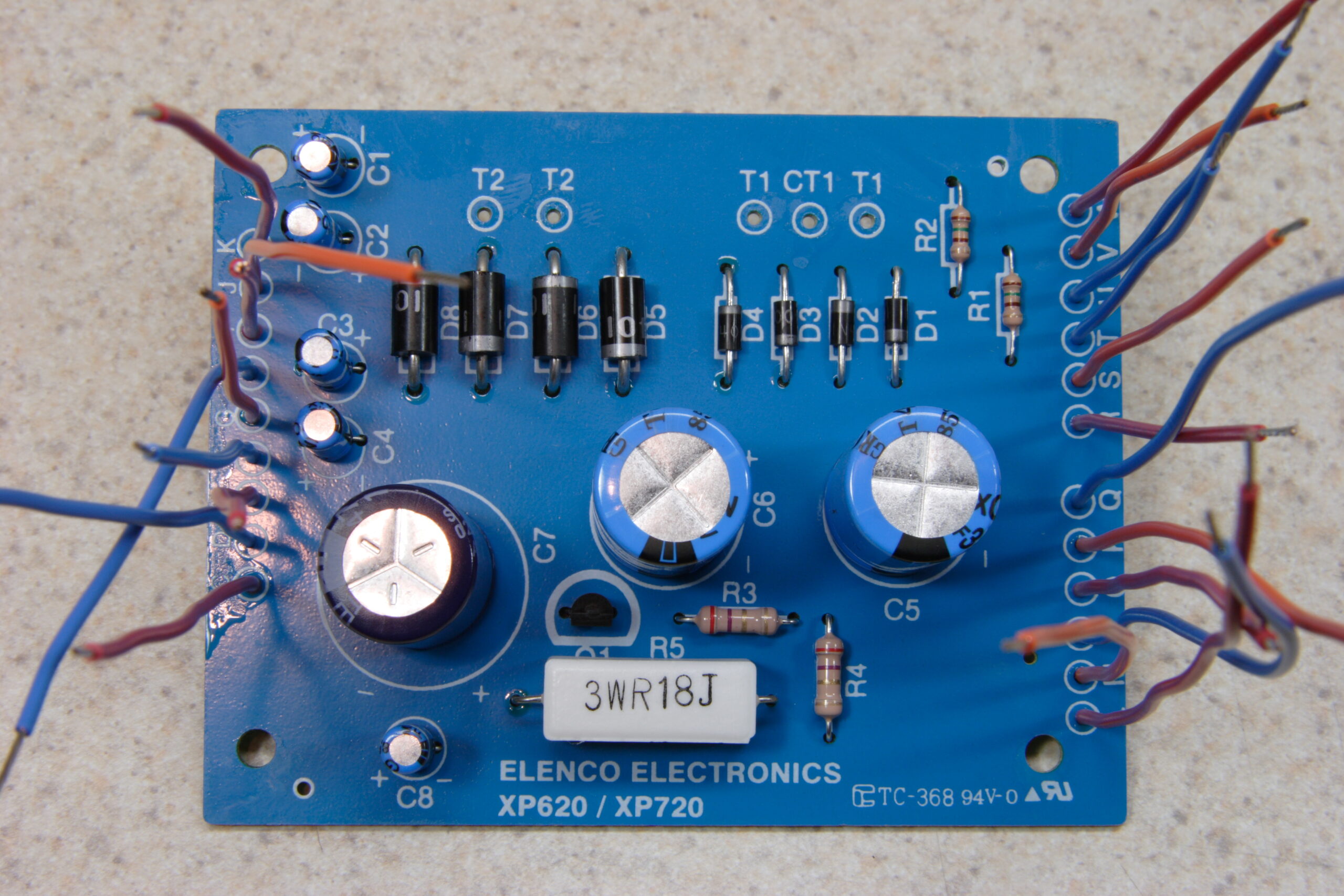
· Detail of the silk screen side of the PCB. No, there aren’t very many parts.
· PCB with all the parts and flying wires installed.
· Solder side of the PCB with all parts installed and flux removed.
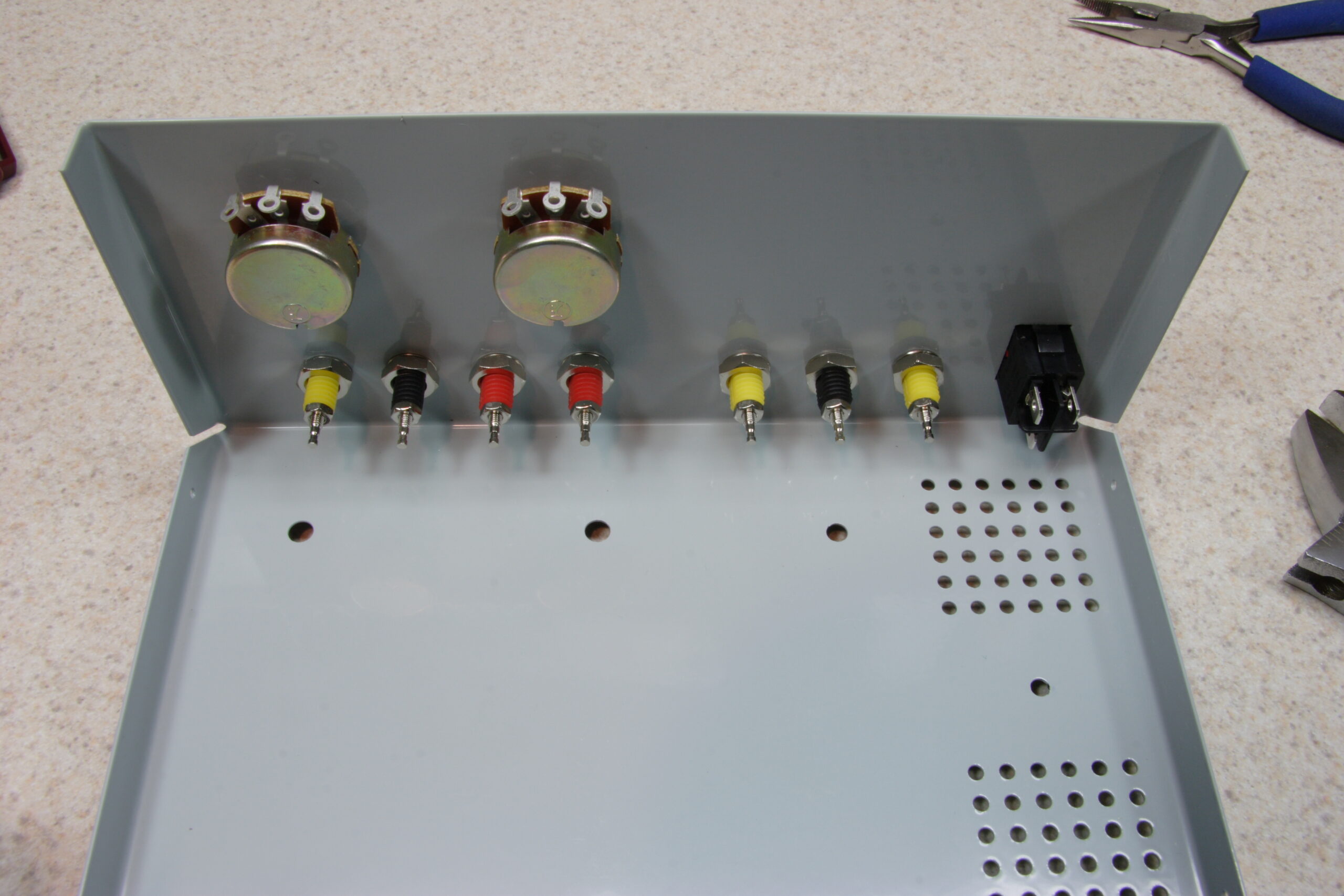
· Chassis with all front panel connections and controls installed, transformer, and mains power connections fitted.
· ICs fitted to the heatsink, with the leads reflow soldered on. These need heatshrink tubing to isolate them.
· Looking down into the top of the Elenco XP-720K.
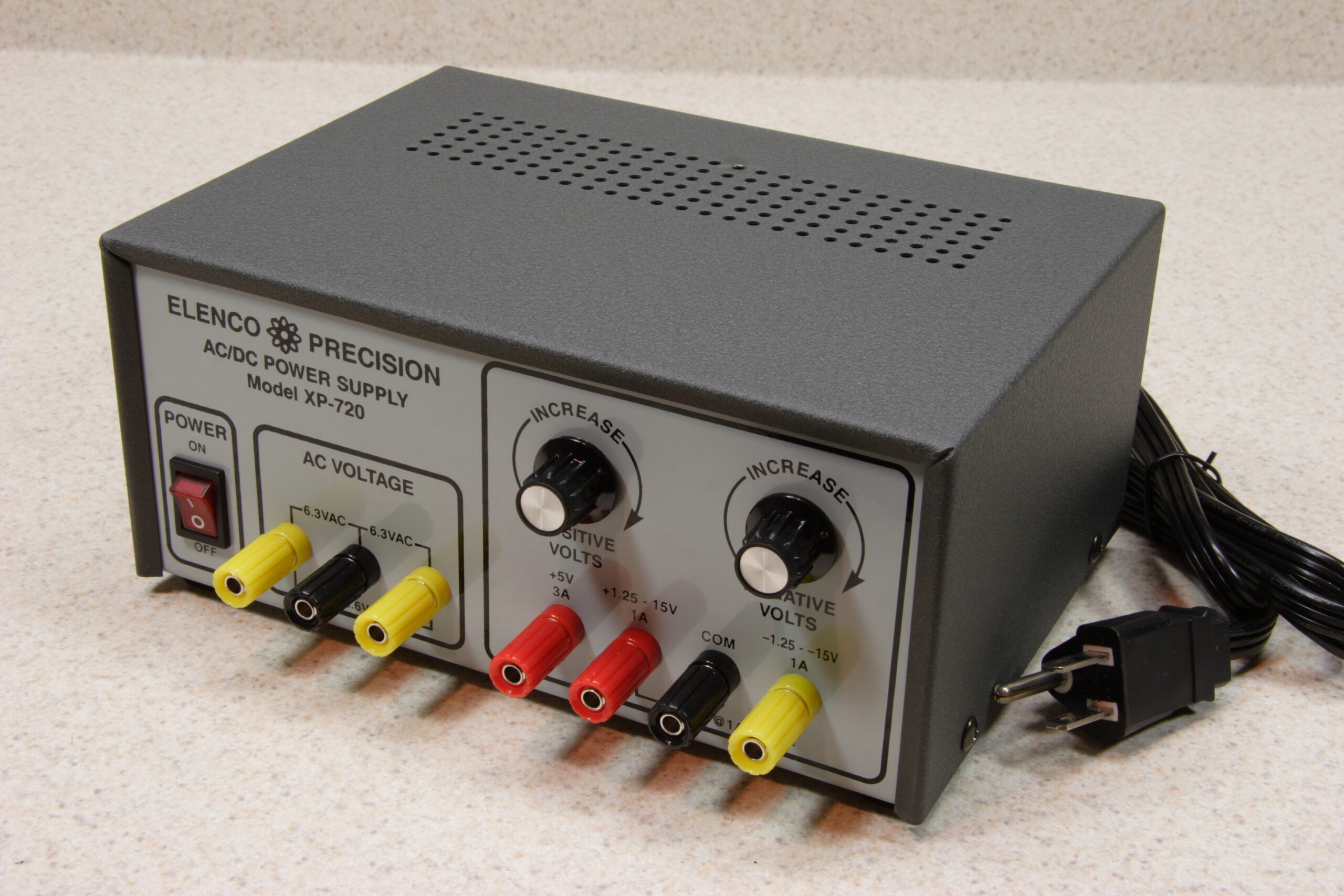
· My completed Elenco XP-720K power supply with the chassis closed.
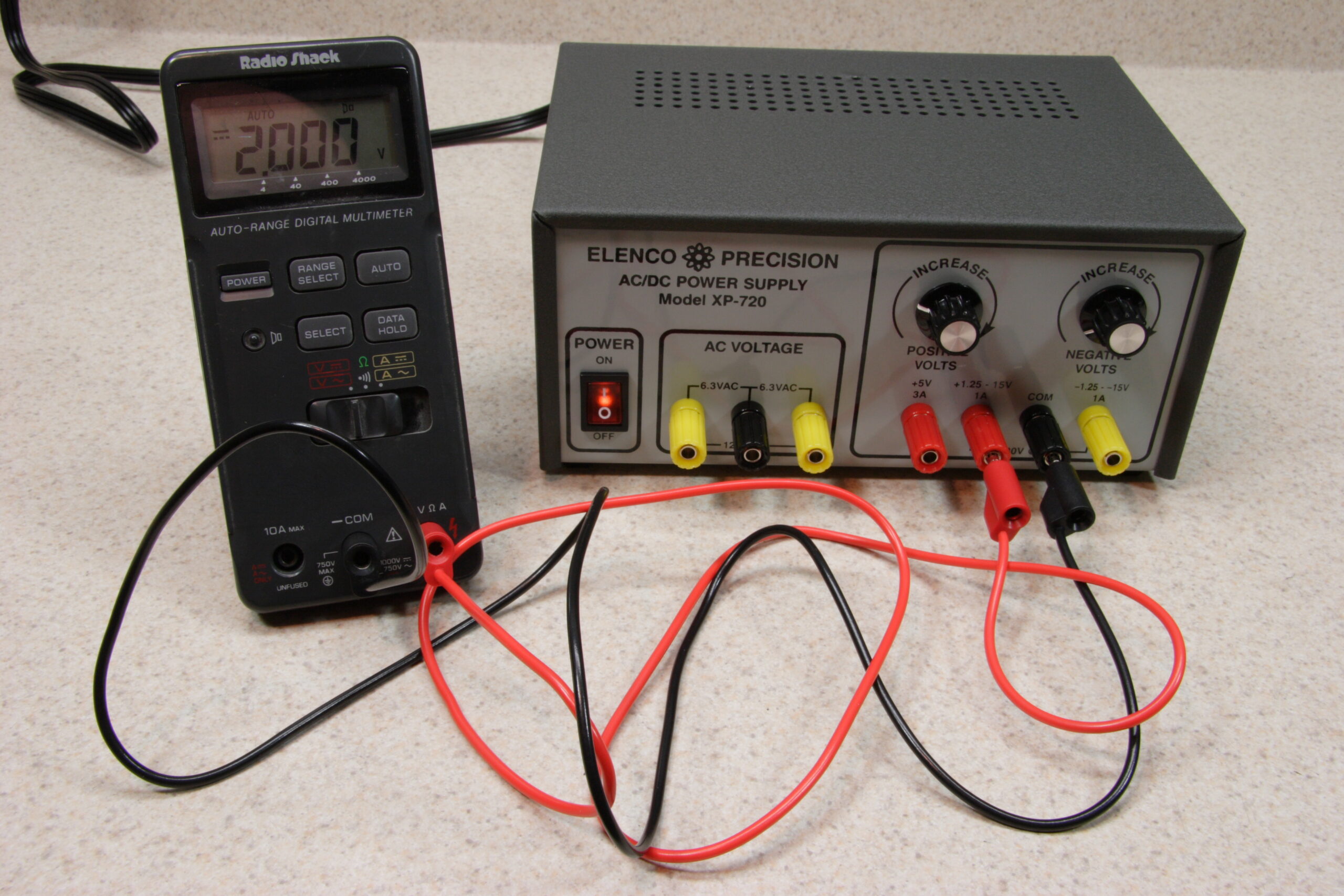
· While testing the Elenco XP-720K I was able to hit 2.000VDC. This would have been easier with a fine control, which I’ll add later.
Hm, might have to pick one of these up for other projects… I’ve got a +/-12 & 5 supply, but it’s not variable like this one.
It seems pretty nice (it’s very solid) and it’ll definitely come in handy. One suggestion, replace the pots with something like p/n 652-3540S-1-202 or 652-3590S-2-202 from Mouser. They are 10-turn 2K pots which should give a lot more control over the voltage.
I’ll probably be ordering a pair of these when I order the other stuffs I need for rebuilding a FatMan.
Oh, it doesn’t really go below 1.25 VDC, but… How often do you really need something that low, anyway?
Yup, 10turn would be much better for a precision app like this… and no, I can’t imagine needing anything much below 3v, really.