![]() |
This is why bathrooms generally have exhaust fans.
(Taken while Danielle was having a very hot shower in the bathroom just off of my bedroom. This is also a good way to make the house more humid, should it be needed.)
Leave a CommentMaking, baking, and (un-)breaking things in Southeast Michigan.
![]() |
This is why bathrooms generally have exhaust fans.
(Taken while Danielle was having a very hot shower in the bathroom just off of my bedroom. This is also a good way to make the house more humid, should it be needed.)
Leave a Comment![]() |
While it may not look like much, this is the first completed draft of the schematic for my rebuild / remake of SDrive. This may not look like much, but attached to every symbol is a footprint for every part which I intend to use in the finished device. All that is left is to validate the part footprints against actual items, lay out the board, give it 20 or 30 sanity checks, then order the prototype PCBs. Yay!
(While the name in that document says SDrive: nuxx Edition the name shall be SDrive NUXX.)
Leave a Comment![]() |
Normally my support of Wahhabism comes from purchasing things made of petroleum, but today’s oily Saudi acquisition is a 1kg jar of “Al Nahkal” Excellent Tahina from the local Middle Eastern-ish market. Danielle acquired this along with two bags of pita and some yerba maté. The first two will be used to make some hummus which we plan to take to a Super Bowl party tomorrow while the latter will be used to keep Danielle awake at work.
Actually, since the container is made of plastic I guess this is actually a Saudi two-fer. Thankfully, as the side of the container tells is, this product is FREE FROM CHEMICAL WHITENING AGENTS. There’s also something I really enjoy about seeing the ink jet printed manufacture and expiration date up at the top in a non-Latin character set.
Leave a Comment![]() |
Not wanting to sit in traffic I decided to stay at work late and poke around with the Atari SIO connectors from an Okidata printer which
Because this footprint was done in CadSoft EAGLE I can’t easily dimension it, so that might make it a little difficult for other people to reuse. Maybe I’ll try and do a DXF of it or something. While measuring it I came across a couple unexpected (for me) things which lead me to believe that it was hand-designed way back when. For example, the overall footprint seems to be 2:1 width:height ratio (1.86″ x .93″), and the pins have a .14″ spacing between each other, with the pins forming equilateral triangles.
(And yes, I will be CC licensing this footprint once I’ve tuned it to fit all the SIO connector variants that I can find.)
Leave a Comment![]() |
An order arrived from Mouser today, which means that I was able to complete the AMB γ1 Modular Miniature DAC that I’ve been building. Complete it’s a bit smaller than a standard business card and feels very solid. The board assembly slides forward and back ever so slightly in the case when inserting or removing the USB cable, but it’s nothing that’s a problem. (A/B this photo and this photo to see the shift.)
Tonight I’m using it connected it to to the Millett Hybrid Maxed that I built last year, my most-favorite Sennheiser HD570 headphones, and each of my computers, and this sounds darn good. Now I’m realizing just how low quality some of the audio recordings on my computer actually are, but better than that I can now† listen to high quality audio at reasonable levels while Danielle sleeps in the next room. Yay!
I’m really enjoying this.
† Yes, I realize that I could have just used the high quality line out in my Mac Pro with the amp, but I’m also expecting to use this when at work or with computers with crap audio (eg: Dell D620).
Leave a Comment![]() |
A few months ago I mentioned that I’d like to build an Atari SDrive as an electronics project. Well, one difficulty in doing that was obtaining SIO connectors. Well, thanks to
![]() |
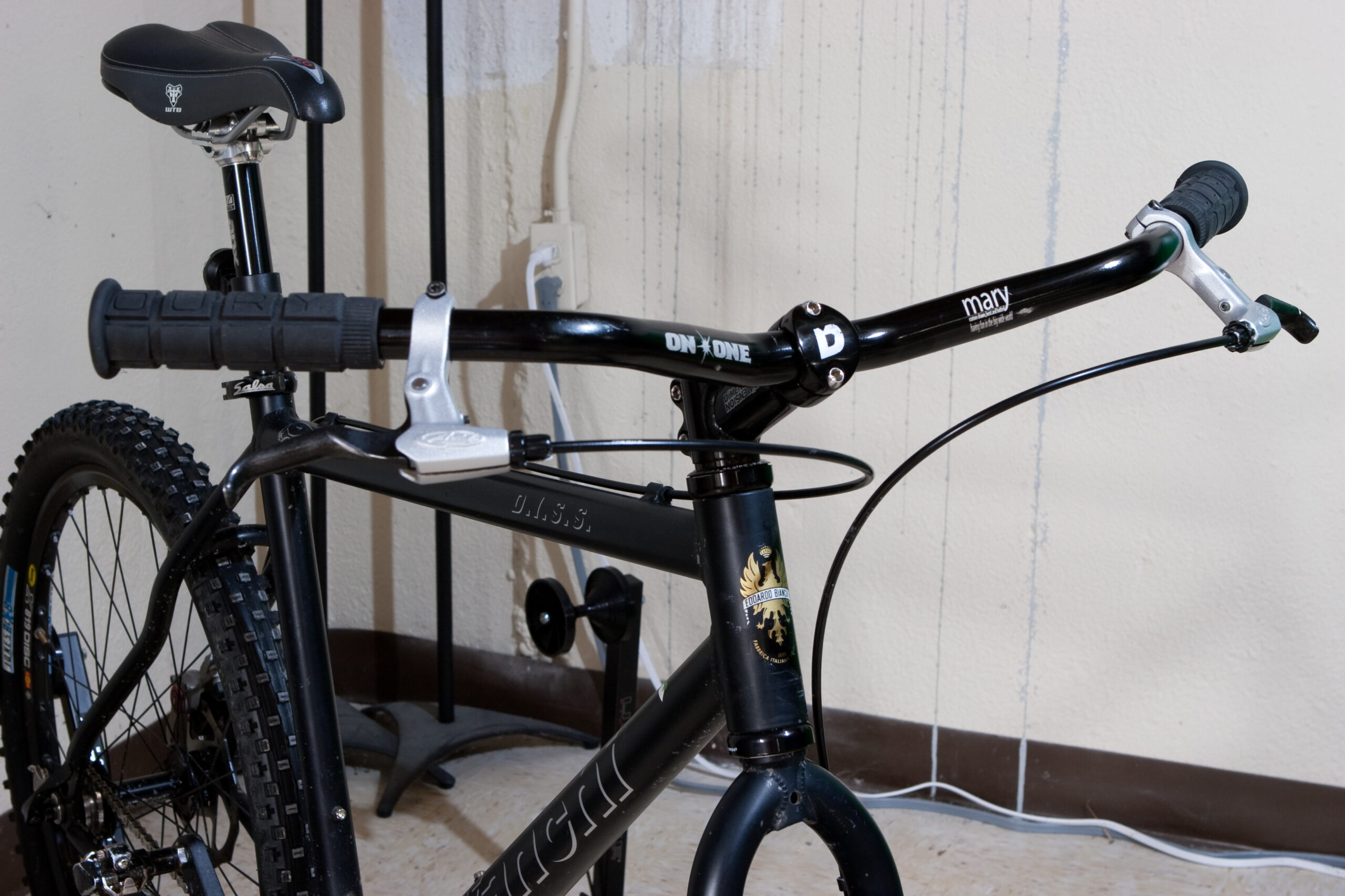
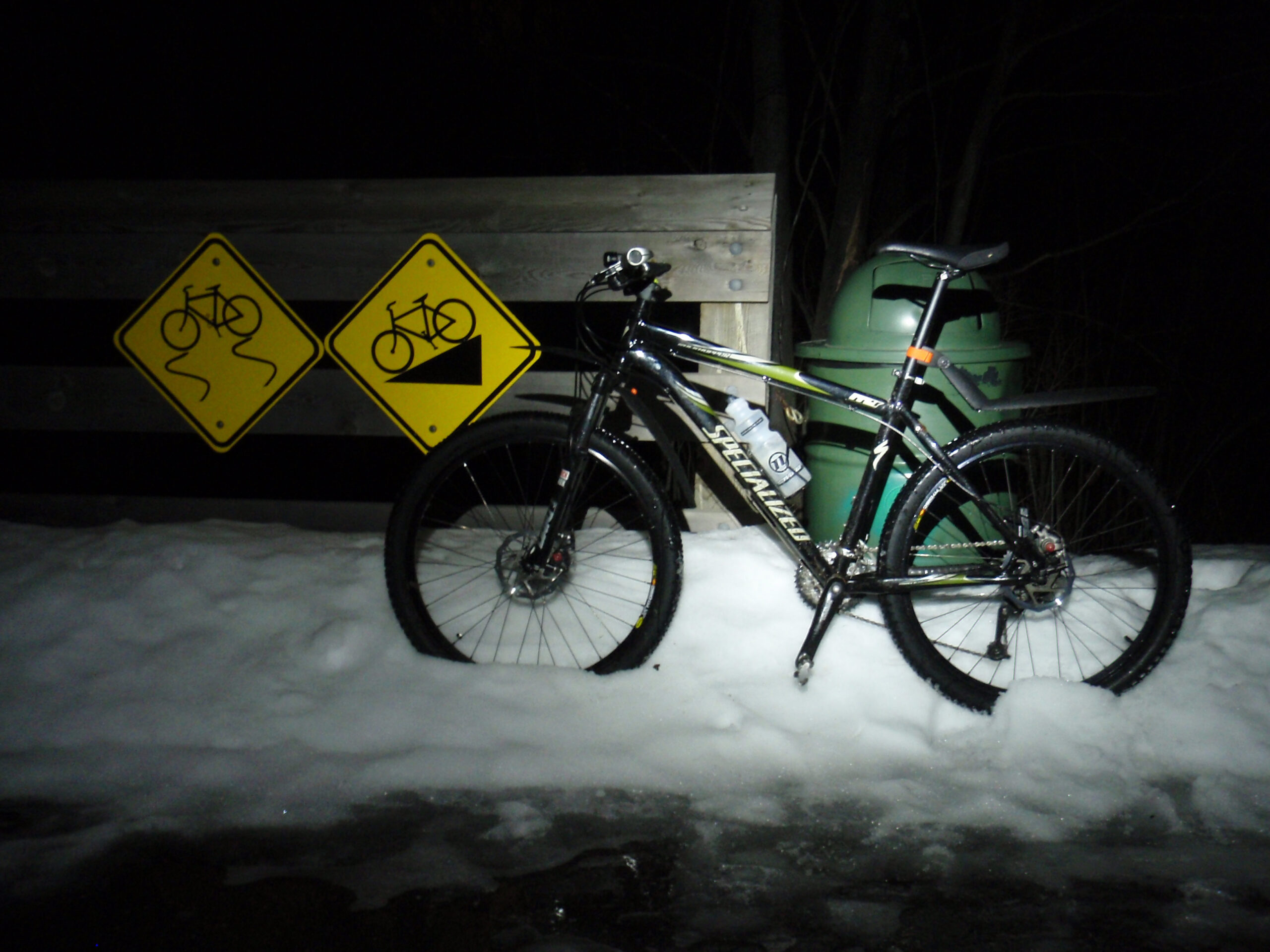
Quite often when riding in below-freezing temperatures just gloves aren’t enough to keep your hands warm. While the Pearl Izumi Gavia Gloves are quite windproof, they don’t do a very good job of keeping icy wind from chilling my hands. I haven’t had much luck with other gloves either, as my hands still tended to get cold pretty quick. So, on recommendation from a number of friends I went ahead and ordered a set of AMF Threadworks / Trail’s Edge Moose Mitts. I received them this evening and went for a reasonably quick (for snow) test ride on my single speed (the D.I.S.S.) through Clinton River Park with some friends of mine.
While these moose mitts look like the sort of thing which would tie one to a bike, I found that I never really felt as if I was stuck to the bike. Even as I took a fall (tires slid out as I rounded a corner) that hand was just suddenly out of the mitt without any problems.
Warmth-wise, wearing those Gavia Gloves beneath the Moose Mitts proved to be a bit too much as my hands were sweaty after riding. For the next ride I think I’ll try going back to my normal fingerless, clearance bin gloves from REI. If the wind blocking / insulating isn’t enough, inside of each mitt are small pockets for chemical hand warmers and loops for hooking them to the ends of the bars and keeping them solidly in place when inserting one’s hands. One could also store gels in there so they remain liquid and easily edible.
All in all, I’m really glad that I bought these. They kept my hands properly warm, didn’t get in the way when I fell, and were overall comfortable. Being made out of a really heavy nylon I also suspect that they’ll last quite a while. Here is a photo of me with my hands in the Moose Mitts, standing over the bike.
Leave a Comment![]() |
Tonight’s dinner is a hastily purchased, prepared, and photographed mix of things of vegetable origin. On the left is home-made bread, toasted and topped with the roasted garlic left over from a few days ago and melted butter. The bowl of veggies is Birds Eye® Freshlike® Broccoli Stir Fry cooked in a bit of soybean oil and some leftover Hormel, House of Tsang-brand Korean Teriyaki stir fry sauce. The beer in the back is Bell’s Two Hearted, a favorite of mine.
The hastiness of the photo is evident by the crap DOF.
Leave a Comment![]() |
Since I’m in a posty mood tonight, have a photo of the smallest thing I’ve soldered to date. It’s nowhere near as small as what some folks I know have done, but I’m pretty happy with it. This part, U1D, is a Texas Instruments TPS2115APW, which handles automatically switching the AMB γ1 between wall and USB power, giving priority to USB whenever it is plugged in.
The package of this part is TSSOP-8, which has 0.65mm between centers of the pins, with the pins being 0.19mm – 0.30mm wide. I soldered it with a Weller WES51 with an ETO tip. Kester 24-6337-6417 (Water Soluble 331 Solder Wire, .025″ dia., Core Size-66 Sn63Pb37) solder was used along with a 2331-zx flux pen. Chemtronics Soder-Wick Rosin SD desoldering braid, in size 3, was used for cleanup.
Soldering was done with the iron set at 700°F. The area was coated with flux, a pad was tinned, more flux was added to that pad, then the part was placed. The iron was then touched to the edge of the pad and the part settled into place. Any slight adjustment would be performed by reheating the pad and moving the part slightly with fingers or a pin, but this wasn’t needed. I then fluxed the legs of the part and very quickly tacked each leg with a bit of solder.
The solder braid was then quickly run across the legs to pull off any extra solder. When washing the PCB after assembly the rosin flux from the desoldering braid was first removed with 99% isopropyl alcohol, then while the board was still wet it was washed with hot water.
(Click here or on the image above for a full res copy of that image.)
Leave a Comment